

Labiaplasty is a well established surgical procedure with a strong safety profile when performed by a qualified surgeon in a regulated clinical environment. Like any surgical procedure, it carries risks and expected side effects. Most side effects are temporary and resolve during healing. Serious complications are uncommon. This guide explains honestly what to expect, what is rare, and what questions to ask before deciding to proceed with labiaplasty.
Table of Contents
What Are the Expected Side Effects of Labiaplasty?

Expected labiaplasty side effects are those that occur predictably as part of the healing process and do not indicate that anything has gone wrong. Every patient should expect some degree of the following:
| Side Effect | When It Occurs | When It Resolves |
|---|---|---|
| Swelling | Immediately after surgery with the highest swelling between days three and five | Most swelling settles by weeks three to four |
| Bruising | Usually appears during the first forty eight hours | Normally fades within one to two weeks |
| Mild discomfort | Common during the first few days | Usually much improved by the second week |
| Itching at the healing site | May occur between weeks one and three | Settles as the stitches dissolve and healing continues |
| Temporary sensitivity changes | Can occur throughout the healing phase | Typically resolves by the second or third month |
| Pink or reddened scar tissue | Visible immediately after the procedure | Gradually softens and fades over three to six months |
These are normal features of the healing process and not complications. For a detailed week by week breakdown of what to expect during recovery, see the labiaplasty recovery guide.
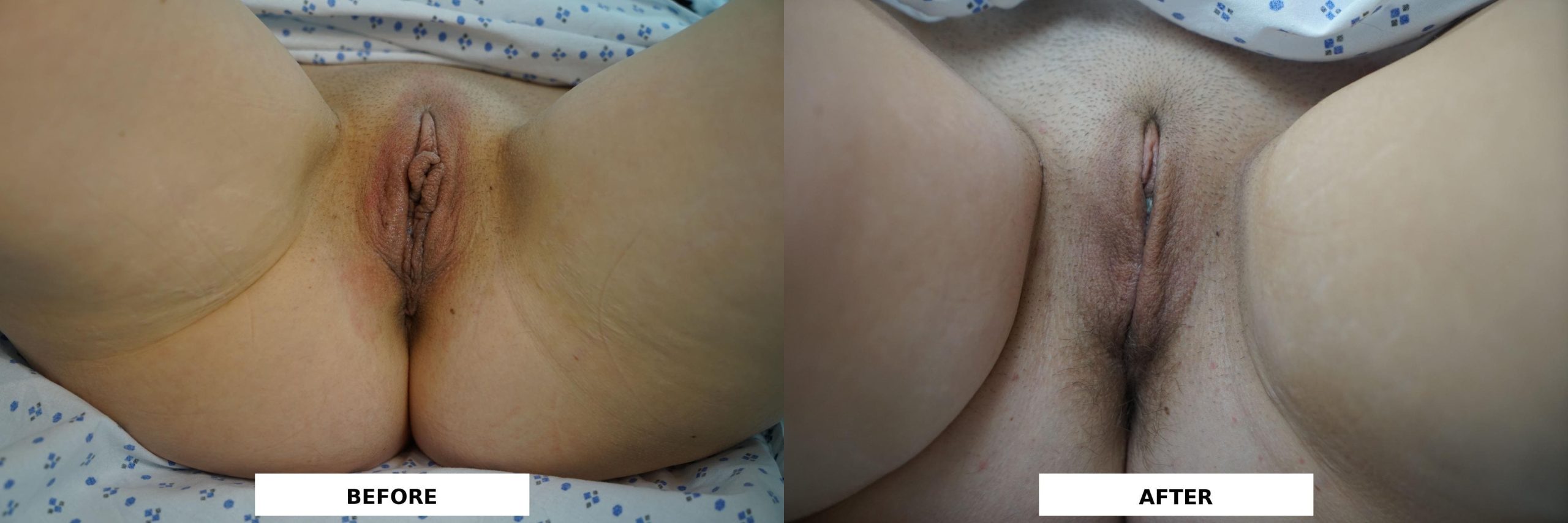
Labiaplasty Treatment Image Before & After
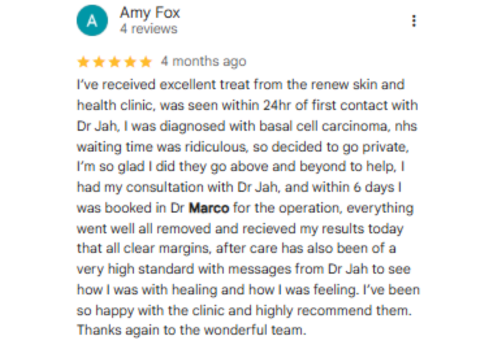
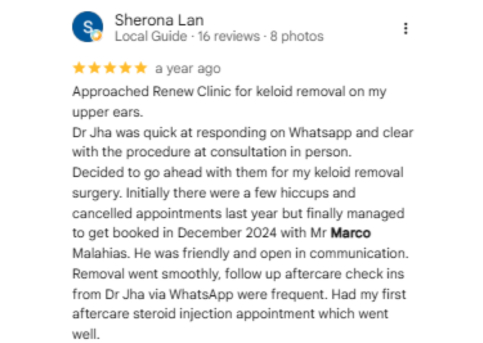
Verified Patient Reviews ⭐⭐⭐⭐⭐| Labiaplasty Treatment

What Are the Risks of Labiaplasty?
The risks of labiaplasty below occur in a minority of cases. Understanding them allows patients to make an informed decision and to recognise the difference between normal healing and something that needs clinical attention.
• Infection: rare when aftercare instructions are followed correctly. Signs include increasing rather than decreasing pain after the first five days, spreading redness, warmth, or unusual discharge. Treated with antibiotics
• Wound dehiscence: partial separation of the sutured wound edges. More likely if activity restrictions are ignored in the first two weeks. Usually heals with conservative management
• Haematoma: a collection of blood beneath the skin. Presents as increasing swelling and firmness. Usually resolves on its own but occasionally requires drainage
• Asymmetry or unsatisfactory cosmetic result: the most common reason patients seek revision. Risk is significantly reduced by choosing a surgeon with specific experience in labiaplasty technique selection for the individual patient’s anatomy
• Scarring: some scarring is normal, but excessive scarring or a lack of scarring can occur and affect appearance
• Altered sensation: temporary numbness or heightened sensitivity during healing is common and resolves. Permanent nerve damage causing lasting loss of sensation is rare
• Over resection: removing too much tissue, resulting in a result the patient finds too severe. This is irreversible. It is the single strongest argument for choosing a surgeon with genuine labiaplasty specific experience rather than a generalist
How Can Labiaplasty Go Wrong?
The majority of labiaplasty complications that are reported in the UK are associated with one or more of the following factors:
• Incorrect technique selection: the trim and wedge techniques produce different results on different anatomies. A surgeon who applies the same approach to every patient without considering individual anatomy risks an asymmetrical or over resected result
• Insufficient surgical experience with this specific procedure: labiaplasty is not a routine part of standard surgical training. Experience in this procedure specifically matters more than general surgical qualifications alone
• Inadequate aftercare and follow up: complications caught early are significantly more manageable than those left unaddressed. A clinic that offers follow up as standard rather than as an optional extra provides a meaningful safety net
• Poor patient compliance with aftercare instructions: returning to strenuous activity, intimacy, or exercise before clearance is one of the most common causes of wound dehiscence and delayed healing
Renew Clinic reduces each of these risks through the appointment of a Consultant Plastic Surgeon (Mr Marco Malahias, EBOPRAS certified) and a Consultant Gynaecologist as the treating clinicians, structured aftercare as a standard inclusion with all procedures, and a private, CQC registered clinical environment.
Is Labiaplasty a Safe Surgery?

Yes. Labiaplasty performed by a qualified surgeon in a regulated clinical setting has a high safety profile and a consistently reported satisfaction rate of between 90% and 95% in peer reviewed clinical literature. It is one of the most commonly performed female genital cosmetic procedures in the UK, and serious complications are uncommon.
Safety in any surgical procedure is not an absolute it is directly related to the experience of the surgeon, the quality of the clinical environment, and how well the patient is prepared and supported before and after the procedure. These are the factors worth assessing when choosing a clinic, rather than focusing on cost alone.
For an understanding of what results look like in practice, the labiaplasty before and afters guide covers what changes to expect and what a well executed result looks like.
What Can I Do Instead of Labiaplasty?
This is an important question and one that a responsible clinician should raise with every patient. The honest answer depends on what is driving the concern.
If the concern is primarily about the volume of the labia majora rather than excess labia minora tissue, labial fillers can restore volume without surgery. This is a non surgical option that suits a specific presentation and is discussed in detail on the labial filler page.
If the concern is specifically the clitoral hood rather than the labia minora, clitoral hood reduction is a distinct procedure that addresses a different anatomical concern without involving the labia at all.
If the concern is about the labia minora specifically, there is no non surgical method that reduces excess tissue. Topical products, devices, and exercises have no clinical evidence of effectiveness for this purpose.
At Renew Clinic, the consultation with the surgeon is specifically designed to understand the patient’s concern, assess whether surgery is appropriate, and discuss all suitable options honestly before any decision is made. No treatment is recommended or agreed at the point of consultation.
How to Choose a Labiaplasty Surgeon Safely in the UK?
The single most important factor in reducing the risks of labiaplasty is choosing the right surgeon. The following questions are worth asking any clinic before committing:
• Is the surgeon GMC registered and listed on the Specialist Register for their area of practice?
• How many labiaplasty procedures has this specific surgeon performed?
• Which technique or techniques do they use, and how is that decision made for each patient?
• Is aftercare and follow up included in the quoted price, or charged separately?
• Is the clinic CQC registered?
• Can they show genuine patient reviews and results, including what the results look like at the fully healed stage?
At Renew Skin and Health Clinic in Leamington Spa, labiaplasty is performed by Mr Marco Malahias, Consultant Plastic Surgeon, GMC 6067810, EBOPRAS certified with over a decade of specialist surgical experience, and by a Consultant Gynaecologist. The clinic is CQC registered, rated 4.9 stars across more than 750 verified reviews, and serves patients from Coventry, Rugby, and across the UK.
For pricing information before your consultation, the labiaplasty prices UK guide explains what the cost includes and how it compares across clinics.
Request a call back
Book a Labiaplasty Consultation at Renew Skin & Health Clinic
Consultations with Mr Malahias (Consultant Plastic Surgeon) or a Consultant Gynaecologist are available at Renew Clinic in Leamington Spa.
All consultations are fully confidential. No treatment is agreed at the consultation unless you are completely ready to proceed.
Call: +44 1926 422 454
WhatsApp: +44 1926 422 454
Email: info@renewskinandhealthclinic.co.uk
Address: Renew Skin & Health Clinic, 18 Guy Street, Leamington Spa, CV32 4RT, United Kingdom
Opening Hours: Monday to Friday, 10:00 AM – 6:00 PM (Telephone lines open daily 9:00 AM – 10:00 PM, including weekends)
Frequently Asked Questions
1. What are the most common side effects of labiaplasty?
The most common side effects are swelling, bruising, and mild discomfort in the first week, itching as the sutures dissolve, and temporary sensitivity changes during the healing phase. These are expected features of the healing process and not complications. Most resolve within three to six weeks.
2. How can labiaplasty go wrong?
The most common reasons labiaplasty does not produce the expected result are incorrect technique selection for the patient’s anatomy, insufficient surgeon experience with this specific procedure, and inadequate aftercare. Over-resection, which means removing too much tissue, is the most serious outcome and is largely preventable by choosing a surgeon who performs labiaplasty regularly rather than occasionally.
3. Is labiaplasty a safe surgery?
Labiaplasty has a high safety profile and a reported patient satisfaction rate of between 90% and 95% in clinical literature when performed by a qualified surgeon. Serious complications are uncommon. Safety is directly related to surgeon experience, clinical environment, and the quality of aftercare provided.
4. What is the ideal age for labiaplasty?
Most surgeons recommend waiting until after the labia have fully developed, which typically occurs by the mid to late teens. In the UK, labiaplasty is generally not performed on patients under 18 outside of exceptional medical circumstances. Adults of any age may be suitable candidates providing they are in good general health and their expectations are realistic and clearly understood.
5. Can labiaplasty cause nerve damage?
Permanent nerve damage causing lasting loss of sensation is a rare complication of labiaplasty. Temporary numbness or altered sensitivity during the healing period is common and typically resolves fully by the two to three month mark as tissue continues to heal internally. Permanent loss of sensation is uncommon in procedures performed with appropriate technique and precision.
6. How long do labiaplasty side effects last?
Most visible side effects including swelling and bruising reduce significantly by weeks two to three. A pink or reddened appearance to the scar tissue may persist for two to six months before fading to its final appearance. Final healed results are typically visible between months two and three.
7. Can labiaplasty affect sensitivity?
Most patients report no lasting change in sensitivity after labiaplasty. Temporary sensitivity changes during the healing period are common. Many patients report that improved comfort following the procedure has a positive effect on their confidence and quality of life overall. Permanent loss of sensation is rare when the procedure is performed by an experienced surgeon using the appropriate technique.
8. What can I do instead of labiaplasty?
If the concern relates to the labia majora rather than the labia minora, labial fillers can restore volume without surgery. If the concern involves the clitoral hood, clitoral hood reduction is a separate procedure that addresses that specific concern. If the concern is excess labia minora tissue specifically, there is no effective non-surgical alternative. The consultation at Renew Clinic is designed to discuss all suitable options honestly before any treatment is recommended.
9. Can labiaplasty affect sensitivity?
Most patients report no lasting change in sensitivity after labiaplasty. Temporary sensitivity changes during the healing period are common. Many patients report that improved comfort following the procedure has a positive effect on their confidence and quality of life overall. Permanent loss of sensation is rare when the procedure is performed by an experienced surgeon using the appropriate technique.
10. What is the recovery like after labiaplasty?
Most patients return to light daily activities within one to two weeks. Exercise, swimming, and intimacy are avoided for four to six weeks. Final results are visible between months two and three. For a complete week by week recovery timeline, read the labiaplasty recovery week by week guide on our blog.