
Basal Cell Carcinoma (BCC) Treatment in Leamington Spa
HOME / Basal Cell Carcinoma
Experienced any skin issues, or been advised by your GP that they could be basal cell carcinoma? This is a very common worry, and brings many patients our way each year. At Renew Skin & Health Clinic, our specialist surgical team is on hand to assess the lesion properly, talk you through what we’re seeing in plain terms, and explain whether removal is the right next step for you. If it is, we can carry out the procedure privately, with the removed tissue sent away and fully analyzed afterward to confirm the diagnosis and check that nothing has been left behind. The whole process is designed to move quickly, so you’re not left waiting weeks for an NHS dermatology appointment while a lesion goes unchecked, and you’ll always know exactly what happens at each stage before you commit to anything.
Before and After Images

Verified Patient Reviews ⭐⭐⭐⭐⭐| Venous Lake Removal

Client Interview Videos
Basal Cell Carcinoma Treatment at a Glance
| Information | Details |
|---|---|
| Condition | Basal Cell Carcinoma (BCC), also called a rodent ulcer. |
| Type | Non-melanoma skin cancer and the most common form of skin cancer in the UK. |
| Consultant | Mr Marco, Consultant Skin Cancer Surgeon. |
| Treatment | Surgical excision under local anaesthetic. |
| Price | From £1,175. |
| Session Time | Typically 30 to 45 minutes. |
| Downtime | Minimal. Most patients return to normal activities on the same day. |
| Aftercare | Comprehensive wound care guidance with follow up arranged through your own GP. |
What is Basal Cell Carcinoma?
Basal cell carcinoma (BCC) is the most prevalent form of skin cancer, most often found in basal cells found deep within the epidermis. BCC is classified as nonmelanoma skin cancer, meaning its behavior differs drastically from melanoma: growth is slow and localised rather than spreading throughout the body making early detection highly treatable.
BCC is also widely known as a rodent ulcer, a nickname that comes from the way untreated lesions can slowly gnaw into surrounding tissue in a pattern that resembles a small rodent bite not because rodents cause it. It’s an old dermatological term you’ll still see used by GPs and on the NHS website.
BCC is, by a large margin, the most commonly diagnosed skin cancer in the UK, and incidence rises with age and cumulative sun exposure.
Types of BCC
There are four recognised types, and they can look quite different from one another:
- Nodular BCC the most common subtype; a shiny, pearly bump, often with visible small blood vessels
- Superficial spreading BCC a flat, scaly, reddish patch, often mistaken for eczema or psoriasis
- Pigmented BCC similar to nodular BCC but darker, sometimes mistaken for a mole
- Sclerosing (morphoeic) BCC a pale, scarlike, flat area with poorly defined edges; can be harder to diagnose visually
What Causes Basal Cell Carcinoma?
The overwhelming majority of BCCs are caused by cumulative damage to skin DNA from ultraviolet (UV) radiation from the sun, and from sunbeds/tanning lamps. This damage triggers mutations in basal cells, which then divide abnormally and form a tumour.
Risk factors for BCC and early stage skin cancer include:
- A history of frequent sunburn, especially in childhood
- Fair or pale skin that burns easily
- Increasing age (most common past middle age)
- Living in a sunny climate or at high altitude
- Previous radiotherapy to the skin
- A family history of skin cancer
- Being on immunosuppressant medication
- Longterm exposure to arsenic or other toxic metals
Signs and Symptoms of Basal Cell Carcinoma
Basal cell carcinoma symptoms depend on its subtype, and this explains why so many patients delay seeking medical advice superficial BCC can appear like a patch of eczema to the untrained eye. Common signs of skin cancer to keep an eye out for include:
- A new, shiny, translucent bump (pink, red, white, brown or black)
- A red, scaly or irritated patch that doesn’t settle
- A growth with a raised, rolled edge
- An open sore or ulcer that doesn’t heal within 4 weeks
- A wound that heals, then reopens in the same spot
- A sore that bleeds, oozes or crusts
- A flat, yellowwhite, scarlike patch
- Itching, tenderness or occasional bleeding from an existing spot
If a mark on your skin has been present for more than a month and hasn’t healed, it’s always worth having it professionally assessed most turn out to be harmless, but early diagnosis is what keeps BCC treatment simple.
Request a call back
Does Basal Cell Carcinoma Go Away on Its Own?
No. Unlike some benign skin lesions, BCC does not resolve on its own and will not disappear without treatment. Left untreated, it will continue to grow slowly sometimes over years and can progressively damage surrounding skin, cartilage or bone, particularly around the nose, ears and eyes. This is why early treatment is so strongly recommended, even though BCC is rarely lifethreatening and has an excellent prognosis when removed.
Basal Cell Carcinoma vs Other Skin Concerns
| Feature | Basal Cell Carcinoma | Squamous Cell Carcinoma | Melanoma |
|---|---|---|---|
| Type | Non-melanoma skin cancer | Non-melanoma skin cancer | Melanoma (rarer and more serious) |
| Growth Rate | Slow | Moderate | Can be fast |
| Spread Risk | Very low | Low to moderate | Higher if left untreated |
| Typical Appearance | Shiny bump or scaly patch | Firm, scaly or crusted lump | Changing mole with irregular border or colour |
If your GP or our clinician suspects squamous cell carcinoma or melanoma rather than BCC, we’ll advise you accordingly and refer you appropriately our excision service at Renew is specifically for confirmed or suspected BCC lesions suitable for private removal.
Basal Cell Carcinoma Treatment What Does Removal Involve?
| Step | What Happens |
|---|---|
| 1. Consultation | Free 10 minute assessment of the lesion with our consultant. |
| 2. Diagnosis | Clinical examination, sometimes supported by dermoscopy. |
| 3. Excision | Surgical removal under local anaesthetic on your booked appointment date. |
| 4. Follow Up | Results are reviewed with you and shared with your GP for ongoing monitoring. |
Important: if your suspected BCC sits very close to a sensitive area such as the nostrils, eyelids, lips or ear canal, it may require Mohs micrographic surgery, which we are not able to provide at our private clinic. In these cases we’ll advise you honestly and help you access the right NHS specialist pathway instead we’d rather refer you correctly than treat you incorrectly.
Aftercare Following BCC Removal
- As directed by your clinician, keep your wound clean and dry at all times
- Avoid strenuous exercise for the period advised at your appointment
- Watch for any signs of infection (increasing redness, swelling, discharge)
- Attend your histology followup appointment
- Continue routine skin checks with your GP, as previous BCC modestly raises the chance of another developing in future
Basal Cell Carcinoma Treatment Cost — All Inclusive Pricing
| Service | Price |
|---|---|
| Standard BCC Removal | From £1,175 |
| Complex or Larger Lesion Surcharge | + £300 |
| Histopathology Analysis (Separate) | £375 |
*VAT applies to cosmetic treatments only. Medical treatments are assessed for VAT exemption at consultation.
Affordable Monthly Payment Plans Available
Chrysalis Finance makes getting an inspection or treatment done promptly no longer cost prohibitive, thanks to our flexible financing solution (renew Skin & Health Clinic Ltd is not a lender and is registered with the Financial Conduct Authority as FRN 626253.)
About Mr Marco Consultant Skin Cancer Surgeon

Mr Marco brings more than a decade of specialist surgical experience to every patient he sees at Renew Skin & Health Clinic. As a GMC-registered Consultant (No. 6067810) holding an MBBCh with Honors, MRCS (Ed), an MSc awarded with Distinction and an MD, his training sits firmly within some of the most rigorous surgical qualification pathways in the UK. He holds certification with the European Board of Plastic, Reconstructive and Aesthetic Surgeons (EBOPRAS), an accreditation which acknowledges sustained peer assessment against European surgical standards rather than one-off certification. Beyond his private clinic work, Mr Marco continues to practise within University Hospitals Birmingham NHS Foundation Trust, meaning patients considering treatment for basal cell carcinoma are seen by a surgeon actively working within NHS cancer and reconstructive pathways, not solely in private practice.
Why Choose Renew Skin & Health Clinic for BCC Treatment
- Private diagnosis and treatment without NHS waiting times
- Experienced consultantled surgical team
- 840+ Google reviews at 4.9★
- Flexible finance options available
- Clear, honest advice including referring you elsewhere if Mohs surgery is more appropriate
Basal Cell Carcinoma Treatment Near Leamington Spa
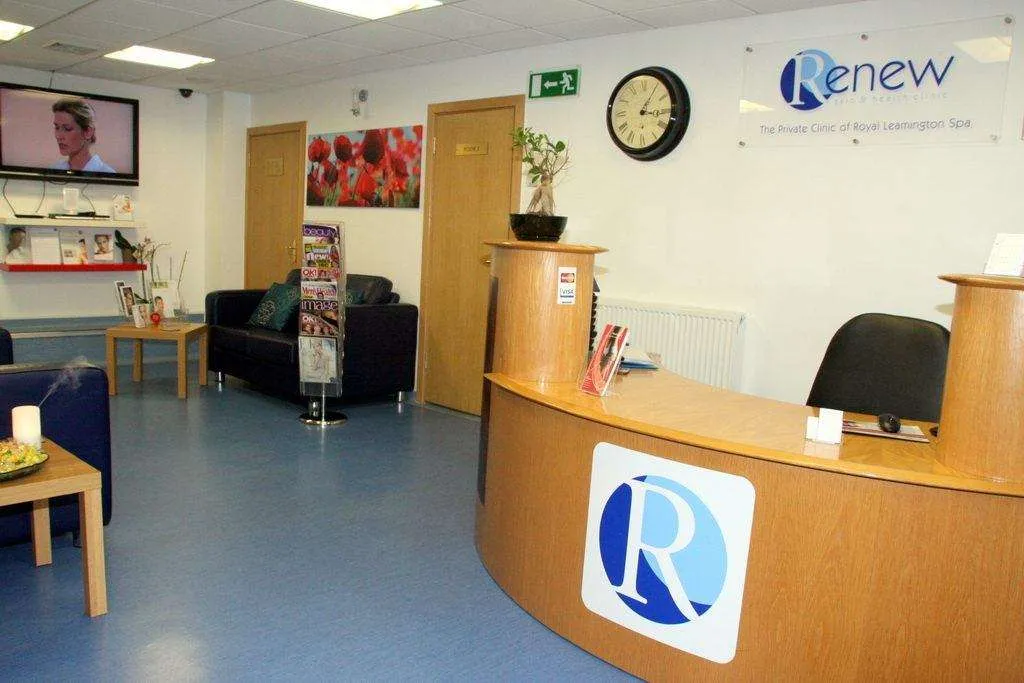
If your GP has told you that a lesion needs looking at, or you’ve noticed a mark that isn’t healing, Renew Skin & Health Clinic offers private basal cell carcinoma assessment and removal from our clinic on Guy Street, in the centre of Royal Leamington Spa, with patients regularly travelling in from Warwick, Kenilworth, Stratford-upon-Avon, Coventry and Solihull to avoid a long wait for NHS dermatology referral; the clinic is a short walk from Leamington Spa railway station, with parking available.
Book Your Free Consultation with Mr. Marco
If you’d like a straight answer about a suspicious spot, lesion or rodent ulcer, book a free consultation with Mr Marco, our Consultant Plastic, Reconstructive & Aesthetic Surgeon, who will personally assess your skin, explain whether it looks consistent with basal cell carcinoma, and talk you through removal options and pricing before you commit to anything.
- Call: +44 1926 422 454
- Email: info@renewskinandhealthclinic.co.uk
- Address: Renew Skin & Health Clinic
18 Guy Street, Leamington Spa, CV32 4RT. United Kingdom. - Whatsapp: +44 1926 422 454
- Opening Hours: Monday to Friday, 10:00 AM – 6:00 PM (Telephone lines open daily 9:00 AM – 10:00 PM, including weekends)
Frequently Asked Questions (FAQs)
1. What is basal cell carcinoma?
Basal cell carcinoma (BCC) is the most frequently encountered form of skin cancer, occurring most commonly in basal cells of the outer layer. Often manifesting itself in shiny bumps or nonhealing patches on the skin’s surface resembling rodent ulcers, BCC is one of the more frequently diagnosed cancers today.
2. What causes basal cell carcinoma?
The main cause is longterm exposure to UV radiation from sunlight or sunbeds, which damages skin cell DNA over time. Fair skin, older age, and a personal or family history of skin cancer all increase the risk.
3. What are the symptoms of basal cell carcinoma?
Common signs include a shiny or pearly bump, a red scaly patch, a sore that won’t heal within four weeks, or a spot that bleeds, crusts or reopens after appearing to heal.
4. Does basal cell carcinoma go away on its own?
No. BCC does not resolve without treatment and will continue to grow slowly if left alone, so early assessment is recommended even though it’s rarely dangerous.
5. Is basal cell carcinoma dangerous?
BCC rarely spreads beyond its initial location and usually has an excellent prognosis with treatment. However, prolonged untreatment could cause damage to adjacent skin, cartilage or bone and is therefore advised against.
6. How much does basal cell carcinoma treatment cost?
Standard BCC removal at our clinic starts at £1,175, while more complex lesions may incur an additional £300 cost. Laboratory tissue analysis to confirm the diagnosis is an additional £375. Our monthly finance plans also allow patients to get treated without waiting due to cost considerations.
7. Is basal cell carcinoma removal painful?
Under local anaesthetic, the procedure should not cause pain during its removal; however, some tenderness during healing is normal and manageable with simple aftercare measures.
8. How is basal cell carcinoma diagnosed?
Your consultant will begin with a hands-on clinical examination of the lesion, sometimes using dermoscopy to look more closely at the skin’s surface. After surgical removal of a lesion, its tissue must be taken for analysis by a laboratory to confirm the diagnosis and verify that all aspects of the lesion have been completely excised.
9. What's the difference between basal cell carcinoma and squamous cell carcinoma?
Both are nonmelanoma skin cancers, but BCC tends to grow more slowly and very rarely spreads, while squamous cell carcinoma grows a little faster and carries a slightly higher (though still low) risk of spreading if untreated.
10. How do I book a basal cell carcinoma consultation near Leamington Spa?
You can request a free 10 minute consultation by calling or WhatsApping 01926 422 454, or by filling in the enquiry form on this page, and our team will arrange an appointment within a few days.