

Medical Review & Disclaimer
Medically Reviewed by: Mr Amit Palchaudhuri, Consultant Gynaecologist, GMC 4752356.
Clinic: Renew Skin & Health Clinic, 18 Guy Street, Leamington Spa.
Reviewed: October 2026
Next Review: October 2027
Medical Disclaimer: This article provides general information and is not a substitute for individual medical advice. NHS funding rules vary by area, so please check with your GP.
Is labiaplasty available on the NHS? In most cases it is not, because the NHS treats it as cosmetic surgery. It may be considered when there is a clear medical need, such as an injury, a childbirth tear or cancer related treatment. Many women look into labiaplasty because of discomfort, irritation, difficulty exercising or worries about appearance, so it is natural to ask what the NHS can offer.
Whether you qualify depends on your clinical circumstances and on the funding policy in your area. This guide explains NHS labiaplasty eligibility, why requests are refused, what to do if you do not qualify, and what private labiaplasty in Leamington Spa involves, including cost, recovery and choosing a surgeon.
Table of Contents
Is Labiaplasty Available on the NHS?

The NHS website says labiaplasty is not usually available on the NHS. The reason is that the NHS generally funds treatment for medical need, and changes made only to appearance are treated as cosmetic. Natural variation in the size and shape of the labia is very common, so a difference from what you expect or see online is not, on its own, a medical problem.
There are exceptions. Surgery may be considered where there is a clinical reason, for example repair after injury or a childbirth tear, a congenital difference in how the labia developed, or treatment linked to cancer. Even then, each case is judged on its own facts, and funding is decided under local policy. Discomfort does not automatically qualify you, and the rules can differ from one area to another.
What Are the NHS Labiaplasty Eligibility Criteria?
There is no single national checklist that guarantees eligibility anywhere in the UK. Funding for procedures like this is set by local NHS bodies, which publish their own labiaplasty NHS criteria, and many list cosmetic genital surgery among treatments that are funded only in limited circumstances. This table gives a general picture, not a promise for your area.
| Situation | Is NHS funding possible? | What usually matters |
|---|---|---|
| Concern about appearance only | Unlikely | Cosmetic procedures are not normally funded. |
| Ongoing physical discomfort or irritation | Sometimes, depending on the local policy | How severe and persistent the symptoms are, and whether other causes and simpler measures have been assessed. |
| Injury or a childbirth tear | Possible | A clinical need for repair, assessed by a specialist. |
| A congenital difference in development | Possible | Specialist assessment and the local policy. |
| Cancer-related treatment | Treated as part of cancer care | Decided by the treating team. |
| Under 18 | Cosmetic surgery is not recommended | The labia keep developing into early adulthood, so speak to your GP. |
When Might the NHS Consider Labiaplasty?
The NHS may consider surgery where there is a medical or reconstructive reason, such as repair after significant injury or childbirth, a congenital difference, or treatment connected with cancer. Your GP is the first step, and they may refer you to a gynaecology or plastic surgery service for assessment.
Many people also ask about NHS labiaplasty waiting time. There is no single national figure, because treatment is only funded in limited cases. Waits depend on your area and the specialist service, so ask your GP or your local integrated care board what to expect.
Why Might Cosmetic Labiaplasty Be Declined?
Labial size, shape, colour and symmetry vary widely, and all of this is normal. Because appearance alone is not a medical need, a request based mainly on how the labia look will generally not meet funding criteria. This does not mean your feelings are unimportant. It reflects how limited NHS funding is applied.
Does Pain or Discomfort Make You Eligible?
If you are asking how to qualify for labiaplasty on the NHS because of rubbing, chafing or difficulty with exercise, the first step is a clinical assessment. Labiaplasty for discomfort is not automatically funded. Similar symptoms can come from skin conditions, infections or friction, and these may be treated without surgery.
Some local policies allow surgery for persistent, significant physical symptoms, but others do not, so your GP can explain what applies where you live. It helps to keep notes on your symptoms, how they affect daily life, and what you have already tried.
Want to Understand Your Private Treatment Options?
If you do not meet the NHS funding criteria, a private consultation can help you understand whether labiaplasty may be suitable for you.
Explore private labiaplasty →📞 Call or WhatsApp: +44 1926 422 454
Why Might Your NHS Labiaplasty Request Be Refused?
A refusal can feel dismissive, but it usually comes down to one of a few reasons:
- The procedure is classed as cosmetic under the relevant local policy
- The clinical criteria for funding have not been met
- Further assessment or treatment of another condition is recommended first
- The case does not meet the requirements for an individual funding request, where that route applies
You are entitled to ask your GP or specialist to explain the decision and which policy it was based on. Understanding the reason is the most useful starting point for deciding what to do next.
What to Do If You Do Not Qualify for Labiaplasty on the NHS?
If you are wondering what happens if you do not qualify for labiaplasty on the NHS, you still have sensible options. These five steps can help you decide calmly.
1. Ask Your GP About Other Explanations for Your Symptoms
Persistent irritation, pain, itching or skin changes around the vulva should be assessed before you decide on surgery. A GP can check for infections, skin conditions or other causes, and some of these can be treated without an operation.
2. Understand the Reason for the Decision
Ask whether the decision came from the local funding policy, from the clinical assessment, or from a need for more investigation. Each answer leads to a different next step, and having it in writing is useful.
3. Explore a Funding Review or Individual Funding Request
Ask whether your area has a review, complaints or individual funding request process. These routes are usually supported by your GP or specialist and are normally for exceptional clinical circumstances. An appeal or request does not guarantee approval, and it can take time
4. Consider a Private Consultation
A private consultation lets you discuss your symptoms, expectations, suitability, costs, risks and recovery with a qualified surgeon. It is a conversation, not a commitment, and private treatment is entirely optional. A good surgeon will tell you honestly if surgery is not the right option.
5. Give Yourself Time
There is no deadline. Weigh the benefits, risks and alternatives, and take time to ask questions. Many people choose to wait, get a second opinion or try simpler measures first, and that is a sound approach.
Private Labiaplasty in the UK: What Are Your Options?
Adults who choose surgery after an appropriate assessment can have private labiaplasty in the UK. At a consultation, the surgeon takes your history, discusses your symptoms and goals, examines your anatomy and explains whether labiaplasty, another procedure, or no surgery at all is the right course. They should also explain potential complications and the follow up arrangements. You can find out more about private labiaplasty at Renew Skin & Health Clinic.
Comparing Clinics: Looking Beyond the Cheapest Price
Searches for the labiaplasty cost UK cheapest option are common, but price should not be the only measure. Compare registration, the surgeon’s training and experience, what is included in the fee, and the aftercare offered. Online forums can feel reassuring, yet personal stories vary and cannot replace an assessment of your own anatomy.
Labiaplasty Before and After Photos in the UK
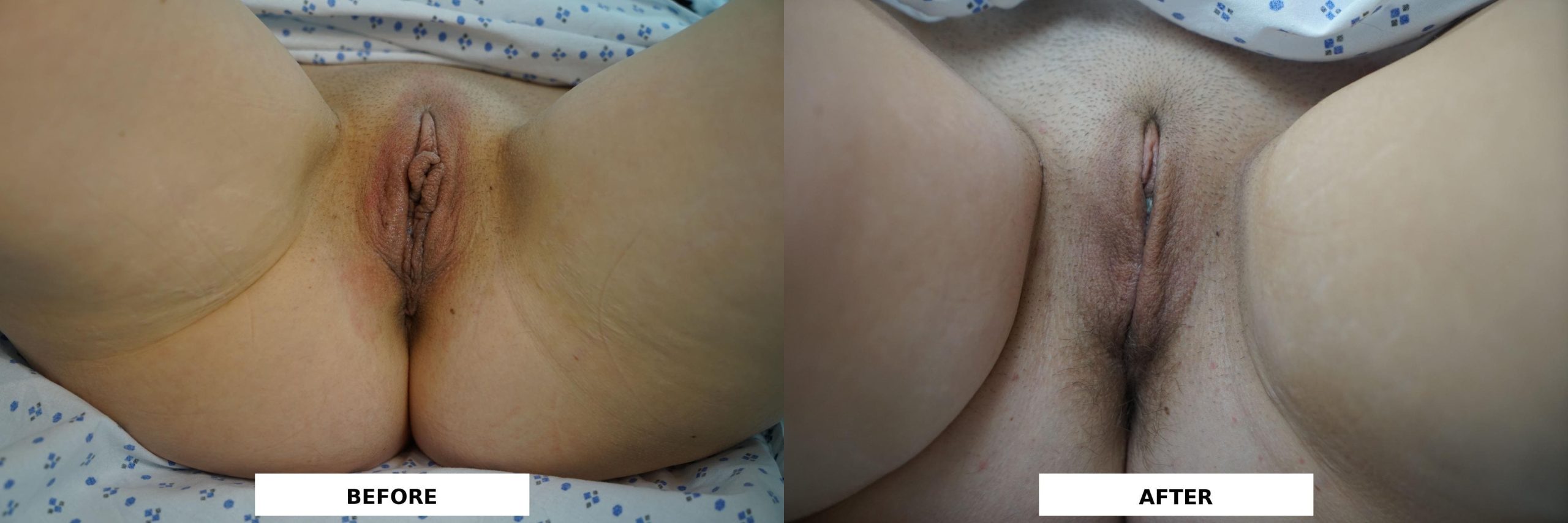
Photos help you understand what surgery can and cannot change, but results differ and cannot be guaranteed. Our guide to what labiaplasty before and afters can show explains how to look at them realistically.
Laser Labiaplasty in the UK
Some clinics advertise laser labiaplasty, meaning a laser is used instead of a scalpel for the cuts. The instrument alone does not decide the outcome. The surgeon’s training, skill and technique matter far more, and the technique is chosen after assessing your anatomy, so ask what is recommended for you and why.
Labiaplasty Near Me, London or Manchester
If you are searching for labiaplasty near me, a clinic you can reach for follow up is a practical advantage. Our clinic is in Leamington Spa, and patients visit us from Coventry, Birmingham, Leicester, Rugby, Banbury, Worcester and Northampton. Others travel from further afield across the United Kingdom, and online consultations are available, so living in or near London or Manchester does not rule out a consultation with us.
How Much Does Private Labiaplasty Cost in the UK?

At Renew Skin & Health Clinic, you can choose to have your labiaplasty with a Consultant Gynaecologist or a Consultant Plastic Surgeon, depending on availability. The prices are shown below, and your full cost is confirmed after your assessment.
Before booking anywhere, check what the price covers:
- The surgeon’s fee and the consultation fee, and whether they are separate
- Anaesthesia, facility charges and any medication
- Follow up appointments and aftercare support
- What happens if you need an additional appointment.
For a full breakdown, read our guide to labiaplasty Labiaplasty prices in the UK , or see current treatment details on the labiaplasty page.
Explore Labiaplasty Costs at Renew Skin & Health Clinic
Learn about the starting price, consultation arrangements and what to ask before proceeding with treatment.
View labiaplasty costs📞 Call or WhatsApp: +44 1926 422 454
What Happens During Labiaplasty Surgery?
Before Surgery
Your consultation covers your medical history, your concerns, the options, the risks and what you can realistically expect. You give informed consent only when you are ready, and you can change your mind.
During the Procedure
Labiaplasty reshapes or reduces excess tissue of the labia. At Renew it is carried out under local anaesthetic and usually takes around 60 to 90 minutes, with dissolvable stitches and same day discharge. The trim technique is commonly used, but your surgeon confirms the approach after assessing you. If you are unsure about terminology, read labia trimming explained.
Labiaplasty Recovery Time
Swelling, bruising and soreness are expected at first. Many people return to desk based work within a few days, and downtime is commonly one to two weeks. Exercise is usually delayed for four to six weeks, and intimacy should wait until your surgeon approves. Final results develop over two to three months. For more detail, read our week by week labiaplasty recovery guide. Recovery varies, and your surgeon’s instructions always take priority.
Seek advice if you notice
Contact the clinic or your GP promptly if you have increasing pain, redness or swelling, a fever, or unpleasant smelling discharge. Go to A&E or call 999 if bleeding is heavy and does not stop with firm pressure. If you are unsure where to go, call NHS 111.
Is Labiaplasty Right for You?
Labial appearance varies naturally, and surgery is not necessary just because yours looks different from images in the media. Labiaplasty suits some people, particularly those with ongoing discomfort, but it is a real operation. It is important to have realistic expectations and to understand the risks, which our guide to labiaplasty risks and side effects explains honestly. Many people also ask whether it affects feeling, which is covered in does labiaplasty affect sensation.
If your concern is mainly the tissue around the clitoris, you may be considering a different procedure, so see clitoral hood reduction vs labiaplasty. Simple measures such as comfortable clothing and good hygiene can also help some people, and a clinician can advise.
People under 18 should not have cosmetic labiaplasty, because the labia continue to develop into early adulthood. If you are under 18 and worried, please speak to your GP. Consultations at Renew are for adults.
Why Consider Renew Skin & Health Clinic for Private Labiaplasty?
Renew Skin & Health Clinic is a CQC registered private clinic at 18 Guy Street, Leamington Spa, rated 4.9 stars from 850+ Google reviews. Consultations are private and confidential. You can choose to have your labiaplasty with our Consultant Gynaecologist or our Consultant Plastic Surgeon, depending on availability. The right choice depends on your preference, your assessment and who is available when you would like to be seen, and a recommendation for surgery is never guaranteed
| Details | Mr Amit Palchaudhuri | Consultant Plastic Surgeon |
|---|---|---|
| Role | Consultant Plastic, Reconstructive and Aesthetic Surgeon | Consultant Plastic, Reconstructive and Aesthetic Surgeon |
| GMC Number | 4752356 | Confirmed when you book your consultation |
| Qualifications & Experience | Experienced Consultant Gynaecologist and Honorary Associate Clinical Professor at the University of Birmingham. Former Postgraduate College Tutor for the Royal College of Obstetricians and Gynaecologists and former Clinical Director of Obstetrics and Gynaecology at University Hospitals Birmingham NHS Trust. | Your plastic surgeon’s name and qualifications are confirmed when you book, depending on availability |
| Price | From £2,599, plus £300 consultation | From £3,599, plus £300 consultation |
References
The following official resources provide further information about NHS labiaplasty eligibility, local funding policies and checking registered healthcare providers.
- NHS: Labiaplasty (Vulval Surgery) – Information about NHS availability, the procedure, risks and choosing a surgeon.
- NHS England: Clinical Commissioning Policy – Urology and Gynaecology Procedures – Guidance on commissioning labiaplasty and related procedures in the circumstances covered by the policy.
- Care Quality Commission (CQC) – Check the registration status of relevant healthcare providers in England.
- General Medical Council (GMC): Medical Register – Check a doctor's registration and licence to practise, and review relevant specialist registration details.
NHS funding criteria can vary by location and may change. Contact your GP or local NHS commissioning body to confirm the current policy that applies to your area.
Considering Private Labiaplasty in Leamington Spa?
Speak to Renew Skin & Health Clinic about arranging a consultation to discuss your concerns, suitability, expected outcomes, risks and recovery. There is no obligation to proceed.
Frequently Asked Questions
1. Can you get labiaplasty on the NHS for free?
Sometimes, but only in limited medical cases. The NHS does not usually fund labiaplasty for cosmetic reasons. It may be considered for reasons such as injury, a childbirth tear, a congenital difference or cancer related treatment, and only when local funding rules and a clinical assessment support it. Your GP can tell you what applies in your area.
2. What are the NHS labiaplasty eligibility criteria??
There is no single national checklist. Each local NHS area sets its own funding policy, and most treat labiaplasty as cosmetic unless there is a clear medical need. To find out how to qualify for labiaplasty on the NHS, book a GP appointment, describe your symptoms in detail and ask which policy applies to you.
3. Is there a waiting list for labiaplasty on the NHS??
There is no single national waiting time for labiaplasty on the NHS, because treatment is only funded in limited cases. If your GP refers you, the wait depends on your area and on the specialist service, such as gynaecology or plastic surgery. Ask your GP or your local integrated care board what to expect.
4. Is labiaplasty available on the NHS for discomfort or pain??
Discomfort alone does not guarantee NHS funding. Rubbing, chafing or pain with exercise should be assessed by a clinician first, because other conditions can cause similar symptoms. Some local policies consider surgery for persistent, significant physical symptoms, but others do not, and each case is judged individually.
5. Can I appeal if the NHS refuses labiaplasty?
You can ask how the decision was made and whether a review or an individual funding request applies in your area. These routes are usually supported by your GP or specialist, and they are normally for exceptional clinical circumstances. An appeal or request does not guarantee approval.
6. Can I have private labiaplasty after being refused by the NHS??
Yes, adults can choose private labiaplasty after an NHS refusal, if a surgeon agrees that surgery is suitable for them. An NHS refusal does not stop you from seeing a private surgeon. A consultation lets you discuss your symptoms, expectations, risks, recovery and cost before you decide.
7. How much does labiaplasty cost privately in the UK??
Private labiaplasty in the UK is commonly quoted at around £2,500 to £4,500, depending on the surgeon, clinic and setting. At Renew Skin & Health Clinic, treatment starts from £2,599 with a Consultant Gynaecologist or £3,599 with a Consultant Plastic Surgeon, plus a £300 consultation, subject to assessment. You can choose a Consultant Gynaecologist or a Consultant Plastic Surgeon, depending on availability.
8. How long does labiaplasty recovery take?
Most people need around one to two weeks of reduced activity, although full healing takes longer. Many return to desk based work within a few days. Exercise is usually delayed for four to six weeks, intimacy waits for medical approval, and final results develop over two to three months. Your surgeon’s advice always takes priority.
9. How do I choose a qualified labiaplasty surgeon?
Check that the clinic is registered with the Care Quality Commission and that the surgeon is on the General Medical Council register. Ask about their training, how often they perform labiaplasty, what complications can happen, and what follow up is included. Compare these points as well as price.
10. Do I need a GP referral for private labiaplasty?
A GP referral is not normally required to book a private consultation, but policies differ between clinics, so please check when you enquire. Telling your GP is still sensible, especially if you have symptoms such as irritation or pain, because they can check for other causes.