
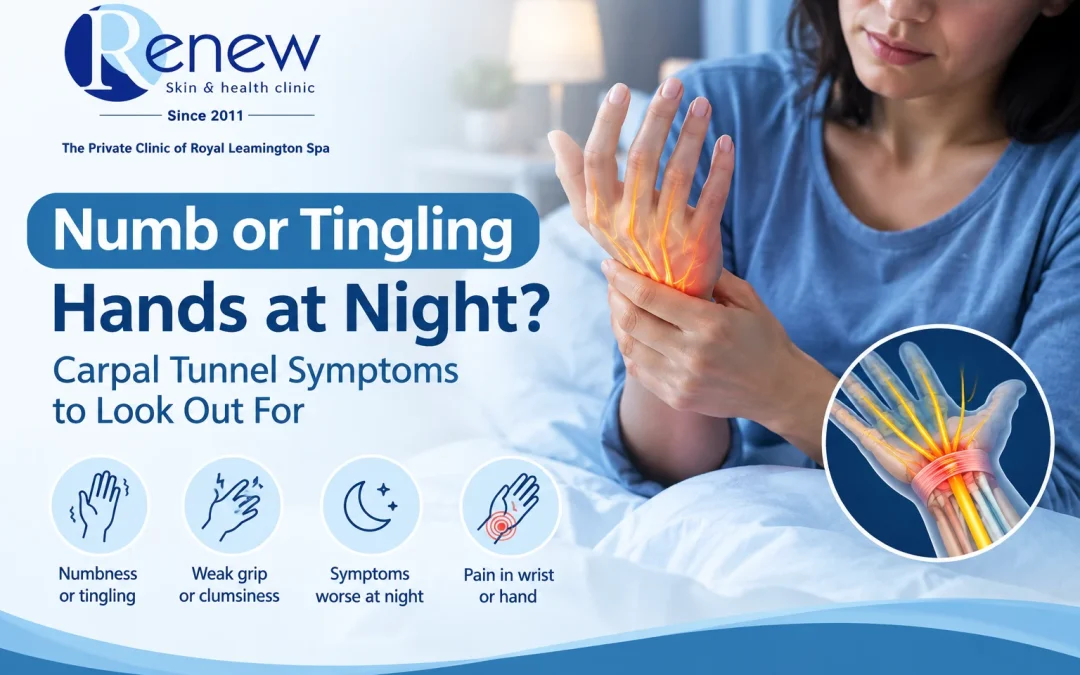
Waking up with a hand that has gone completely numb, or shaking out tingling fingers after driving or scrolling your phone, is easy to dismiss the first few times it happens. But when numbness in fingers at night becomes a regular pattern, it is often one of the clearest early symptoms of carpal tunnel syndrome, a common condition caused by pressure on a nerve at the wrist. This article explains what to look out for, what is actually happening in your hand, and when it is worth seeing someone about it.
Table Of Contents
Request a call back
Carpal Tunnel Syndrome Symptoms Checklist

Carpal tunnel syndrome has a fairly recognisable pattern once you know what to look for. The following symptoms, especially the first two together, point strongly toward carpal tunnel rather than general hand tiredness or a trapped nerve from sleeping awkwardly.
- Numbness or tingling in hands, especially the thumb, index, middle, and half of the ring finger
- Symptoms that are noticeably worse at night, sometimes waking you from sleep
- A sensation of needing to shake your hand out to get feeling back
- Weakness when gripping objects, or dropping things more often than usual
- Symptoms triggered or worsened by driving, typing, or holding a phone for a while
If several of these sound familiar, particularly the combination of night- time numbness and tingling in those specific fingers, carpal tunnel syndrome is a reasonable explanation worth having properly assessed.
What Is Happening in Your Hand?
Carpal tunnel syndrome happens when the median nerve, which runs from your forearm into your hand through a narrow passage at the wrist, becomes compressed. This is why symptoms follow such a specific pattern, affecting the thumb, index, and middle fingers rather than the whole hand. Symptoms are often worse at night because many people sleep with their wrists bent, which narrows the passage further and increases pressure on the nerve.
Carpal Tunnel Syndrome vs Osteoarthritis
It is common to wonder whether hand symptoms are carpal tunnel syndrome or osteoarthritis, since both become more common with age and can cause discomfort in the same general area. The two are different conditions with different patterns.
| Carpal Tunnel Syndrome | Osteoarthritis | |
|---|---|---|
| Main sensation | Numbness and tingling | Aching and stiffness |
| Pattern | Thumb, index, middle, half of ring finger | Joints themselves, often fingertips and base of thumb |
| Worse at night | Classic, very common feature | Less typical |
| Cause | Nerve compression at the wrist | Wear and tear of the joint surfaces |
Some people do experience both conditions at once, which is another reason a proper assessment is more reliable than guessing from symptoms alone.
What Causes Carpal Tunnel Syndrome?
- Repetitive hand or wrist movements, including typing and manual work
- Pregnancy, due to fluid retention increasing pressure in the wrist. Carpal tunnel symptoms during pregnancy often ease after delivery
- Underlying conditions such as diabetes or thyroid problems
- A wrist injury or previous fracture
- In some cases, no single clear cause is identified
Does Carpal Tunnel Syndrome Go Away on Its Own?
A common and honest question is whether carpal tunnel syndrome goes away without any treatment. In mild cases, particularly when linked to a temporary cause such as pregnancy, symptoms can ease on their own. But for most people, carpal tunnel syndrome does not reliably resolve by itself, and symptoms that are left unaddressed can gradually worsen, sometimes leading to persistent numbness or weakness in the hand. This is why early symptoms are worth taking seriously rather than waiting to see if they pass.
When to See a Specialist
- Symptoms have been present for several weeks or more
- Numbness or tingling is affecting your sleep regularly
- You are noticing weakness or dropping objects more often
- Symptoms are affecting your work or daily activities
A specialist assessment, sometimes supported by a nerve conduction study (a nerve test for carpal tunnel), confirms the diagnosis and how severe the nerve compression is, which guides the right next step for your specific case.
What Can Help, From Splinting to Surgery?
Treatment for carpal tunnel syndrome usually follows a clear ladder. A wrist splint, worn especially at night, is often tried first and can meaningfully reduce symptoms without surgery in early or mild cases. Where splinting is not enough, an injection is often the next step, with surgery considered when symptoms are persistent, progressive, or affecting hand strength and function.
If an injection is recommended, your consultant will also explain what to expect afterwards. If surgery becomes the right option, recovery is generally described week by week rather than all at once, since most people improve steadily over the following weeks. Delete this sentence, or link the recovery guide only once that page is live.
At Renew Skin and Health Clinic in Leamington Spa, Mr Amit Amit, Consultant Neurosurgeon, assesses each patient individually to recommend the right option, whether that is splinting advice, an injection, or private carpal tunnel surgery for patients travelling to Leamington Spa from across the UK. You can read the full details, including current pricing, on our Carpal Tunnel Syndrome Treatment page. or read more about Mr Amit Amit specialist profile.
Request a call back
Book Your Consultation

If your symptoms match what is described in this article, book a consultation with Mr Ami Amit to discuss an assessment.
Call: +44 1926 422 454
WhatsApp: +44 1926 422 454
Email: info@renewskinandhealthclinic.co.uk
Address: Renew Skin & Health Clinic, 18 Guy Street, Leamington Spa, CV32 4RT, United Kingdom
Opening Hours: Monday to Friday, 10:00 AM – 6:00 PM (Telephone lines open daily 9:00 AM – 10:00 PM, including weekends)
Medically Reviewed
Mr Amit Amit, Consultant Neurosurgeon, GMC 6047850, entered on the GMC Specialist Register in Neurosurgery, over 25 years of experience. Reviewed October 2026. |
Frequently Asked Questions
1. What are the first signs of carpal tunnel syndrome?
Numbness or tingling in the thumb, index, middle, and half of the ring finger, often worse at night, is usually the earliest noticeable symptom.
2. Why are my hands worse at night?
Many people sleep with their wrists bent, which narrows the passage the median nerve runs through and increases pressure on it, making night time symptoms a classic feature of carpal tunnel syndrome.
3. Does carpal tunnel syndrome go away on its own?
In mild or temporary cases, such as during pregnancy, symptoms can ease without treatment. For most people, however, it does not reliably resolve on its own, and untreated symptoms can gradually worsen.
4. How is carpal tunnel syndrome different from osteoarthritis?
Carpal tunnel syndrome typically causes numbness and tingling in specific fingers, often worse at night, from nerve compression at the wrist. Osteoarthritis causes aching and stiffness in the joints themselves, without the same nerve related pattern.
5. Can pregnancy cause carpal tunnel syndrome?
Yes. Fluid retention during pregnancy can increase pressure in the wrist and bring on carpal tunnel symptoms, which often ease again after delivery.
6. Do I need a nerve conduction study?
A nerve conduction study is not always required to start treatment, but it is typically needed before surgery, since it confirms the diagnosis and how severe the nerve compression is.
7. Will a wrist splint actually help?
A wrist splint, particularly worn at night, can meaningfully reduce symptoms in early or mild cases, and is usually the first thing tried before considering injection or surgery.
8. When is surgery needed for carpal tunnel syndrome?
Surgery is generally considered when symptoms are persistent, progressive, or affecting hand strength and function, particularly where splinting or injection have not given lasting relief.
9. Can carpal tunnel syndrome affect both hands?
Yes, it is common for both hands to be affected, though one side is often more severe than the other.
10. How do I book an assessment for carpal tunnel symptoms?
You can book a consultation with Mr Amit, Consultant Neurosurgeon, at Renew Skin and Health Clinic in Leamington Spa by calling +44 1926 422 454.