

No. Pearly penile papules are not dangerous. They are a benign anatomical variation, not an infection, not a sexually transmitted disease, and not linked to cancer or any internal health problem. They are also extremely common, affecting a significant proportion of men, and once diagnosed they require no medical treatment unless you personally want them removed for appearance or confidence. At Renew Skin and Health Clinic in Leamington Spa, Dr Jha assesses and, where wanted, removes pearly penile papules using CO2 laser, radiosurgery, and hyfrecation, with prices from £625.
What Are Pearly Penile Papules?

Pearly penile papules, often shortened to PPP, are small, smooth, dome shaped bumps that form in one or two neat rows around the corona, which is the rim where the head of the penis meets the shaft. They are usually flesh coloured, pearl white, or slightly translucent, uniform in size, and stable over time. They are caused by a harmless clustering of tissue called hirsutoid papillomas, which develop naturally during adolescence or early adulthood in some men and simply never go away on their own.
PPP is not caused by poor hygiene, sexual activity, or any infection. It is closer to a fingerprint or a mole in nature, a variation of normal anatomy rather than a medical condition that needs treating.
Client Interview Videos
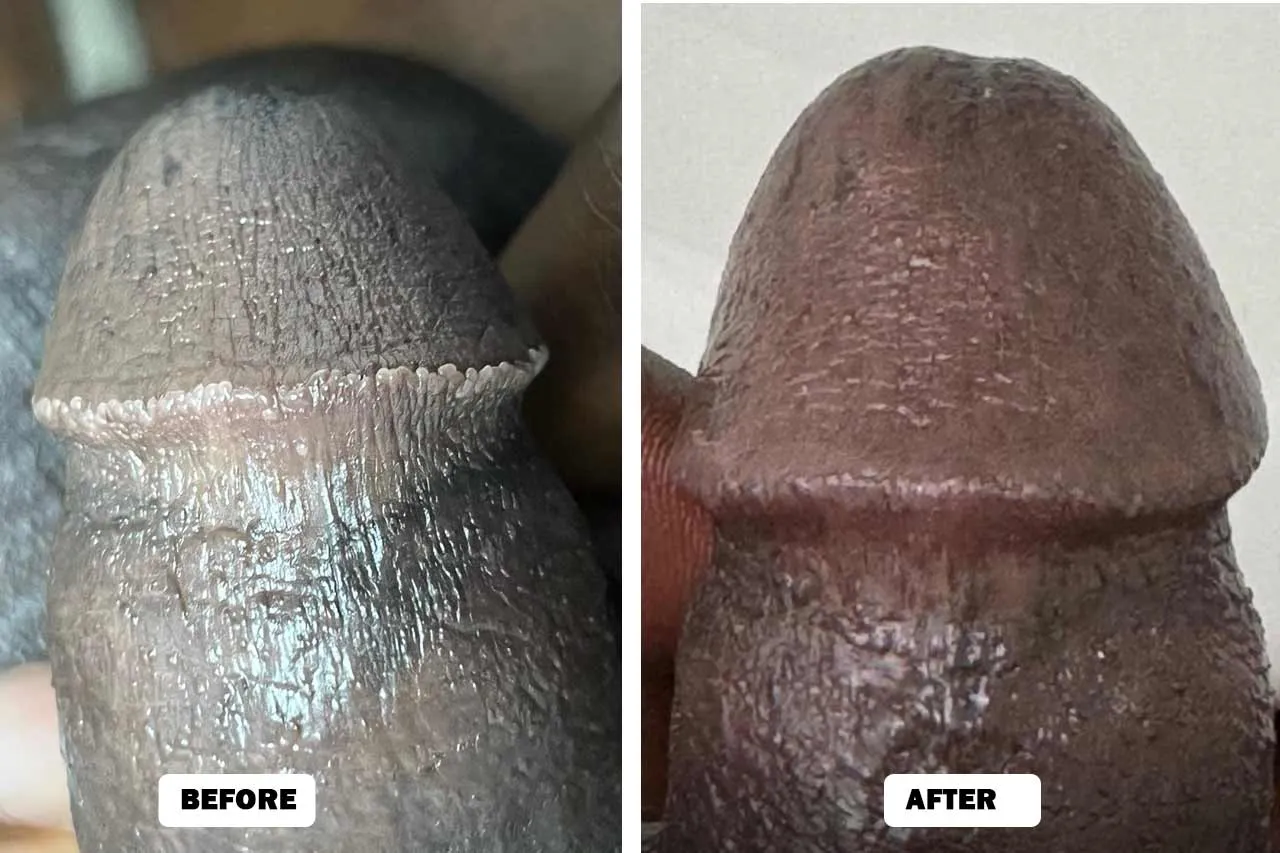


Is PPP Dangerous?
This is the single biggest worry men have when they first notice these bumps, and the honest answer is reassuring. Pearly penile papules are not dangerous in any medical sense. They carry no risk of cancer, no risk of infertility, no link to any internal disease, and they do not spread to other parts of the body. They are not contagious, so a partner cannot catch them, and they will not get worse or multiply over time once they have appeared.
The bumps themselves cause no pain, no discharge, no bleeding, and no itching. If any of those symptoms are present, what you are looking at is very likely not PPP, and a different explanation should be considered, which is covered in the next section.
PPP vs STI: Why the Confusion Happens
Most of the anxiety around PPP comes from one single fear, that the bumps might be a sexually transmitted infection such as genital warts. This confusion is understandable, since both conditions can appear as small bumps in the same general area, but the two are completely different in cause, behaviour, and risk.
PPP is not an STI. It cannot be transmitted to a partner through sex or any other kind of contact, and it does not appear because of any virus or infection. Genital warts, by comparison, are caused by human papillomavirus, tend to look irregular and can vary in size, and typically change or spread over time if untreated. PPP is the opposite on every point, uniform, stable, and permanent without any change.
If you want a deeper visual and clinical comparison, our guide on pearly penile papules vs Fordyce spots and our guide to white bumps on the penis both walk through how to tell PPP apart from other look alike conditions.
Quick Comparison: PPP vs Look Alike Conditions
| Feature | Pearly Penile Papules | Genital Warts | Fordyce Spots |
|---|---|---|---|
| Cause | Benign anatomical variation | HPV infection | Visible sebaceous glands |
| Contagious | No | Yes | No |
| Dangerous | No | Requires monitoring | No |
| Appearance | Uniform rows at the corona | Irregular variable size | Small yellowish spots |
| Changes over time | No | Often grows or spreads | No |
| Goes away on its own | No | Sometimes with treatment | No |
When Should You Actually Be Concerned?
While PPP itself is never dangerous, it is still worth knowing which symptoms are not consistent with PPP and deserve a proper medical check. Book an assessment if you notice any of the following.
- Bumps that are painful, itchy, or bleed
- Discharge or an unusual smell
- Bumps that change shape, grow, or spread over a matter of weeks
- Bumps that appear suddenly after a new sexual partner
None of these are typical PPP behaviour. If any apply to you, a free clinical assessment with Dr Jha at Renew Clinic will confirm exactly what you are dealing with within a single appointment, ruling out genital warts or another condition definitively.
How Common Is PPP?
PPP is far more common than most men realise, which is exactly why the anxiety around it is so unnecessary. Clinical literature estimates that a substantial proportion of men have some degree of PPP, and many never notice it or never seek treatment because it causes no physical problem. If you have PPP, you are not an outlier, you are one of a very large number of men with the exact same, entirely normal, presentation.
Should You Remove PPP If It Is Not Dangerous?
Since PPP is not dangerous, removal is always a personal choice rather than a medical necessity. Men who choose to move forward with removal usually do so for one of these reasons.
- Reduced confidence during intimacy
- Anxiety about a partner noticing or misunderstanding the bumps
- A simple personal preference for smoother appearance
There is no wrong choice here. Some men live with PPP for life without any issue, while others prefer the certainty and confidence that comes with removal. If you are unsure, our guide on whether PPP goes away on its own explains why the bumps are permanent without treatment, which helps many men decide.
A Word of Caution on Self Treatment
Because PPP is harmless, some men are tempted to try removing it themselves at home, including picking, popping, or applying unregulated creams. This carries a real risk of scarring, infection, and permanent damage to sensitive penile skin, for a condition that was never dangerous to begin with. Our detailed guide on whether you should pop pearly penile papules explains exactly why this approach should be avoided, and our guide on safe treatment for pearly penile papules covers the options that are actually clinically safe.
Professional Removal at Renew Skin & Health Clinic
At Renew Skin and Health Clinic in Leamington Spa, Dr Nawal Jha, Cosmetic Physician with close to 35 years of clinical experience, performs pearly penile papule removal using three proven methods. The consultation is free, the procedure is carried out as an outpatient appointment, and all options include full aftercare.
| Treatment | Price | Best For |
|---|---|---|
| Hyfrecation | From £625 | Cost accessible, suitable for most cases |
| Radiosurgery | From £875 | Precision removal with minimal downtime |
| CO2 Laser Removal | From £1,075 | Gold standard, best cosmetic result |
VAT Information
VAT applies to cosmetic treatments only.
Medical treatments are assessed for VAT exemption at consultation.
All three options include the consultation, all aftercare, daily WhatsApp follow ups until healed, and a lifetime guarantee. 0% finance is available. For full pearly penile papule removal cost details and before and after results, visit the main PPP treatment page.
Request a call back
Book Your Free PPP Consultation at Renew Skin & Health Clinic
Consultations are free and confidential. Dr Jha can confirm your diagnosis and discuss treatment at the same appointment, with no obligation to proceed.
Call: +44 1926 422 454
WhatsApp: +44 1926 422 454
Email: info@renewskinandhealthclinic.co.uk
Address: Renew Skin & Health Clinic, 18 Guy Street, Leamington Spa, CV32 4RT, United Kingdom
Opening Hours: Monday to Friday, 10:00 AM – 6:00 PM (Telephone lines open daily 9:00 AM – 10:00 PM, including weekends)
Frequently Asked Questions
1. Are pearly penile papules dangerous?
No. PPP is a benign anatomical variation with no link to cancer, infection, or any internal disease. It is not contagious and cannot be passed to a partner.
2. Are pearly penile papules an STI?
No. PPP is not caused by a virus, bacteria, or any sexually transmitted agent. Genital warts, which are caused by HPV, can look similar but are irregular, variable in size, and behave very differently over time.
3. Can I remove PPP myself?
It is not recommended. Picking, popping, or using unregulated creams at home carries a real risk of scarring and skin damage. Professional removal by a qualified clinician is the only safe and effective option.
4. Does PPP in men go away on its own?
No. Once established in adulthood, pearly penile papules are permanent and do not resolve without treatment. They also do not get worse, so leaving them untreated carries no medical risk if you choose not to remove them.
5. What percentage of men have pearly papules?
PPP is considered a common finding, with a meaningful proportion of men affected to some degree. Many cases go unnoticed or untreated simply because the bumps cause no physical symptoms.
6. Can PPP be on the tip of the penis?
PPP typically appears at the corona, the ridge where the glans meets the shaft, rather than at the very tip. Bumps appearing directly on the tip or opening of the penis should be assessed to rule out a different cause.
7. What are the side effects of pearly penile papules?
PPP itself has no side effects. It causes no pain, no discharge, no itching, and no bleeding. Any of those symptoms suggest a different condition and warrant a clinical check.
8. Is it normal to have pearly penile papules?
Yes. PPP is a normal anatomical variation rather than a medical abnormality. It is comparable to other harmless features of individual anatomy and is not something to be ashamed of or worried about.
9. How much does pearly penile papule removal cost?
Removal at Renew Skin and Health Clinic starts from £625 for hyfrecation, £875 for radiosurgery, and £1,075 for CO2 laser. The consultation is free and 0% finance is available.
10. Can I book a free consultation to check if my bumps are PPP?
Yes. The consultation with Dr Jha at Renew Clinic is completely free. He will assess the presentation visually, confirm the diagnosis, and discuss removal options if you want them. Book by calling or WhatsApp messaging the clinic on +44 1926 422 454.