
Medically reviewed by Dr. Nawal Kishore Jha, Lead Dermatologist at Renew Skin & Health Clinic, Leamington Spa.
A scar that keeps growing, itching, or thickening long after a wound has healed can be confusing and, for many people, a source of real self consciousness. This is often the story of a keloid scar, a raised, overgrown scar tissue that behaves very differently from an ordinary scar. Whether you are dealing with a single small keloid scar on an earlobe from a piercing or a larger one on the chest or shoulder, understanding why it forms is the first step towards treating it effectively.
At Renew Skin & Health Clinic in Leamington Spa, we see patients from across the UK who are looking for clear answers and safe, personalized treatment for keloid scarring. In this guide, we explain what causes keloid scars, how they differ from normal scars, and the treatment options our specialists use to reduce their Size and appearance.
What Is a Keloid Scar?
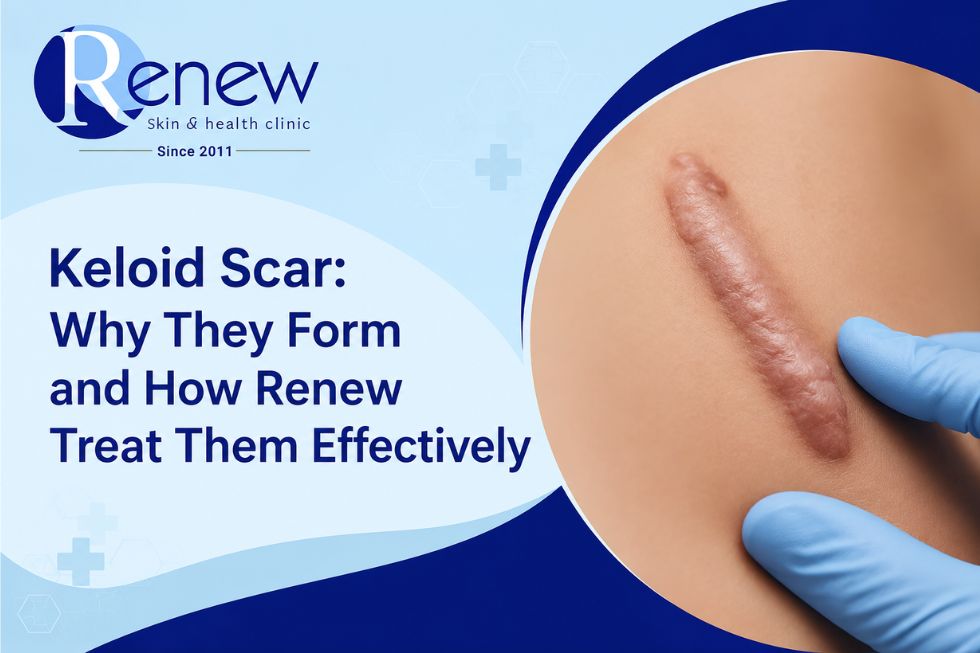
A Keloid scar is a hard, elevated region of scar tissue that forms as the skin creates excessive collagen in the process of healing. In contrast to a normal scar that stays within the limits of the wound, however, a keloid can extend beyond the boundaries of the wound and may grow over a period of months, or perhaps years.
Keloids are usually smooth on the surface and can appear pink, red, purple, or darker than the surrounding skin, depending on your natural skin tone. They can develop after almost any form of skin trauma, including:
- Ear piercings
- Surgical incisions
- Acne breakouts
- Burns
- Cuts, scrapes, or insect bites
- Vaccination sites
Some scars remain small and localized, while others grow into large, raised areas that extend well beyond the original wound.
Why Do Keloid Scar Form?
The exact reason some people develop keloid scars while others heal with a flat, faint scar is still being researched, but several contributing factors are well recognized:
1. An Overactive Healing Response
During normal healing, the body makes collagen to help repair skin damage. For people who are susceptible to Keloids, this process does not stop at the appropriate time, and collagen continues to build and create thickened, raised tissue.
2. Genetics and Family History:
If your parent or sibling has been diagnosed with keloid scars, you are more likely to develop them as well. This genetic link is among the most powerful recognized risk factors.
3. Skin Tone
Keloid scars are more common in people with darker skin tones, although anyone, regardless of ethnicity, can develop one.
4. Location of the Injury:
Certain areas of the body are more prone to keloid formation, including the chest, shoulders, upper back, earlobes, and jawline, likely due to skin tension in these regions.
5. Age:
Keloids most frequently develop in people between the ages of 10 and 30, although they can appear at any age.
Small Keloid Scars vs Large Keloid Scars
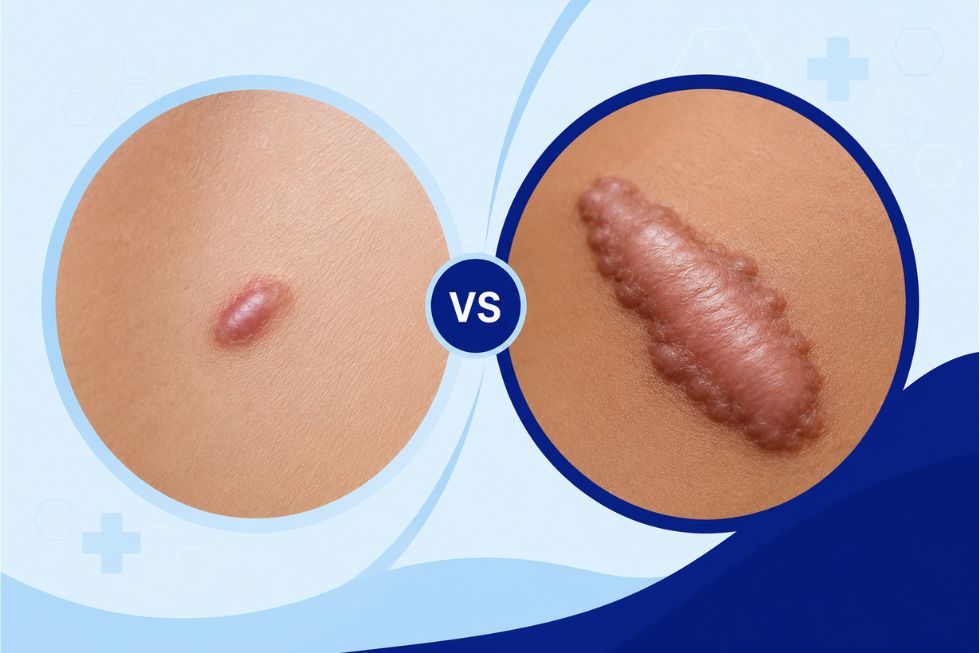
Not every keloid looks the same, and the Size of the scar often influences which treatment is recommended.
Small keloid scars typically develop after minor trauma such as ear piercings, small cuts, or acne lesions. They are often raised, firm, and localized to a small patch of skin, but they can still itch, feel tender, or catch on clothing and jewellery. Many patients are surprised that even a small keloid scar can be persistent and slow to respond to home remedies, which is why an early professional assessment is worthwhile.
Larger keloid scars are more likely to appear following surgical incisions, burns, or more severe skin injuries. They can extend far beyond the initial wound, and then become more firm as time passes and may require an array of treatments to treat effectively.
Regardless of Size, keloid scars rarely disappear without some form of intervention, so understanding your options early can help prevent further growth.
Common Symptoms of Keloid Scar
While the appearance of a keloid can vary from person to person, common symptoms include:
- Raised, thickened, or lumpy scar tissue
- A smooth, shiny skin surface
- Itching or a prickling sensation
- Tenderness or discomfort, especially with friction
- Gradual enlargement beyond the original wound
- A firm texture that may feel tight when the skin moves
If you notice a scar that continues to grow, itches persistently, or feels increasingly firm, it is worth having it assessed by a dermatology specialist.
Are Keloid Scars Dangerous?
Keloid scars are not usually a medical danger and are not cancerous. However, they can cause ongoing physical discomfort, restrict movement if they form over a joint, and affect a person’s confidence, particularly when they develop on visible areas such as the face, neck, or ears. For these reasons, many people choose to pursue treatment for both comfort and cosmetic reasons rather than leaving a keloid untreated.
How Renew Skin & Health Clinic Treats Keloid Scar Effectively
At Renew Skin & Health Clinic, our specialists assess every keloid scar individually before recommending a treatment plan, taking into account its Size, location, age, and your skin type. We offer several evidence based options, often combined for the best long term results.
1. Laser Treatment for Keloid Scars
Laser therapy is among the most popular methods for keloid scar reduction. It targets the scar tissue in order to improve its texture, flatten the surface, and reduce redness, with a minimum of downtime. This procedure is especially popular for patients who have small keloid like scars on the face or ears, where the most precise minimally invasive procedure is preferred.
2. Steroid Injections
Corticosteroid injections are a great option to decrease inflammation and excessive collagen production in the scar. The injections relax and smooth the keloid following several sessions. They are often utilized in conjunction with other treatments to get more effective results.
3. Surgical Keloid Removal
For more extensive or established scars from keloid, surgical removal could be the best option. The procedures we offer are performed by highly skilled plastic surgeons registered on the GMC specialist register. They are often followed by follow up treatments, such as laser therapy or steroid injections, to minimize the risk of keloid recurrence.
4. Combination Therapy
Many of our patients achieve the best long term outcomes through a combined approach, such as surgical removal followed by steroid injections and laser therapy. This integrated strategy is especially useful for larger keloids or scars that have previously returned after a single treatment.
What to Expect at Your Consultation
Every treatment plan begins with a thorough, personalized consultation. Our specialists will examine the scar, discuss your medical and healing history, and explain the realistic outcomes you can expect based on the Size and location of your keloid. Treatment for keloid scars at Renew Skin & Health Clinic starts from £175, with the final cost depending on the Size, type, and location of the scar.
Related Skin Concerns We Treat
Keloid scars are often seen alongside or are often mistaken for different visible changes to the skin. The clinic we have in Leamington Spa provides comprehensive dermatology treatment for a range of skin conditions that include:
- If you have noticed yellowish deposits around your eyes, our specialists offer xanthelasma removal using precise CO2 laser technology.
- Sun related pigmentation is also common alongside scarring concerns; if you are searching for age spot removal near me, our team can assess and treat these safely.
- Raised, waxy patches of skin that thicken over time may be seborrheic keratoses, and if you are looking for seborrheic keratosis removal near me, our specialists can confirm the diagnosis and recommend suitable removal options.
- For patients concerned about moles anywhere on the body, including those researching mole removal near me, we offer thorough skin checks and safe removal.
- We understand that some concerns are more sensitive; for patients dealing with moles in genital area, our clinic offers a discreet, respectful assessment process.
- Patients who prefer complete confidentiality for intimate skin concerns can also enquire about Private Mole Removal appointments with our specialists.
- We also examine and treat common skin conditions like skin warts, skin tags and small bumps on the eyelids, including eyelid skin tags.
- Other conditions we regularly manage include fibrous papule, angiokeratoma, venous lake removal, molluscum contagiosum, genital warts, and port wine stain removal.
- If your scarring is linked to a hair or scalp concern, our hair loss treatment service may also be relevant.
If you are unsure whether your scar or skin concern needs professional attention, our team is always happy to assess it during a free consultation.
Why Choose Renew Skin & Health Clinic for Keloid Scar Treatment?
Led by Dr. Nawal Kishore Jha, Renew Skin & Health Clinic has been providing dermatology, cosmetic, and laser treatments in Leamington Spa since 2010. Patients choose us for:
- CQC Registered Clinic
- Certified Medical Staff, including plastic surgeons on the GMC specialist register
- Same Day Appointments
- 24/7 Doctor Aftercare
- Customized Treatment Plans based on the type of skin you have Size of scars, and your medical background
Advanced dermatology and laser technology
All keloid procedures are carried out with careful clinical assessment, so you receive a treatment plan suited specifically to your scar rather than a one size fits all approach.
Request a call back
Book Your Free Keloid Scar Consultation
If a keloid scar is affecting your comfort or confidence, our specialists at Renew Skin & Health Clinic are here to help with safe, effective, and personalized care.
Call: +44 1926 422 454
WhatsApp: +44 1926 422 454
Email: info@renewskinandhealthclinic.co.uk
Address: Renew Skin & Health Clinic, 18 Guy Street, Leamington Spa, CV32 4RT, United Kingdom
Opening Hours: Monday to Friday, 10:00 AM – 6:00 PM (Telephone lines open daily 9:00 AM – 10:00 PM, including weekends)
Frequently Asked Questions
1. What is a keloid scar?
A Keloid scar is a raised, thickened layer of scar tissue that develops due to the production of excessive collagen as it heals. In contrast to normal scars, it expands beyond the edges of the original wound and could grow larger as time passes.
2. What is the main cause of keloid scars?
The most important reason is an overactive healing response, where the skin continues to produce collagen even after the wound is closed. Genetics, skin tone, and the site of the wound also play a major role in the development of keloids.
3. Can small keloid scars grow larger over time?
Yes, even small keloid marks such as those caused by small cuts or ear piercings are prone to growing larger in the absence of treatment. Early detection can help control the growth before it becomes evident.
4. Do keloid scars go away on their own?
Keloid scars are rarely eliminated without treatment. They can soften slightly over time, but they will always require professional intervention like laser therapy, injections of steroids or surgical removal for significant improvement.
5. What treatments does Renew Skin & Health Clinic offer for keloid scars?
We offer laser treatment, steroid injections, surgical keloid removal, and combination therapy, tailored to the Size, age, and location of each scar following a personalized consultation.
6. Are keloid scars painful?
Some keloid scars cause itching, tenderness, or discomfort, particularly if they rub against clothing or jewellery. Others are painless but visually noticeable.
7. Can a keloid scar come back after treatment?
There is a possibility of recurrence after any keloid treatment, which is why combination therapy, such as surgery followed by steroid injections, is often recommended to reduce this risk.
8. Who is most likely to develop keloid scars?
People with a family history of keloid scarring, darker skin tones, or previous keloids on other parts of the body are more likely to develop new ones after skin injury.
9. How much does keloid scar treatment cost at Renew Skin & Health Clinic?
Treatment starts from £175, with final pricing depending on the Size, type, and location of the scar as well as the treatment method recommended during your consultation.
10. How can I book a keloid scar consultation in Leamington Spa?
You can call +44 1926 422 454, WhatsApp the same number, or email info@renewskinandhealthclinic.co.uk to arrange a free consultation with our specialists at 18 Guy Street, Leamington Spa, CV32 4RT.