
Molluscum Contagiosum Treatment and Removal in Leamington Spa
HOME / Molluscum Contagiosum Treatment and Removal in Leamington Spa
Molluscum Contagiosum Removal
Molluscum contagiosum is a common viral skin infection causing small, firm, round bumps with a characteristic central dimple. It affects children and adults alike and is treated at Renew Skin and Health Clinic in Leamington Spa by Dr Nawal Jha, Cosmetic Physician, GMC 5170447, using CO2 laser and electrocautery. Consultations are free. Molluscum contagiosum treatment is available for all presentations including face, body, and genital lesions, with same week appointments and 0% finance.
Molluscum Contagiosum Treatment Photos


Molluscum Contagiosum Interview Videos
Verified Patient Reviews ⭐⭐⭐⭐⭐| Molluscum Contagiosum Treatment


Request a call back
Molluscum Contagiosum Treatment at a Glance
Table Of Contents
What is Molluscum Contagiosum?

Molluscum contagiosum (MC) is a highly contagious viral skin infection caused by the molluscum contagiosum virus (MCV), a member of the poxvirus family. It produces small, round, firm bumps on the skin typically 2 to 5mm in diameter with a characteristic pearlescent appearance and a central dimple or indentation. The bumps are painless in most cases and may appear anywhere on the body.
In children, molluscum contagiosum most commonly appears on the face, neck, armpits, and trunk, spreading through direct skin contact in school or sports environments. In adults, it can also develop in the genital area through sexual contact. Read our detailed guide on molluscum contagiosum in adults symptoms, spread and treatment for a distinct clinical presentation that warrants assessment separately from non genital molluscum.
The condition is very common it is estimated that molluscum contagiosum accounts for 1% of all diagnosed skin conditions in the UK. While it causes no systemic harm, it can persist for 6 to 18 months without treatment and spread significantly during this time, which is why many patients and parents seek professional removal.
What Causes Molluscum Contagiosum?
The single cause of all forms of molluscum contagiosum is the MCV poxvirus. There are four strains (MCV-1 through MCV-4), with MCV-1 being the most common and accounting for the vast majority of cases in children. The virus is transmitted through:
| Transmission Route | Details |
|---|---|
| Direct Skin Contact | The most common route in children through touching, hugging, shared bathing and sports activities. |
| Shared Objects and Surfaces | Towels, clothing, flannels, swimming pool surfaces and gym equipment. |
| Sexual Contact in Adults | In adults, genital molluscum contagiosum can be transmitted through close sexual contact. This presentation should always be assessed by a clinician. |
| Autoinoculation | Self spreading occurs when an existing lesion is scratched or rubbed and the virus is transferred to another area of skin. |
People with weakened immune systems, including those living with HIV or receiving immunosuppressive treatment, are more likely to develop widespread molluscum contagiosum with a larger number of lesions. Because several skin conditions can appear similar, it is also important to distinguish molluscum contagiosum from conditions such as genital warts and Fordyce spots as each requires a different approach to diagnosis and treatment.
Signs and Symptoms of Molluscum Contagiosum
The hallmark sign of molluscum contagiosum is a small, round bump with a distinctive pearlescent sheen and a central dimple. The symptoms by presentation type are:
• Size: typically 2 to 5mm in diameter, though lesions can become larger (giant molluscum) in immunocompromised individuals
• Colour: flesh coloured, white, or pearlescent occasionally with a pink surround if inflamed
• Central dimple: a characteristic small pit or indentation at the centre of each lesion (umbilication)
• Painless in most cases, though itching can occur, particularly if scratched or inflamed
• May appear in clusters or individually, with a tendency to spread over time through autoinoculation
Molluscum Contagiosum on the Face
Molluscum contagiosum on the face is particularly common in children and can appear around the eyes, on the cheeks, and on the forehead. Facial lesions are often the most distressing for families as they are visible and can spread quickly in school age children. Patients who develop bumps specifically on the eyelid area may also want to read about eyelid skin tags and milia removal which can present similarly on the face.
Request a call back
Molluscum Contagiosum vs Genital Warts: What Is the Difference
Adults who discover lesions in the genital area frequently confuse molluscum contagiosum with genital warts caused by HPV. The two conditions can look similar to an untrained eye but are clinically distinct. An experienced clinician can differentiate them in a single examination.
| Molluscum Contagiosum | Genital Warts (HPV) | |
|---|---|---|
| Cause | MCV poxvirus | Human papillomavirus (HPV) |
| STI? | Not classified as an STI. Transmission in adults can occur through sexual contact, but molluscum contagiosum has no specific sexual health implications. | Yes. It is a sexually transmitted infection. |
| Appearance | Round, smooth, pearlescent bumps with a central dimple known as umbilication. | Irregular, rough, cauliflower like growths. |
| Common in Children? | Yes. It is one of the most common childhood skin conditions. | Rare in children. |
| Contagious Through Skin Contact? | Yes | Yes |
| Treatment at Renew | CO2 laser, electrocautery and cryotherapy. | Genital Wart Removal |
If you are uncertain whether your lesions are molluscum or genital warts, a clinical assessment is the only reliable way to confirm. Self diagnosis from internet images is inaccurate and a common source of unnecessary anxiety.
Can Molluscum Contagiosum Heal on Its Own?
Yes, but with a significant caveat. Untreated molluscum contagiosum does eventually resolve without intervention as the immune system recognises and clears the virus. However, the process typically takes 6 to 18 months and during this time the lesions can:
• Spread significantly through autoinoculation to other areas of the body
• Spread to close household contacts, school friends, or sports teammates
• Cause itching and discomfort, particularly if lesions become inflamed
• Leave temporary marks or very rarely small scars if severely inflamed or scratched
For adults with genital molluscum, for children attending school or sport, and for immunocompromised individuals, waiting 6 to 18 months without treatment is not a practical option. Professional removal eliminates the lesions in one or two sessions and stops the spread immediately.
Molluscum Contagiosum Treatment Options at Renew Skin & Health Clinic
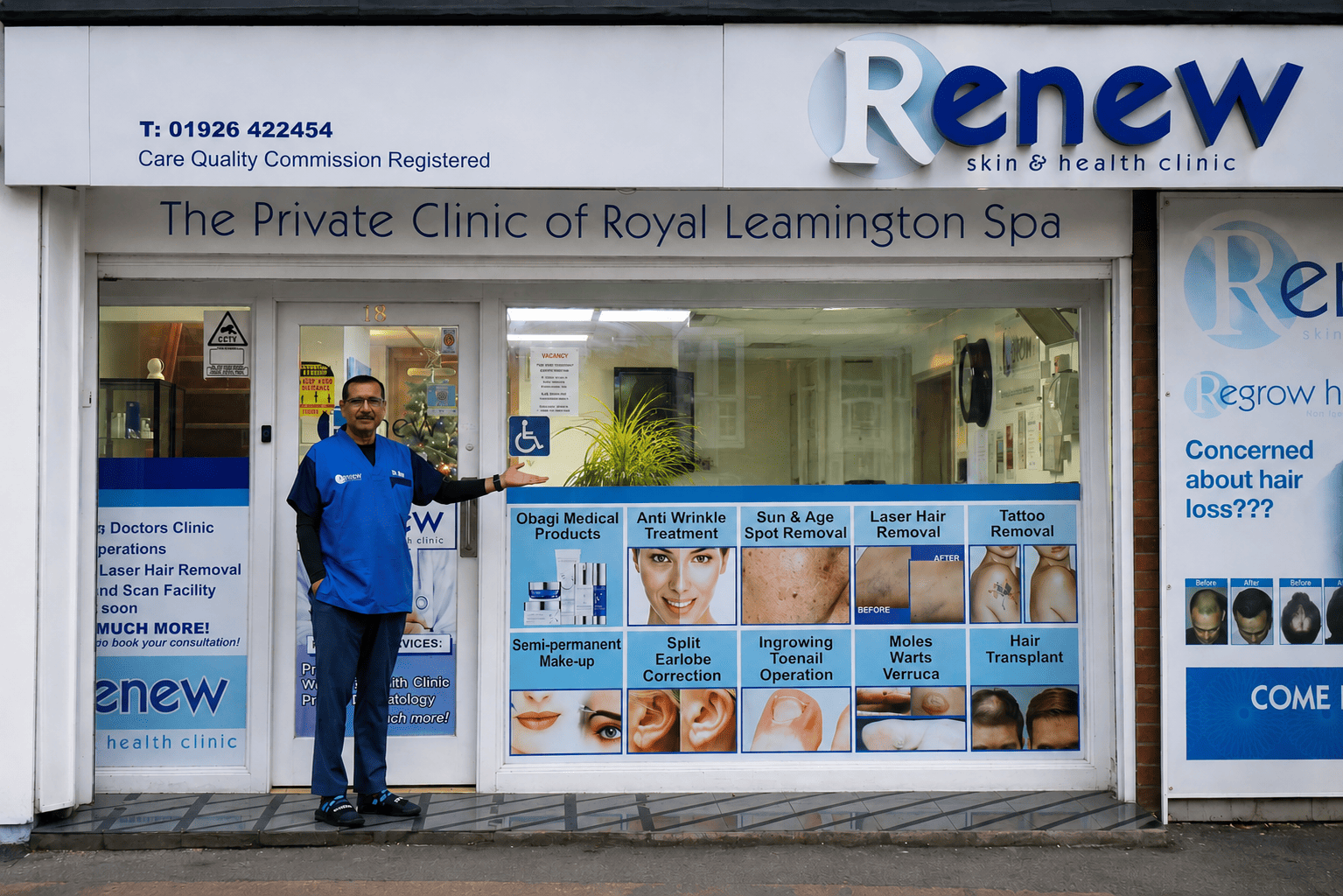
At Renew Skin and Health Clinic, molluscum contagiosum treatment is performed by Dr Nawal Jha using three clinically established removal techniques. The most appropriate method is discussed and agreed at your free consultation based on the number of lesions, their distribution, and your skin type.
| Patient Group | Recommended Treatment | Why This Method Is Preferred? |
|---|---|---|
| Adults | CO₂ Laser Treatment | Provides precise removal of lesions, excellent clearance rates, minimal scarring, and controlled healing |
| Children (10+ years) | Pulsed Dye Laser (PDL) | A gentle, non ablative laser that treats molluscum safely with reduced discomfort and minimal impact on surrounding skin. |
Treatment is performed under topical anaesthetic cream for comfort. Patients describe the sensation as a mild sting or warmth rather than pain. Most procedures are completed within 30 to 60 minutes depending on the number of lesions.
Request a call back
Aftercare Following Molluscum Contagiosum Removal
• Keep the treated areas clean and dry for 24 hours after treatment
• Do not pick or scratch any scabs that form — they fall away naturally over 7 to 14 days
• Avoid swimming pools, communal baths, or shared towels until all treated areas are fully healed
• Apply SPF 50 sunscreen to any treated areas on the face during the healing period
• Avoid tight clothing on body treated sites until healed
• For children: keep them away from school swimming lessons until fully healed
• Contact the clinic promptly if you notice increasing redness, pain, or signs of infection at any treated site
Molluscum Contagiosum Treatment Cost and Finance Options
Your final treatment cost will depend on the number and size of the lesions and will be confirmed during your free consultation before any treatment begins.
| Treatment Component | Details |
|---|---|
| Consultation | Free with Dr Jha |
| Laser Treatment | Laser treatment sessions start from £250. Additional lesions are charged at £50 per lesion. Your final treatment cost depends on the number and size of the lesions and will be confirmed during your free consultation before treatment begins. |
| Aftercare | Comprehensive aftercare guidance is included with every treatment. |
| VAT Information | VAT applies to cosmetic treatments only. Medical treatments, including molluscum contagiosum where there is a documented clinical indication, are assessed for VAT exemption during your consultation. |
Weekend Appointments
Renew Clinic offers weekend appointments for patients who cannot attend during the working week. A weekend surcharge applies.
| Service | Weekdays | Weekends and Bank Holidays |
|---|---|---|
| Consultation (Dr Jha) | Free | Additional £75 |
| MC Removal Procedure | Confirmed price at consultation | Additional £150 |
About Dr Nawal Jha — Your Molluscum Contagiosum Clinician

Dr Nawal Kishore Jha
Cosmetic Physician, GMC 5170447
Dr Nawal Kishore Jha, Cosmetic Physician, GMC 5170447, has close to 35 years of clinical experience treating viral and inflammatory skin conditions across all skin types and age groups. He graduated with an MBBS from the University of Ranchi in 1992 and has advanced training across six laser platforms including CO2 and Nd-YAG, making him highly suited to molluscum contagiosum laser treatment in both children and adults.
Dr Jha offers a completely free initial consultation. He will assess your lesions, confirm the diagnosis, count the number of lesions to be treated, and discuss the most appropriate method before any treatment is agreed.
Why Choose Renew Skin & Health Clinic for Molluscum Contagiosum Removal?
| Renew Skin and Health Clinic | Other Providers |
|---|---|
| ✅ Free consultation with diagnosis and a personalised treatment plan confirmed at no cost. | ✘ Consultation fees are commonly charged. |
| ✅ Close to 35 years of clinical experience treating children, adults and all skin types. | ✘ Experience with paediatric and adult presentations may vary. |
| ✅ Tailored treatment for every patient. Adults: CO₂ Laser Treatment for precise lesion removal, excellent clearance rates, minimal scarring and controlled healing. Children aged 10 years and over: Pulsed Dye Laser (PDL), a gentle non ablative laser that treats molluscum safely with reduced discomfort and minimal impact on surrounding skin. | ✘ A single treatment method may be used regardless of the patient's age or clinical presentation. |
| ✅ CQC registered clinical environment at 18 Guy Street, Leamington Spa. | ✘ CQC registration and inspection status may not always be confirmed. |
| ✅ 0% finance available. | ✘ Interest free finance is rarely offered. |
| ✅ Rated 4.9 stars from more than 840 verified patient reviews. | ✘ Review quality, verification and patient volume may vary. |
| ✅ Conveniently located for patients travelling from Coventry, Birmingham, Rugby, Warwick, Leicester and across the Midlands. | ✘ Accessibility depends on the clinic location. |
Book a Confidential Molluscum Contagiosum Removal in Leamington Spa
Take the first step towards comfort, confidence, and expert Molluscum Contagiosum Removal
All consultations are private, discreet, and handled with complete sensitivity.
- Call: +44 1926 422 454
- Email:
- Address: 18 Guy Street, Leamington Spa, CV32 4RT, United Kingdom
- Whatsapp: +441926422454
Frequently Asked Questions (FAQs)
1. Is molluscum contagiosum contagious?
Yes. Molluscum contagiosum is contagious and spreads through direct skin contact, shared towels or clothing, and via surfaces such as swimming pool edges or gym equipment. It can also spread from one area of your own body to another if you scratch a lesion and touch another area. This is called autoinoculation and is one of the main reasons professional removal is recommended over watchful waiting.
2. How long does molluscum contagiosum last without treatment?
Molluscum contagiosum typically resolves without treatment in 6 to 18 months as the immune system clears the virus. However, during this period the lesions can spread significantly. For children attending school, adults in the workplace, and immunocompromised individuals, professional removal rather than watchful waiting is the more practical and considerate approach.
3. Can molluscum contagiosum appear on the face?
Yes. Molluscum contagiosum on the face is common, particularly in children, where it often appears around the eyes, on the cheeks, and on the forehead. Facial molluscum is removed by Dr Jha using CO2 laser, which is precise and well-suited to the face. Free consultation confirms suitability and expected results before treatment.
4. Is molluscum contagiosum an STI?
Molluscum contagiosum is not classified as a sexually transmitted infection. In adults, it can be transmitted through sexual contact when the lesions are in the genital area, but it does not carry the same sexual health implications as STIs such as HPV or herpes. If you have genital molluscum and have concerns, a clinical assessment will confirm the diagnosis and exclude any co-existing conditions.
5. Can molluscum contagiosum be treated at home?
No home treatment has reliable clinical evidence for molluscum contagiosum removal. Over-the-counter products including tea tree oil, apple cider vinegar, and proprietary creams may cause skin irritation without effectively removing the lesions. Attempting to pierce or remove the lesions at home risks spreading the virus and causing infection or scarring. Professional removal is the safe and effective alternative.
6. How many sessions does molluscum contagiosum removal take?
Most patients require one to two treatment sessions. The number of sessions depends on how many lesions are present and how widely distributed they are across the body. Dr Jha assesses this at your free consultation and gives you a realistic expectation of the number of sessions before any treatment begins.
7. What is the difference between molluscum contagiosum and genital warts?
Molluscum contagiosum vs genital warts: molluscum presents as smooth, round, pearlescent bumps with a central dimple. Genital warts caused by HPV are typically irregular, rough, and cauliflower-like. Molluscum is caused by a poxvirus and is not an STI. Genital warts are caused by HPV and are sexually transmitted. A clinical assessment is the only reliable way to distinguish between them.
8. Can children be treated for molluscum contagiosum at Renew Clinic?
Yes. Dr Jha treats molluscum contagiosum in children as well as adults. Topical anaesthetic cream is applied before treatment to ensure comfort, and the procedure is completed quickly. Parental consent is required for children under 18. Same week appointments are available.
9. How much does molluscum contagiosum removal cost?
The cost of molluscum contagiosum removal at Renew Clinic is confirmed at your free consultation with Dr Jha and depends on the number of lesions and the treatment area involved. There is no charge for the initial assessment. 0% finance is available to spread the cost of treatment.
10. What is the difference between general molluscum and genital molluscum contagiosum?
General molluscum contagiosum, which is most common in children, is not sexually transmitted. Genital molluscum contagiosum in adults can spread through sexual contact and requires a separate clinical assessment. Renew Clinic is developing a dedicated genital molluscum treatment page for adult patients who need a discreet, private appointment specifically for this presentation.