

If you have ever sat with a pounding head wondering whether you are dealing with migraine symptoms or simply a bad headache, you are far from alone. It is one of the most common questions people search before ever speaking to a doctor about it. The two can feel similar at first, but migraine has a specific pattern of symptoms that sets it apart from an ordinary migraine headache. This article walks through what to look out for, how migraine compares to a tension headache, and when it is worth seeking proper treatment.
Table Of Contents
Request a call back
Migraine Symptoms Checklist
A true migraine tends to involve more than just head pain. The following symptoms, especially in combination, point toward migraine rather than a straightforward headache.
- Throbbing or pulsing pain, often on one side of the head
- Sensitivity to light, sound, or smells during the episode
- Nausea, or in some cases vomiting
- Pain that gets worse with physical activity, such as climbing stairs
- An episode lasting anywhere from a few hours to several days if untreated
- Migraine headache symptoms that follow a recognisable pattern for that individual, rather than appearing randomly
If several of these apply together, particularly the combination of one sided throbbing pain with light sensitivity and nausea, this points toward migraine rather than a tension type headache.
Migraine Aura Without Headache
One of the most confusing presentations is migraine aura without headache, where a person experiences the visual or sensory warning signs typically associated with migraine, flashing lights, zigzag lines, or temporary blind spots, without any head pain following at all. This genuinely happens, and it can be unsettling precisely because there is no headache to explain what is going on. If you experience aura symptoms with or without pain, it is still worth having this properly assessed, since aura itself is a recognised form of migraine.
Migraine vs Tension Headache, and Which Is Worse?
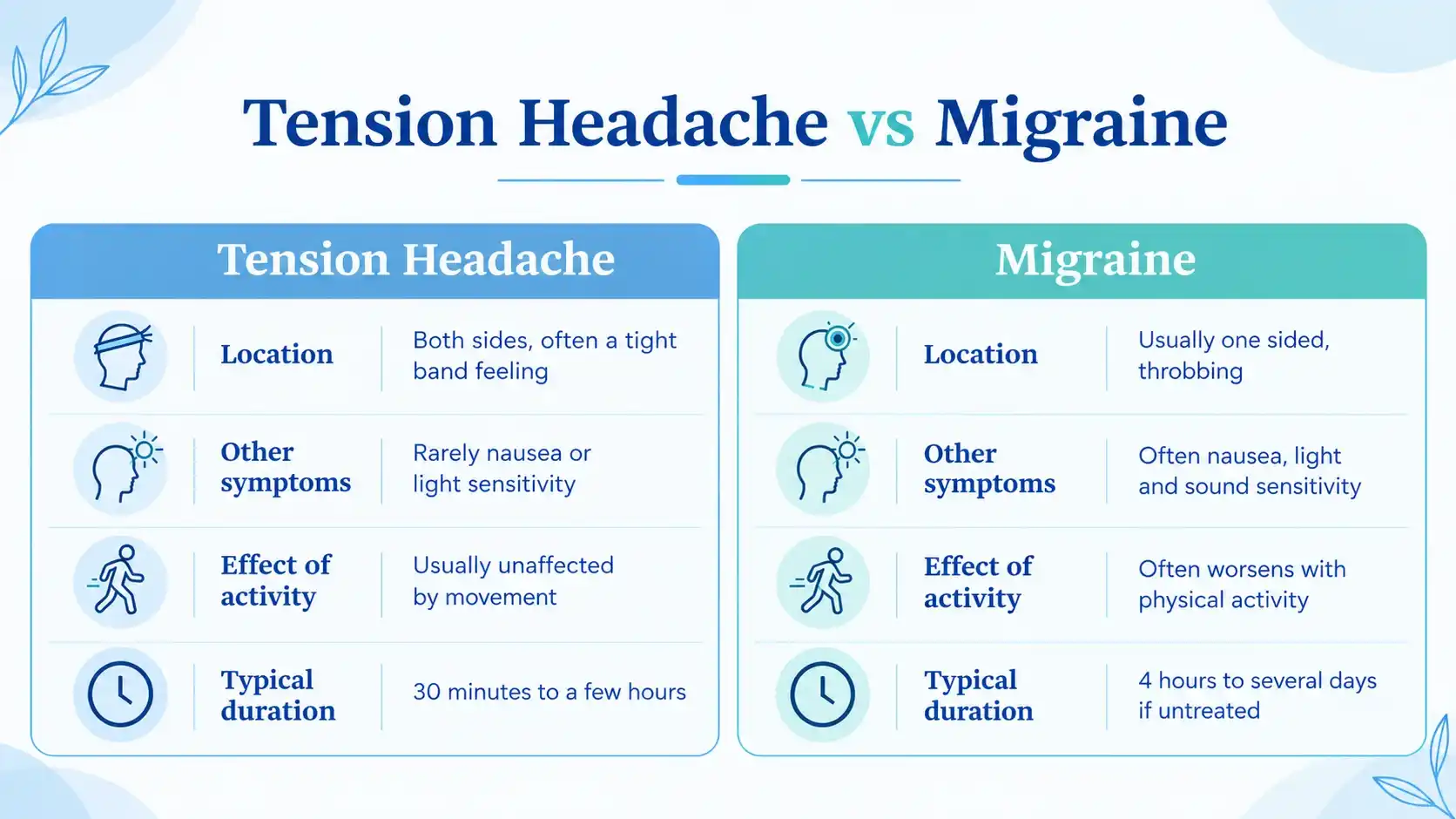
People often ask which is worse headache or migraine, and the honest answer is that they are different conditions rather than different points on the same scale. A bad headache vs migraine comparison usually comes down to the specific pattern of symptoms, not simply how much pain is involved.
| Tension Headache | Migraine | |
|---|---|---|
| Location | Both sides, often a tight band feeling | Usually one sided, throbbing |
| Other symptoms | Rarely nausea or light sensitivity | Often nausea, light and sound sensitivity |
| Effect of activity | Usually unaffected by movement | Often worsens with physical activity |
| Typical duration | 30 minutes to a few hours | 4 hours to several days if untreated |
A migraine vs tension headache comparison like this is a helpful starting point, but it is not a diagnosis, and some people experience features of both.
Self Check, Could It Be Migraine
There is no substitute for a proper assessment, but if you are trying to work out how to know if you have a migraine or just a headache before deciding whether to seek help, ask yourself the following.
- Is the pain mostly on one side, and does it throb rather than feel like a constant pressure
- Do you feel sick, or more sensitive to light or sound than usual, during the episode
- Does moving around or climbing stairs make the pain noticeably worse
- Have you had a very similar pattern of symptoms before, on more than one occasion
Answering yes to most of these suggests migraine is a reasonable explanation. This is a starting point for your own understanding, not a replacement for a proper clinical assessment.
Causes and Triggers, Including What Causes Migraines in Females
Migraine triggers vary from person to person, but several patterns come up often. A common question is what causes migraines in females specifically, and hormonal changes around the menstrual cycle are a well recognised trigger, which is why migraine is reported more frequently in women than in men. Other common triggers for anyone include:
- Stress and poor sleep
- Certain foods, caffeine, or alcohol
- Bright lights or strong smells
- Skipped meals or dehydration
Keeping a brief diary of when your symptoms occur, and what happened in the day or two before, is one of the most useful things you can do to identify your own pattern.
When It Is More Than Just a Headache?
Most headaches, migraine included, are not a sign of anything dangerous. But certain features mean you should seek urgent medical attention rather than waiting to see if it settles.
- The worst headache of your life, coming on suddenly
- A headache with a fever and a stiff neck
- A headache following a head injury
- New weakness, confusion, or difficulty speaking alongside the headache
If any of these apply, go straight to A&E rather than waiting for a routine appointment.
What Can Help, and the Best Way to Treat a Migraine?
For occasional migraines, simple measures such as resting in a dark, quiet room, staying hydrated, and avoiding known triggers are often enough. For frequent or chronic migraines, the best way to treat a migraine usually involves a proper specialist assessment rather than relying on over the counter options alone, especially once migraines start affecting work, sleep, or daily life.
A range of migraine treatments are available depending on how frequent and severe your migraines are, from standard nerve blocks through to preventive injection therapy for chronic migraine. At Renew Skin and Health Clinic in Leamington Spa, Mr Amit Amit, Consultant Neurosurgeon, assesses each patient individually to recommend the most suitable option.
If the checklist above sounds familiar and your migraines are frequent or disruptive, it may be time for a proper assessment. Visit our Migraine Injection Treatment page, or read more about Mr Amit Amit specialist profile.
Request a call back
Book Your Free Consultation

If your symptoms match what is described in this article, book a consultation with Mr Amit Amit to discuss an assessment.
Call: +44 1926 422 454
WhatsApp: +44 1926 422 454
Email: info@renewskinandhealthclinic.co.uk
Address: Renew Skin & Health Clinic, 18 Guy Street, Leamington Spa, CV32 4RT, United Kingdom
Opening Hours: Monday to Friday, 10:00 AM – 6:00 PM (Telephone lines open daily 9:00 AM – 10:00 PM, including weekends)
Medically Reviewed
Mr Amit Amit, Consultant Neurosurgeon, GMC 6047850, entered on the GMC Specialist Register in Neurosurgery, over 25 years of experience. Reviewed October 2026. |
Frequently Asked Questions
1. How do I know if I have a migraine or just a headache?
Migraine usually involves throbbing, often one sided pain, along with nausea or sensitivity to light and sound, and tends to worsen with physical activity. A tension headache is more often a constant, band like pressure on both sides without these additional symptoms.
2. What are the main symptoms of a migraine?
Throbbing or pulsing pain, often on one side, sensitivity to light, sound, or smells, nausea, and pain that worsens with movement are the most recognised migraine symptoms.
3.Can you have migraine aura without a headache?
Yes. Some people experience the visual or sensory warning signs of migraine, such as flashing lights or temporary blind spots, with no headache following at all. This is still considered a form of migraine.
4. Which is worse, a headache or a migraine?
They are different conditions rather than different points on the same scale. Migraine typically involves more symptoms beyond pain, such as nausea and light sensitivity, and can be more disruptive to daily life, but severity varies by individual.
5. What is the difference between a migraine and a tension headache?
Tension headaches are usually a constant pressure on both sides of the head, without nausea or light sensitivity. Migraines are typically one sided, throbbing, and often come with nausea, light sensitivity, and worsening with activity.
6. What causes migraines in females?
Hormonal changes around the menstrual cycle are a well recognised trigger, which is part of why migraine is reported more frequently in women. Stress, poor sleep, certain foods, and dehydration are common triggers for anyone.
7. How long does a migraine usually last?
A migraine episode can last anywhere from four hours to several days if untreated, compared to a tension headache, which usually resolves within a few hours.
8. When should I see a doctor about my headaches?
If migraines are frequent, severe, or disrupting your work, sleep, or daily life, it is worth seeking a specialist assessment rather than managing them alone long term.
9. What symptoms mean I should seek urgent help?
Go straight to A&E for the worst headache of your life coming on suddenly, a headache with fever and a stiff neck, a headache after a head injury, or new weakness, confusion, or difficulty speaking alongside the headache.
10. What is the best way to treat frequent migraines?
For frequent or chronic migraines, a proper specialist assessment is the best starting point, since treatment options range from nerve blocks to preventive injection therapy depending on individual pattern and severity.