
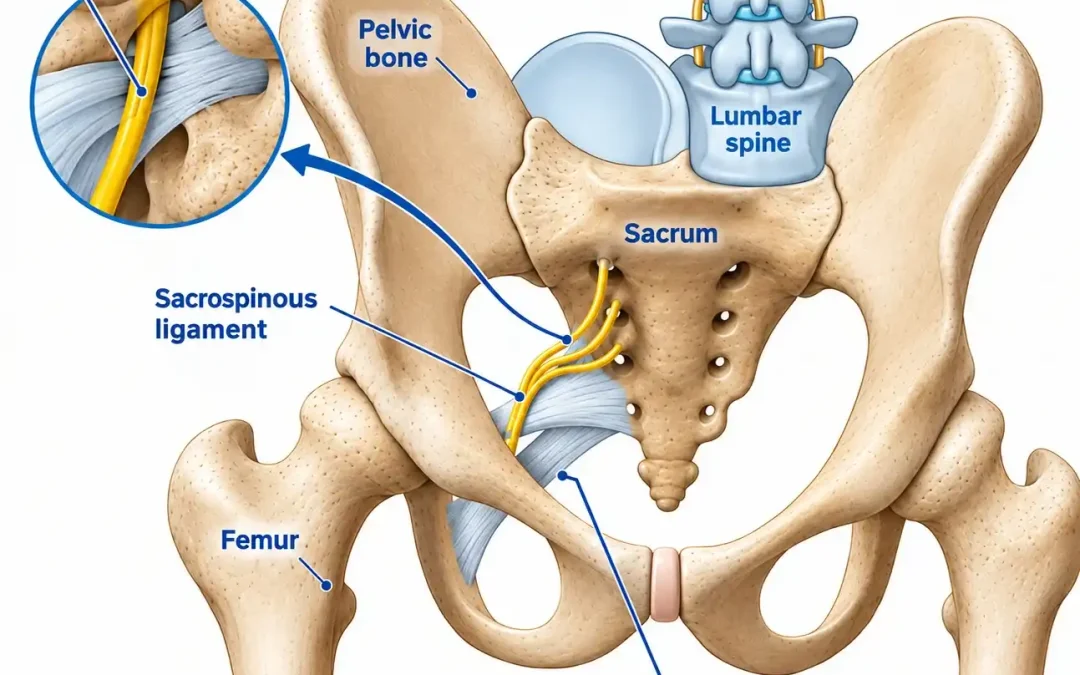
If you have been living with a burning, shooting, or aching pain in the pelvis, perineum, or genital area, especially pain that gets worse the longer you sit, you may have already searched for answers more than once. Pudendal nerve entrapment is a genuine, physical cause of this kind of pain, but it is frequently missed for months or years, often because the symptoms overlap with several other pelvic conditions. This article explains what it is, what it feels like, what causes it, and when it is time to see a specialist.
Table Of Contents
Request a call back
What Is Pudendal Nerve Entrapment?
The pudendal nerve runs through the pelvis and supplies sensation to the perineum, genitals, and back passage. Pudendal nerve entrapment happens when this nerve becomes trapped, irritated, or compressed as it passes through the surrounding muscles and ligaments, leading to ongoing pudendal block type pain in the area it supplies.
The related term pudendal neuritis is sometimes used to describe irritation or inflammation of the nerve itself, and you may come across it while researching your own symptoms.
Who Is Affected?
Pudendal nerve entrapment affects both men and women. It is commonly assumed to be a pudendal nerve female only condition, but this is not accurate, pudendal nerve in women is simply more widely discussed.
A pudendal nerve block male patient experiences the same underlying nerve problem and the same assessment and treatment approach as a female patient. If you are a man experiencing this kind of pelvic pain, you are not searching for the wrong condition.
Symptoms of Pudendal Nerve Entrapment
The symptoms can vary from person to person, but certain patterns come up again and again in patients who are eventually diagnosed correctly.
- Burning, shooting, or aching pelvic nerve pain, often on one side
- Sitting pain that is the most noticeable pattern of all, easing when standing or lying down
- Pain that can spread into the pelvic pain hip pain pattern, reaching the hip or inner thigh
- A combination sometimes described as pelvic pain and abdominal pain, since the discomfort does not always stay in one place
- A sensation of swelling, numbness, or a foreign body in the area, without any visible cause
- Symptoms of pudendal nerve entrapment that have often been present for months or years before a clear diagnosis is reached.
Because the nerve runs through the pelvis rather than sitting in one single spot, some patients describe their pain more generally as coming from somewhere in the nerve in pelvis area, without being able to point to one exact location. This is a normal and expected part of how this condition presents.
What Causes Pudendal Nerve Entrapment?
- A number of different factors can lead to pudendal nerve irritation or entrapment, and it is common for more than one to be involved.
Prolonged sitting or cycling, which can place sustained pressure on the nerve over time - Childbirth, which can stretch or injure the nerve or surrounding tissue
- A pelvic injury or previous pelvic surgery, a recognised cause of injury to pudendal nerve
- Entrapment of the nerve as it passes through the surrounding muscles and ligaments in the pelvis, one of the most common mechanical explanations for pudendal nerve entrapment causes
- It is worth noting that in many patients no single, obvious cause is ever identified, and the absence of a clear trigger does not make the pain any less real or any less worth investigating.
How Pudendal Nerve Entrapment Is Diagnosed?
There is no single test that confirms this condition on its own. Diagnosis relies on a careful history of your symptoms, a clinical assessment, and often a diagnostic injection, since pain relief following a pudendal nerve block strongly suggests the nerve is the true source of the problem. This is one of the reasons the condition takes time to diagnose correctly, it genuinely requires a specialist who is looking for it specifically.
None of these approaches address the structural cause of DPN. At best, they do nothing. At worst, they irritate the skin or cause marks that take longer to fade than the DPN itself.
Treatment Options for Pudendal Neuralgia
The most effective pudendal neuralgia treatment starting point is usually a nerve block injection, which combines local anaesthetic with anti inflammatory medication and is delivered under ultrasound guidance directly to the nerve. This approach can both confirm the diagnosis and provide relief. Wider pelvic pain treatments may also be discussed depending on your individual case, and your consultant will explain the full range of options at your assessment.
At Renew Skin and Health Clinic in Leamington Spa, pudendal nerve blocks are performed by Mr Amit, Consultant Neurosurgeon. You can read the full details of the procedure, what to expect, and current pricing on our Pudendal Nerve Block treatment page .
Living With Pudendal Neuralgia While You Seek Treatment
While you are waiting for an assessment, or deciding whether to seek one, a few practical adjustments can make daily life more manageable, though they are not a substitute for proper diagnosis and treatment.
- Using a cushion with a cut out section to reduce direct pressure while sitting
- Taking regular breaks from sitting during the day where possible
- Keeping a symptom diary noting what worsens or eases your pain, which is genuinely useful information for your consultant
These measures can help you cope, but they do not address the underlying nerve irritation, which is why a proper assessment matters once symptoms persist.
When to See a Specialist
If you have pelvic, perineal, or genital pain that has lasted more than a few weeks, particularly if it follows a pattern of being worse when sitting, it is worth seeking a specialist opinion rather than continuing to manage it alone. This condition is frequently misdiagnosed or dismissed, and a consultant who is specifically looking for pudendal nerve involvement is far more likely to reach the right answer.
Mr Amit Amit, Consultant Neurosurgeon at Renew Skin and Health Clinic, assesses and treats pudendal nerve entrapment with a chaperone present at every appointment and consent discussed carefully beforehand. Visit the Pudendal Nerve Block treatment page to read more, or view his full specialist profile.
Related nerve and pelvic pain conditions Mr Amit Amit also treats include Sacroiliac Joint Injections and Piriformis Injections.
Request a call back
Book Your Free Consultation

If your symptoms match what is described in this article, book a consultation with Mr Amit Amit to discuss an assessment.
Call: +44 1926 422 454
WhatsApp: +44 1926 422 454
Email: info@renewskinandhealthclinic.co.uk
Address: Renew Skin & Health Clinic, 18 Guy Street, Leamington Spa, CV32 4RT, United Kingdom
Opening Hours: Monday to Friday, 10:00 AM – 6:00 PM (Telephone lines open daily 9:00 AM – 10:00 PM, including weekends)
Medically Reviewed
Mr Amit Amit, Consultant Neurosurgeon, GMC 6047850, entered on the GMC Specialist Register in Neurosurgery, over 25 years of experience. Reviewed September 2026. |
Frequently Asked Questions
1. What does pudendal nerve entrapment feel like?
Most people describe a burning, shooting, or aching pain in the perineum, genitals, or back passage, which is often noticeably worse when sitting and eases when standing or lying down.
2. Can men have pudendal nerve entrapment?
Yes. This condition affects both men and women, and the assessment and treatment approach is the same for both.
3.What causes pudendal nerve entrapment?
Common causes include prolonged sitting or cycling, childbirth, a pelvic injury or previous pelvic surgery, and entrapment of the nerve as it passes through the surrounding pelvic muscles and ligaments. In some patients, no single clear cause is ever identified.
4.Why is pudendal nerve entrapment so often missed?
The symptoms overlap with several other causes of pelvic pain, and there is no single test that confirms the condition on its own. It often takes a specialist who is specifically looking for pudendal nerve involvement to reach the correct diagnosis.
5. How is pudendal nerve entrapment diagnosed?
Diagnosis relies on a detailed history, clinical assessment, and often a diagnostic nerve block, since pain relief following the injection strongly suggests the pudendal nerve is the source of the problem.
6. Does sitting always make the pain worse?
For most patients, yes, this is one of the most recognisable patterns of pudendal nerve entrapment, though the exact degree varies from person to person.
7. What is the difference between pudendal neuralgia and pudendal neuritis?
The two terms are closely related. Pudendal neuralgia describes the ongoing pain condition, while pudendal neuritis more specifically refers to irritation or inflammation of the nerve itself. You may see both terms used when researching the same underlying problem.
8. Is pudendal nerve entrapment treatable?
Yes. A pudendal nerve block, combining local anaesthetic and anti inflammatory medication, is a well established starting point, and can both confirm the diagnosis and provide relief.
9. Can pudendal nerve entrapment be confused with sciatica or other pelvic conditions?
Yes, this is one of the main reasons it is missed so often. The pain pattern can overlap with sciatic nerve pain, hip problems, and other pelvic conditions, which is why a specific, careful assessment matters.
10. Who should I see about pudendal nerve entrapment symptoms?
A consultant with specific experience assessing and treating pudendal nerve conditions is the right starting point. Mr Amit, Consultant Neurosurgeon at Renew Skin and Health Clinic in Leamington Spa, offers assessment and treatment for this condition, with full details on our Pudendal Nerve Block treatment page.