

Many women who notice small bumps in the genital area assume the worst. The two most commonly confused conditions are vestibular papillomatosis and genital warts, and while they can look similar to an untrained eye, they are completely different in cause, risk and treatment. Understanding the difference can save a lot of unnecessary worry.
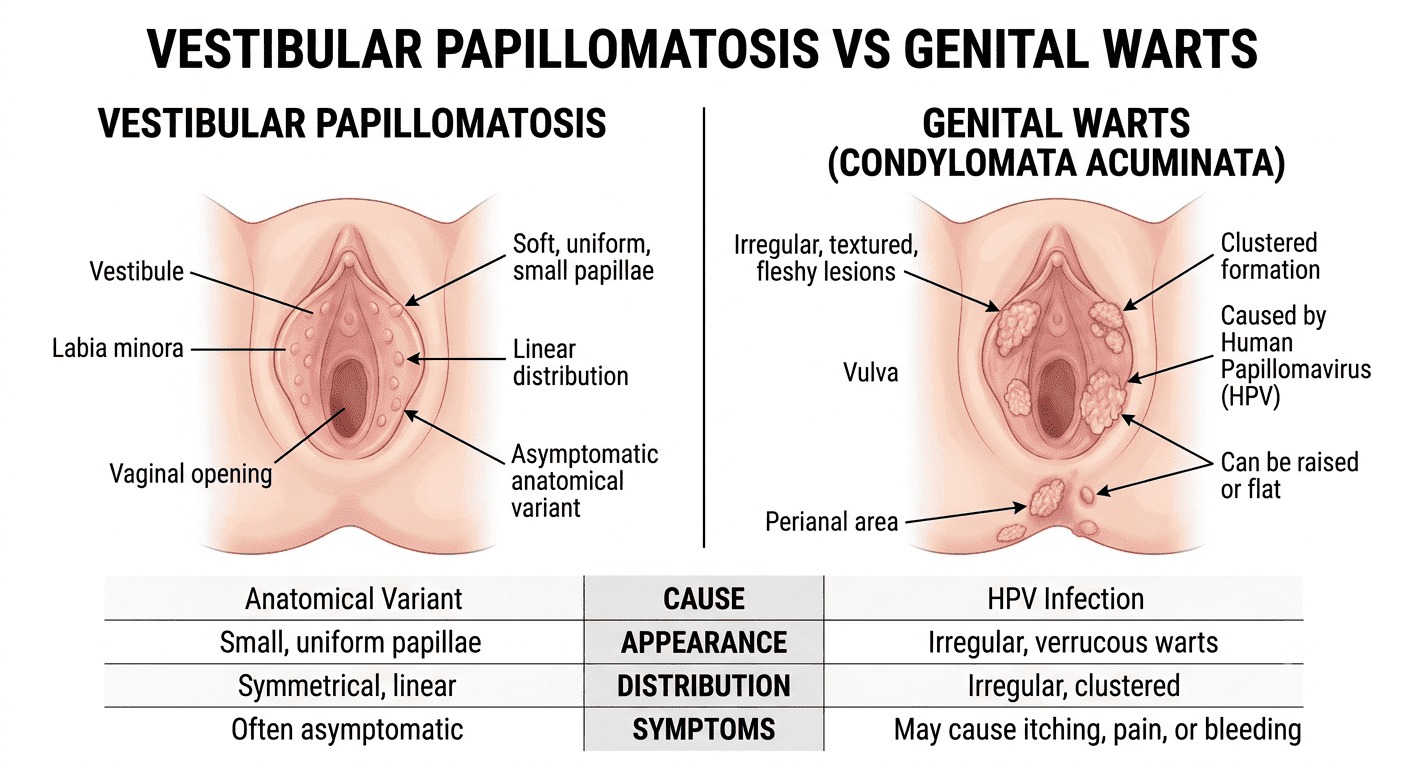
What Is Vestibular Papillomatosis?
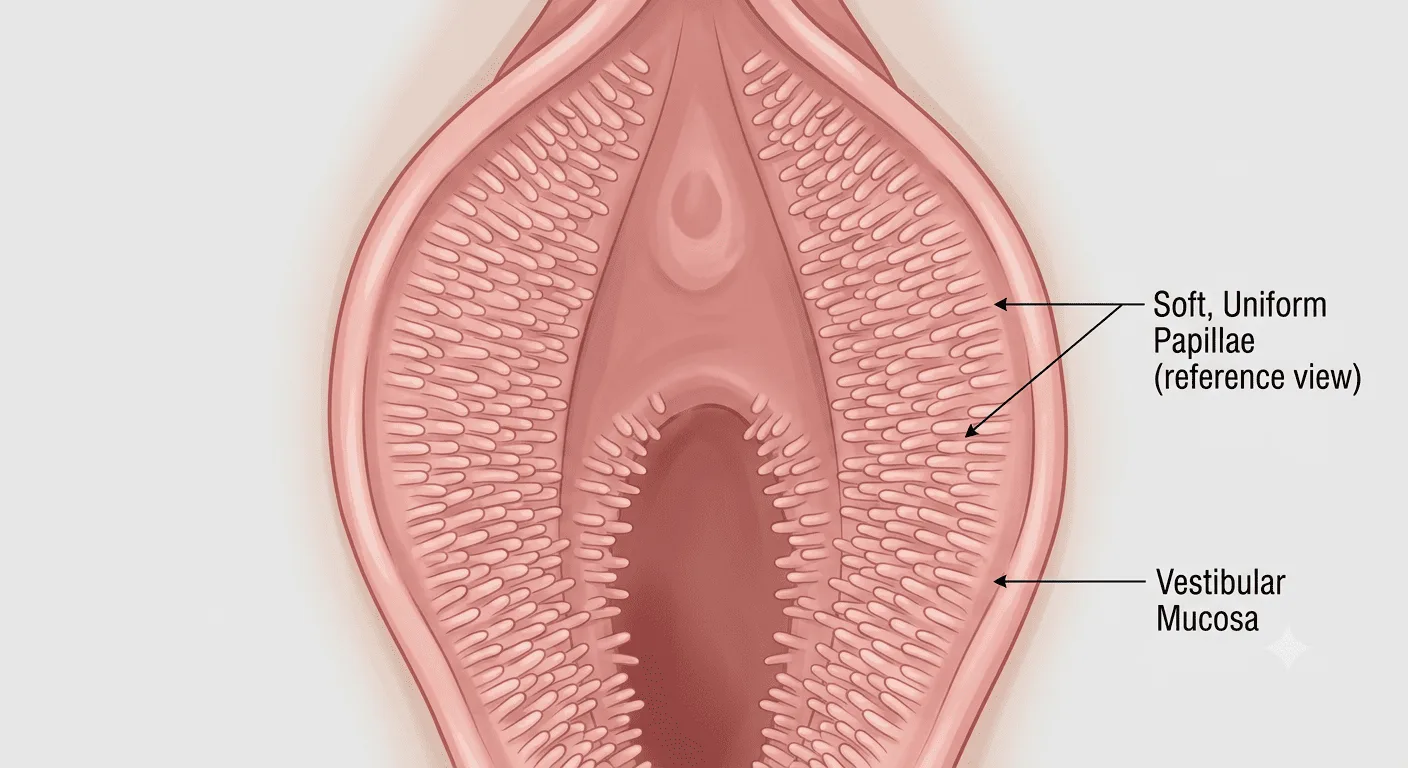
Vestibular papillomatosis is a benign, naturally occurring condition where small, soft, finger like projections develop along the inner surface of the vulvar vestibule. These are often described in
everyday language as vaginal skin tags, though clinically they are a normal anatomical variation rather than a disease.
The individual projections, known as vestibular papillae, are usually one to three millimetres in size, soft, uniform and arranged symmetrically on both sides of the vestibule. This symmetry is one of the clearest visual clues that separates them from genital warts.
Vestibular papillomatosis causes are still not completely understood, but current clinical evidence points to it being a normal variant of tissue development, sometimes influenced by oestrogen levels. This is why it can occasionally become more noticeable during pregnancy or other hormonal changes, and why some women feel it has appeared suddenly even though the papillae may have been present for some time.
Most women have no symptoms at all. Where symptoms do occur, they can include mild itching, a sensation of rawness, or discomfort during intercourse. A vestibular papillomatosis itchy sensation does not mean the condition is more serious, and it does not mean it has changed into something else.
You can read a full breakdown of symptoms, causes and treatment on our main vestibular papillomatosis treatment page.
What Are Genital Warts?
Genital warts are caused by certain strains of human papillomavirus, most commonly HPV 6 and 11. Unlike vestibular papillomatosis, they are a sexually transmitted infection and are contagious through skin to skin intimate contact.
They tend to look quite different once you know what to compare. Genital warts are usually irregular in shape, described as cauliflower like, and often appear as a single growth or in an uneven cluster rather than in a neat, symmetrical pattern. They can appear anywhere in the genital or anal area, not only along the vestibule.
Full details on causes, appearance and treatment options are available on our genital wart removal treatment page.
Vestibular Papillomatosis vs HPV: The Key Differences
| Feature | Vestibular Papillomatosis | Genital Warts (HPV) |
|---|---|---|
| Cause | Normal anatomical variant | Human papillomavirus infection |
| Contagious | No | Yes |
| Shape | Soft, smooth, uniform | Irregular, cauliflower-like |
| Distribution | Symmetrical, both sides | Often single or uneven cluster |
| Cancer risk | None | Low risk with HPV strains 6 & 11 |
| Treatment urgency | Optional, for comfort or cosmetic preference | Recommended to reduce spread |
The single most reliable way to know which condition you have is a clinical examination. Photographs found online, including general vestibular papillomatosis pictures, are useful for context but are not a substitute for a proper diagnosis, since lighting, angle and individual anatomy vary widely.
Does Vestibular Papillomatosis Go Away on Its Own?
Vestibular papillomatosis often remains stable for years and, in some women, becomes less noticeable after hormonal changes such as menopause. It does not reliably disappear on its own, and there is no cream or topical treatment proven to remove it. Removal, when wanted, is a straightforward outpatient procedure rather than something that resolves with medication.
Genital warts behave differently. Some clear on their own as the immune system deals with the virus, but many need active treatment such as laser, cryotherapy or electrocautery to fully clear and to reduce the chance of the virus spreading to a partner.
Getting a Proper Diagnosis
Trying to self diagnose from images alone is one of the most common causes of unnecessary anxiety. If you have noticed any changes in the vulvar or genital area, the safest next step is a private consultation with a specialist who can examine the area, confirm what you are dealing with, and explain your options clearly.
At Renew Skin and Health Clinic in Leamington Spa, both conditions are assessed by Mr Amit Palchaudhuri, a Consultant Gynaecologist with over 15 years of specialist experience. You can book a consultation through our vestibular papillomatosis treatment page or our genital wart removal treatment page, depending on what you suspect, and receive a clear diagnosis in one visit.
Request a call back
Book Your Free Keloid Scar Consultation
If a keloid scar is affecting your comfort or confidence, our specialists at Renew Skin & Health Clinic are here to help with safe, effective, and personalized care.
Call: +44 1926 422 454
WhatsApp: +44 1926 422 454
Email: info@renewskinandhealthclinic.co.uk
Address: Renew Skin & Health Clinic, 18 Guy Street, Leamington Spa, CV32 4RT, United Kingdom
Opening Hours: Monday to Friday, 10:00 AM – 6:00 PM (Telephone lines open daily 9:00 AM – 10:00 PM, including weekends)
Frequently Asked Questions
1. Will I have HPV forever if I have genital warts?
Not necessarily. HPV infection often clears naturally over time as the immune system suppresses the virus, though this can take months or longer. Some strains persist longer than others, and the warts themselves can be treated and removed even while the virus is still present in the body.
2. Is vestibular papillomatosis a form of HPV?
No. Clinical studies using DNA testing have consistently found no HPV present in vestibular papillomatosis tissue. It is considered a normal anatomical variant and is not an infection, so it cannot be passed on to a partner.
3. What is usually mistaken for genital warts?
Vestibular papillomatosis is one of the most common conditions mistaken for genital warts, along with other skin variations such as small sebaceous glands or minor skin tags in the genital area. This is why a professional assessment is important before assuming any growth is HPV related.
4. How can you tell the difference between vestibular papillomatosis and genital warts?
The clearest signs are shape and distribution. Vestibular papillomatosis appears as soft, uniform projections in a symmetrical pattern on both sides of the vestibule. Genital warts are usually irregular, uneven and can appear as a single growth anywhere in the genital area. A clinical examination by a gynaecologist gives a definitive answer.