

Mr. Malahias is a GMC registered Consultant Plastic Surgeon certified by the European Board of Plastic Surgeons EBOPRAS. He holds an MSc in Aesthetic Surgery with distinction from the University of Manchester and is associated with University Hospitals Birmingham NHS Foundation Trust.
All inverted nipple correction procedures at Renew Skin and Health Clinic are performed personally by Mr. Malahias.
Most inverted nipples are congenital present from birth or appearing during puberty and have no connection to breast cancer. A new onset nipple change in an adult, however, is a recognised warning sign that warrants prompt medical assessment. Understanding the difference between a lifelong anatomical variation and a clinically significant change is the most important thing to know before drawing any conclusions about your own situation.
Table Of Content
What Is an Inverted Nipple?
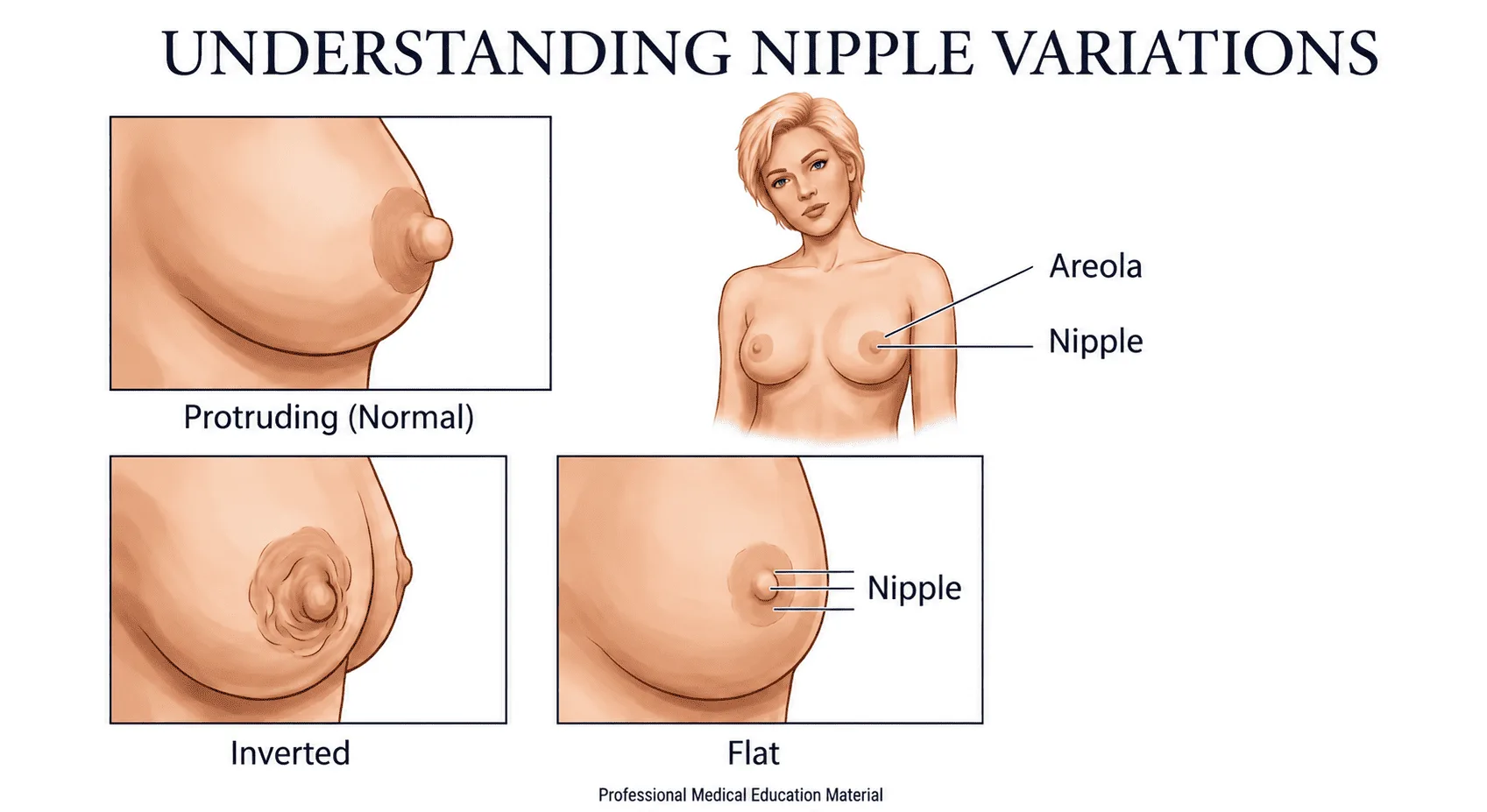
An inverted nipple is one that points inward rather than outward. Instead of projecting from the surface of the areola, it sits flat or retreats below the surrounding skin. The condition affects both men and women and is far more common than most people realise it is estimated to affect up to 10% of women to some degree.
The reasons for inverted nipple in most people are entirely anatomical. The nipple is held in position by connective tissue beneath the skin. When this tissue is shorter or tighter than usual, it holds the nipple in a retracted position. This is typically present from puberty and remains stable throughout adult life.
The Grades of Nipple Inversion Explained
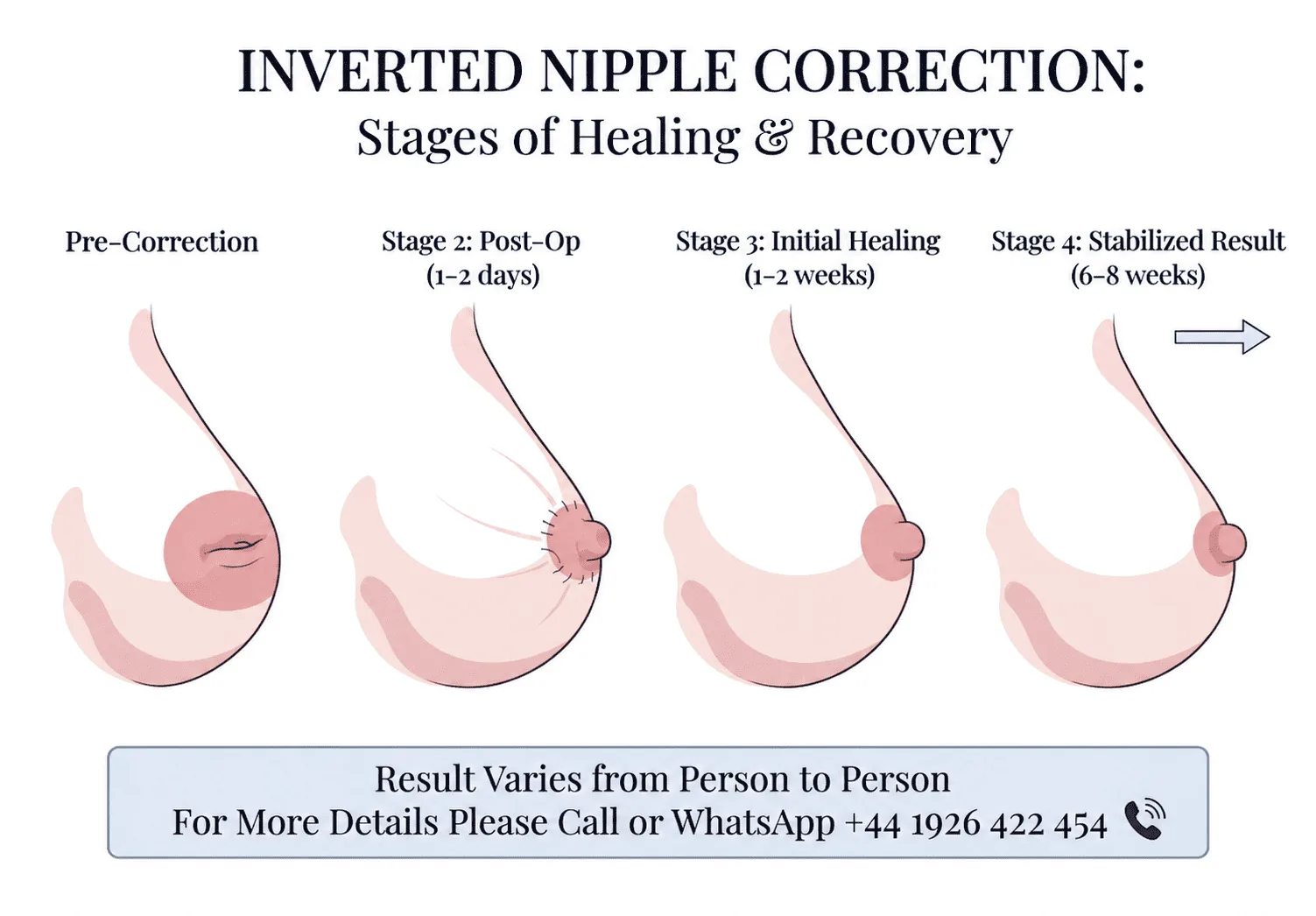
Nipple inversion is classified into three grades. The grade determines how the nipple responds to stimulation, whether breastfeeding is possible, and which treatment approach is most appropriate.
| Grade | Appearance | Breastfeeding | Treatment |
|---|---|---|---|
| Grade 1 | The nipple can be pulled out easily and maintains its projection for a period without stimulation. | Usually possible | Conservative options may help. Surgery is effective for those who prefer treatment. |
| Grade 2 | The nipple can be pulled out with some effort but returns to inversion when released. | Often difficult | Surgical correction is typically recommended for lasting results. |
| Grade 3 | The nipple cannot be pulled out manually and sits fully retracted. It may also be associated with skin changes beneath. | Usually not possible | Surgical correction is the standard approach. |
Can an Inverted Nipple Be a Sign of Breast Cancer?
Yes but only in specific circumstances. A nipple change that is new, meaning it was not previously present, is one of the recognised early warning signs of breast cancer. This is because a tumour growing within the breast can tether the skin and connective tissue, drawing the nipple inward.
The key clinical distinction is this: a congenital inverted nipple that has been present since puberty and has not changed carries no associated cancer risk. A nipple that was previously normal and has recently become inverted requires urgent medical assessment to exclude an underlying cause.
| Congenital Inverted Nipple | Newly Inverted Nipple | |
|---|---|---|
| Present since | Puberty or birth | Recent onset within weeks or months |
| Associated changes | None | May have a lump, skin puckering, discharge, or swelling |
| Affects one or both | Can affect one or both | Typically one side only |
| Cancer risk | No elevated risk | Requires urgent medical review to exclude cancer |
| Appropriate action | Assessment and correction if desired | See your GP immediately for examination and imaging |
Warning Signs That Require Prompt Medical Attention
See your GP as soon as possible if you notice any of the following in combination with or alongside a change in your nipple:
- A nipple that was previously normal and has recently become inverted or retracted
- A lump or thickening in the breast or armpit
- Skin puckering, dimpling, or a texture change on the breast
- Spontaneous nipple discharge, particularly if bloodstained or from one side only
- Redness, rash, or skin changes around the nipple or areola
- Swelling in the armpit or collarbone area
- Pain in one breast that is persistent and unexplained
These symptoms do not confirm cancer. They indicate that further investigation is needed. Early assessment leads to the best outcomes.
This blog is not a substitute for medical assessment. If you are concerned about a nipple change, please see your GP.
When Is an Inverted Nipple Simply an Anatomical Variation?
The overwhelming majority of inverted nipples are entirely harmless. If your nipple has been inverted since puberty, has not changed in appearance, and is not accompanied by any of the warning signs listed above, it is almost certainly an anatomical variation with no underlying pathology. It is also entirely normal to have just one inverted nipple asymmetry in this regard is common and does not in itself warrant concern. Similarly, nipples can appear flatter or change slightly across the menstrual cycle, with age, and during and after pregnancy. These gradual, bilateral changes are generally within the range of normal variation.
The most important principle is simple: if you are unsure whether a change is new or longstanding, seek a clinical opinion. A brief GP appointment is always the right first step when there is any doubt.
What Are the Treatment Options for Inverted Nipples?
For patients who have confirmed that their inverted nipple is congenital and have no underlying medical concerns, a range of correction options exists. The right approach depends on the grade of inversion, whether the patient wants to preserve the ability to breastfeed, and their personal preferences.
| Treatment | How It Works | Best Suited To |
|---|---|---|
| Surgical correction | A short procedure under local anaesthetic in which the tethering connective tissue is released, allowing the nipple to project naturally. | Grade 2 and Grade 3 inversion. Permanent results. Performed by Mr. Malahias at Renew Clinic. |
| Minimally invasive technique for Grade 1 | A less extensive procedure for mild inversion with preserved lactiferous ducts where breastfeeding preservation is important. | Grade 1 patients who wish to preserve breastfeeding potential. |
| Non surgical devices | Suction devices worn daily to gradually draw out the nipple. | Grade 1 only. Results are temporary and often inconsistent. |
For full details on surgical correction including pricing, recovery, and what to expect, see our inverted nipple correction treatment page
About the Author — Mr. Marco Malahias

All inverted nipple correction procedures at Renew Skin and Health Clinic are performed by Mr. Marco Nestor Emmanuel Malahias, a Consultant Plastic, Reconstructive and Aesthetic Surgeon certified by the European Board of Plastic Surgeons (EBOPRAS). He holds an MSc in Aesthetic Surgery with distinction from the University of Manchester and is associated with University Hospitals Birmingham NHS Foundation Trust.
Mr. Malahias combines technical precision with an artistic approach, focusing on results that are natural looking, balanced, and tailored to each individual patient. He offers clear, unhurried consultations with personalised guidance at every stage. To learn more, visit his specialist profile
Request a call back
Considering Inverted Nipple Correction? Book a Consultation
If you have ruled out any medical concern and are considering correction for personal, cosmetic, or functional reasons, Mr. Malahias offers a clear, evidence based consultation with no obligation to proceed.
- Call: +44 1926 422 454
- Email:
- Address: Renew Skin & Health Clinic
18 Guy Street, Leamington Spa, CV32 4RT. United Kingdom. - Whatsapp: +44 1926 422 454
- Opening Hours: Monday to Friday, 10:00 AM – 6:00 PM (Telephone lines open daily 9:00 AM – 10:00 PM, including weekends)
Frequently Asked Questions
1. What is the difference between a facet joint injection and an epidural steroid injection?
A facet joint injection targets a specific spinal joint to reduce localised inflammation. An epidural steroid injection targets the epidural space to reduce inflammation around compressed nerve roots. Facet injections treat joint related spinal pain; epidurals treat nerve related pain radiating into the arm or leg.
2. Which is better for back pain a facet injection or an epidural?
Neither is universally better the choice depends on the cause of your pain. Facet injections work best for localised spinal pain caused by joint degeneration. Epidural steroid injections work best for radiating pain caused by nerve compression. A specialist assessment determines which approach is appropriate.
3. Can a facet joint injection and an epidural be done at the same time?
In some cases, yes. Patients with both facet joint degeneration and nerve compression may benefit from both procedures. Mr. Amit assesses each patient individually and recommends the combination most appropriate for their specific presentation.
4. How long does a facet joint injection last?
Relief from a facet joint injection typically lasts from a few weeks to several months, depending on the individual and the degree of underlying joint degeneration. Some patients benefit from a series of injections combined with physiotherapy to maximise the duration of relief.
5. How long does an epidural steroid injection last?
An epidural steroid injection typically provides relief for several weeks to several months. The duration depends on the underlying cause patients with a herniated disc that resolves over time may experience lasting relief, while those with structural stenosis may require repeat injections.
6. Are facet joint injections painful?
Most patients tolerate facet injections well. The procedure is performed under local anaesthetic, which minimises discomfort. Some patients experience brief soreness at the injection site for one to two days after the procedure.
7. What conditions are treated with epidural steroid injections?
Epidural steroid injections are used to treat conditions including cervical radiculopathy, lumbar radiculopathy (sciatica), herniated discs, degenerative disc disease, spinal stenosis, and nerve root compression. They are particularly effective when the primary symptom is pain, numbness, or weakness radiating down the arm or leg.
8. What is a medial branch nerve block and how does it relate to facet injections?
A medial branch nerve block targets the nerves that supply the facet joints rather than the joint itself. It is closely related to facet joint injections and is often used diagnostically — a positive response (significant pain relief) confirms that the facet joint is the source of pain and helps justify a more permanent treatment such as radiofrequency ablation.
9. Can I get a facet joint injection or epidural on the NHS?
Both facet joint injections and epidural steroid injections are available on the NHS for suitable patients, but waiting times for pain management procedures in the West Midlands can be significant. Private access at Renew Skin and Health Clinic in Leamington Spa allows patients to proceed directly to assessment and treatment.
10. How do I know which injection I need for my back pain?
The type of injection most appropriate for your pain depends on the cause of your symptoms specifically whether the pain originates from the facet joints or from nerve compression. A clinical consultation with a specialist such as Mr. Amit, which includes a review of your symptoms and imaging, is the only reliable way to determine the right approach.

What Our Client's Say
750+ Google reviews with 4.9 rating


