
Vasculitis Disorders: Symptoms, Causes and Treatment
HOME /Vasculitis Disorders: Symptoms, Causes and Treatment
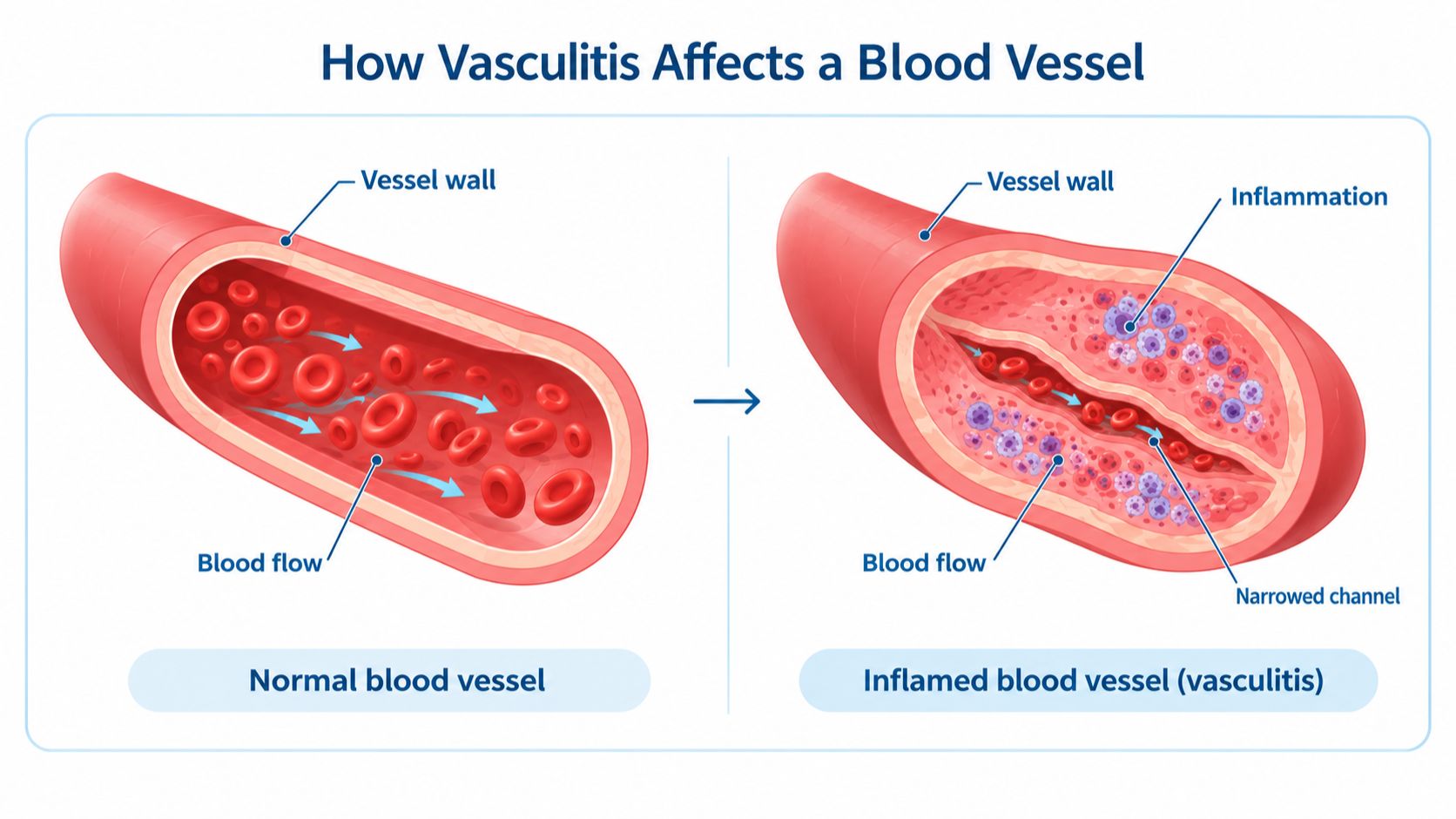
Vasculitis is the name given to a group of conditions that cause inflammation of the blood vessels. This inflammation can thicken and narrow the vessel walls, restricting blood flow and, in more serious cases, damaging the organs and tissues that vessel supplies. At Renew Skin & Health Clinic, our consultant led rheumatology service focuses on identifying the specific type of vasculitis involved and building a plan that reflects how it is affecting you.
Because vasculitis covers many different conditions, ranging from mild and skin limited to serious and organ threatening, an accurate diagnosis from an experienced rheumatologist matters from the very start.
Important — When to Seek Urgent Medical Attention
Please do not wait for a routine appointment if you have:
- A new severe headache with tenderness over the scalp or temples, jaw pain when chewing (known as jaw claudication), or any change or loss of vision, since these can be signs of giant cell arteritis and need same-day assessment.
- Sudden breathlessness, coughing up blood, or chest pain.
- A marked drop in how much urine you are passing, or blood in your urine.
- Sudden numbness, weakness, or severe abdominal pain.
Seek urgent medical attention:
Contact your GP urgently, call NHS 111, or attend
your nearest A&E.
This page provides general information only and is not a substitute for individual medical advice.
What Is Vasculitis?
Vasculitis develops when the immune system mistakenly attacks the walls of blood vessels, causing them to become inflamed, thickened and narrowed. It can affect blood vessels of any size, from the large arteries branching from the heart to the smallest capillaries in the skin. Because so many different vessels and organs can be involved, vasculitis symptoms vary widely between patients and between the different types of vasculitis.
Some cases are triggered by an infection or another underlying condition, though in many patients no clear trigger is ever found. What all types share is ongoing inflammation within the vessel wall, which is why early specialist assessment helps limit lasting damage.
Vasculitis Symptoms
Patients with vasculitis describe a wide range of symptoms, and the pattern often depends on which vessels are affected. Common features include:
- Persistent tiredness, fever or unexplained weight loss
- Joint and muscle pain
- A vasculitis rash, which can appear as small bruise like spots, raised purple marks or open sores on the skin
- Numbness, tingling or weakness affecting the hands or feet
- Breathlessness or a persistent cough
- Abdominal pain
- Changes in urine, including blood in the urine
Because these symptoms overlap with many other conditions, a thorough rheumatology assessment is the only reliable way to confirm whether vasculitis is present and, if so, which type.
Types of Vasculitis We Assess and Manage
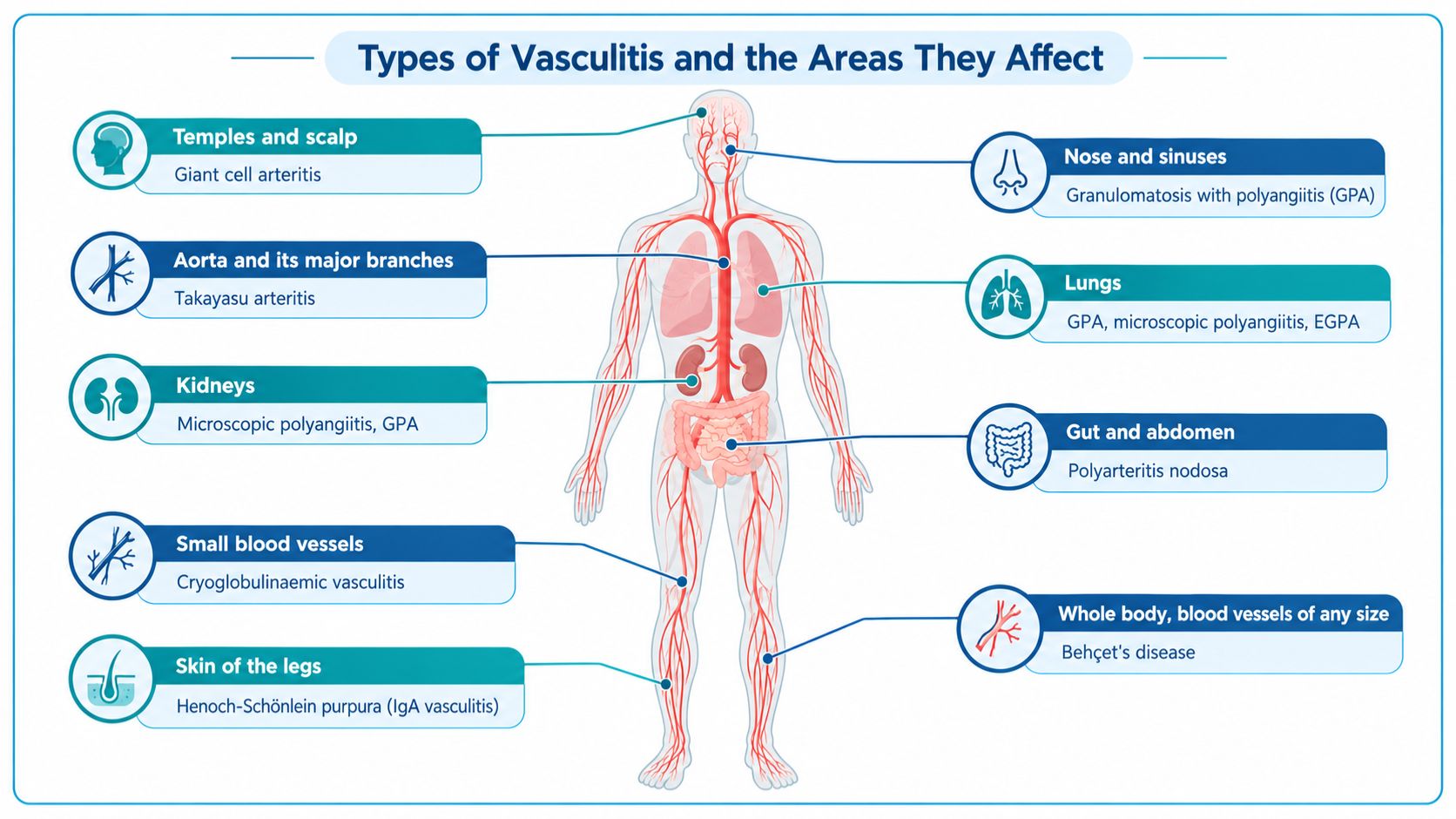
Vasculitis covers many different conditions, and vasculitis symptoms vary depending on which blood vessels and organs are affected. Some types can cause a vasculitis rash, while others mainly involve the lungs, kidneys or nerves. The table below gives a quick comparison, with more detail on each type underneath.
| Type | Main vessels or organs involved | Key symptoms |
|---|---|---|
| Giant cell arteritis (temporal arteritis) | Arteries around the temples and scalp | New headache, scalp tenderness, jaw claudication, sudden vision changes |
| Takayasu arteritis | Aorta and its major branches | Tiredness, weight loss, fever, pain or coldness in the limbs |
| Polyarteritis nodosa | Medium-sized arteries supplying the gut, kidneys and nerves | Abdominal pain (particularly after eating), muscle and joint pain, skin changes, numbness or tingling |
| Granulomatosis with polyangiitis (GPA vasculitis, formerly Wegener's granulomatosis) | Nose, sinuses, lungs and kidneys | Sinus problems, nosebleeds, cough, breathlessness, kidney involvement |
| Microscopic polyangiitis | Kidneys, lungs and nerves | Breathlessness, skin changes, numbness or tingling, changes in urine |
| Eosinophilic granulomatosis with polyangiitis (EGPA, Churg Strauss syndrome) | Lungs, nerves and other organs | Fever, muscle and joint pain, tiredness, nerve or organ involvement |
| Henoch Schönlein purpura (IgA vasculitis) | Skin, joints, gut and, in some cases, kidneys | Distinctive rash on the legs, joint pain, abdominal pain |
| Cryoglobulinemic vasculitis | Small blood vessels | Rash on the lower legs, joint pain, nerve symptoms, kidney involvement |
| Behçet's disease | Blood vessels of any size | Recurrent mouth and genital ulcers, eye inflammation, skin changes |
Giant Cell Arteritis (Temporal Arteritis)
Giant cell arteritis, also called temporal arteritis, causes inflammation in the arteries around the temples and scalp. It mainly affects people over 50. Typical giant cell arteritis symptoms include a new headache, a tender scalp, jaw claudication and, in more serious cases, sudden changes in vision. Temporal arteritis symptoms can come on quickly, so anyone with vision changes needs to be seen the same day. Giant cell arteritis treatment aims to bring the inflammation under control quickly to protect eyesight. Your consultant will also keep an eye out for related conditions such as polymyalgia rheumatica.
Takayasu Arteritis
Takayasu arteritis is a rare type of vasculitis that inflames the aorta and its main branches. It is seen most often in younger women. Reduced blood flow can cause pain or coldness in the limbs, so a careful assessment of the blood vessels is an important part of diagnosis.
Polyarteritis Nodosa
Polyarteritis nodosa affects the medium-sized arteries supplying the gut, kidneys and nerves. In some patients it follows an underlying infection, though often the exact cause is not identified, and a coordinated assessment helps guide the right treatment approach.
Granulomatosis with Polyangiitis (Wegener's Granulomatosis)
Granulomatosis with polyangiitis, previously known as Wegener’s granulomatosis, is a form of GPA vasculitis that typically affects the nose, sinuses, lungs and kidneys. It is one of several conditions grouped together as ANCA-associated vasculitis, and prompt diagnosis matters because untreated GPA can affect how well the organs function.
Microscopic Polyangiitis
Microscopic polyangiitis is another ANCA-associated vasculitis, most often affecting the kidneys, lungs and nerves. Like GPA, it usually needs prompt specialist assessment and ongoing monitoring.
Eosinophilic Granulomatosis with Polyangiitis (EGPA / Churg Strauss Syndrome)
Eosinophilic granulomatosis with polyangiitis (EGPA), also known as Churg Strauss syndrome, usually develops in adults who have asthma or an allergic condition such as allergic rhinitis. Because it often follows respiratory symptoms, your consultant will assess both the lungs and the wider immune system.
Henoch Schönlein Purpura (IgA Vasculitis)
Henoch Schönlein purpura, also known as IgA vasculitis, is one of the more common forms of vasculitis and is seen more often in children than adults. Many cases settle without long-term problems, though ongoing monitoring is important where the kidneys are affected.
Cryoglobulinaemic Vasculitis
Cryoglobulinaemic vasculitis (also spelt cryoglobulinemic vasculitis) occurs when abnormal proteins in the blood, called cryoglobulins, cause inflammation in the small blood vessels. It is sometimes linked to a viral infection.
Behçet's Disease
Behçet’s disease is a type of vasculitis that can affect blood vessels of any size. It is seen more commonly in people with family origins in the Mediterranean, Middle East and parts of Asia. Because symptoms can flare and settle over time, ongoing specialist review helps keep the condition well controlled.
Request a call back
Diagnosis and Blood Tests for Vasculitis
Your consultant will begin by taking a detailed history and examining you. Blood tests are then chosen to suit your symptoms, rather than being a standard set for everyone. The results may be described as a vasculitis blood test or vasculitic screen bloods, and further investigations may be arranged if needed.
Bloods for Vasculitis
The table below shows the blood tests most commonly arranged. Which ones you need depends on the type of vasculitis suspected.
| Test | What it checks | Why it may be arranged |
|---|---|---|
| ANCA blood test (ANCA test) | Antibodies linked to certain types of vasculitis | To help identify conditions such as GPA and microscopic polyangiitis |
| ANA blood test | Antinuclear antibodies | Where a connective tissue overlap is possible |
| Full blood count, ESR test and C reactive protein test | Combined, they show how much inflammation is present in the body | Often included in other blood tests for vasculitis as a general screen |
Your Care Pathway at Renew Skin & Health Clinic
Step 1: Initial Consultation – Your first appointment begins with a detailed discussion of your symptoms, medical history and any concerns you have, followed by a clinical examination.
Step 2: Investigations – Where appropriate, blood tests, imaging or a referral for further investigations are arranged to help confirm the diagnosis and identify which vessels are involved.
Step 3: Diagnosis and Treatment Plan – Your consultant explains the findings in plain language and discusses the treatment approach best suited to your individual circumstances.
Step 4: Ongoing Care – Regular follow up appointments allow your consultant to monitor your progress and adjust your treatment plan as your condition changes.
Request a call back
Treatment Options
Depending on the type and severity of vasculitis you have, your plan may draw on:
- Medication management
- Long term monitoring for inflammatory and autoimmune conditions
- Referral for specialist investigations or onward care where these are needed
- Practical lifestyle guidance to support your overall treatment plan
No two patients receive an identical plan, because no two cases of vasculitis behave the same way. Where prescription treatment could help, your consultant explains the options in full during your consultation, and nothing is prescribed until a complete assessment has taken place. How well any individual responds varies from person to person, and results are never guaranteed. The aim of every plan is to bring inflammation under control and protect your organs for the long term.
Meet Your Consultant Rheumatologist
Your care is led by Dr Ganesh Kasavkar, MBBS, MRCP, Rheumatology and General Internal Medicine (CCT), GMC Reg. No. 7436153. Dr Kasavkar has over 10 years of experience in Rheumatology and over 15 years in General Internal Medicine, and works as a full time consultant rheumatologist at a major NHS teaching hospital.

He is a member of a vasculitis multidisciplinary team and has particular exposure to giant cell arteritis through regular on call work and a dedicated giant cell arteritis management pathway. His academic work includes a review of temporal artery biopsy referrals in suspected giant cell arteritis and a published case report on vasculitis linked to contaminated recreational drug use. Dr Kasavkar is committed to patient centred care, involving every patient fully in decisions about their own treatment plan.
Consultation Fees
| Rheumatology Consultation | Fee |
|---|---|
| Initial rheumatology consultation | £230 |
| Follow-up consultation | £125 |
Why Choose Renew Skin & Health Clinic?

Renew Skin & Health Clinic is a CQC registered clinic offering consultant led rheumatology assessment for the full range of vasculitis disorders. We combine genuine specialist expertise with a calm, supportive environment, helping you feel informed and confident at every stage of your care.
Your consultation fee covers your appointment with our consultant rheumatologist. Blood tests, scans and any other investigations are priced separately, and we always discuss the cost with you before they are arranged. Full details are on our Price List
Book Your Vasculitis Consultation in Leamington Spa
If you have noticed a persistent rash, unexplained fatigue, joint pain or any of the symptoms described above, contact Renew Skin & Health Clinic today to arrange a consultation with our consultant rheumatologist. Early, expert assessment can make a genuine difference to how your condition is understood and managed going forward. Speak to our team now to find a time that suits you.
Renew Skin & Health Clinic
18 Guy Street, Royal Leamington Spa, CV32 4RT
Telephone: +44 1926 422 454 · Email:
Frequently Asked Questions
1. What is vasculitis?
Vasculitis is a group of conditions in which the immune system attacks the body’s own blood vessels, causing inflammation, thickening and narrowing that can restrict blood flow. At Renew Skin & Health Clinic, our consultant rheumatologist carries out a full assessment to identify which type is present and how it is affecting you.
2. What are the main vasculitis symptoms to look out for?
Common vasculitis symptoms include persistent tiredness, fever, joint and muscle pain, a rash and, depending on which vessels are affected, breathlessness, abdominal pain or changes in urine. Symptoms lasting more than a couple of weeks are worth having assessed.
3. What does a vasculitis rash look like?
A vasculitis rash often appears as small bruise like spots or raised purple marks on the skin, and in some conditions can progress to open sores. The exact appearance varies depending on the type of vasculitis involved.
4. What are giant cell arteritis symptoms, and why is prompt assessment so important?
Giant cell arteritis symptoms include a new headache, scalp tenderness, jaw claudication and sudden vision changes. Because it can threaten eyesight if untreated, same day assessment is important whenever these symptoms appear.
5. What is jaw claudication?
Jaw claudication is pain or fatigue in the jaw muscles that develops while chewing or talking. It is a recognised symptom of giant cell arteritis and should always be assessed promptly.
6. Is Wegener's granulomatosis the same condition as granulomatosis with polyangiitis (GPA)?
Yes. Wegener’s granulomatosis is the older name for what is now called granulomatosis with polyangiitis, a form of GPA vasculitis that most often affects the nose, sinuses, lungs and kidneys.
7. What is Henoch Schönlein purpura (IgA vasculitis)?
Henoch Schönlein purpura, also known as IgA vasculitis, is a common form of vasculitis that causes a distinctive rash, joint pain and abdominal pain, and is seen more often in children. Many cases settle without long term problems, though kidney involvement needs monitoring.
8. What is EGPA (Churg Strauss syndrome)?
EGPA, also known as Churg Strauss syndrome, is a form of vasculitis that typically develops in adults with a history of asthma or allergic conditions, and can cause fever, joint pain and, in some patients, nerve or organ involvement.
9. What blood tests are used to diagnose vasculitis?
Diagnosis often involves an ANCA blood test, an ANA blood test for antinuclear antibodies, a full blood count, an ESR test and a C reactive protein test, chosen according to your specific symptoms rather than a single generic panel.
Do I need a GP referral to see a rheumatologist at Renew Skin & Health Clinic?
referral is helpful but not essential. If you have recent blood tests, scans or letters, please bring them to your appointment.