
Phimosis Treatment in Leamington Spa | Renew Skin & Health Clinic
HOME /Phimosis Treatment in Leamington Spa | Renew Skin & Health Clinic
Phimosis is a condition in which the foreskin cannot be fully retracted over the head of the penis. It is common in infants and children, where it resolves naturally over time. In adults, it requires clinical assessment and treatment. At Renew Skin and Health Clinic in Leamington Spa, phimosis is treated by Dr Atul Kothare, GP and Minor Surgeon, and Mr Marco Malahias, Consultant Plastic Surgeon, through non surgical options including steroid cream and stretching exercises, or through surgical circumcision where conservative treatment has not been effective. Treatment prices range from £795 to £1,250.
Table Of Contents
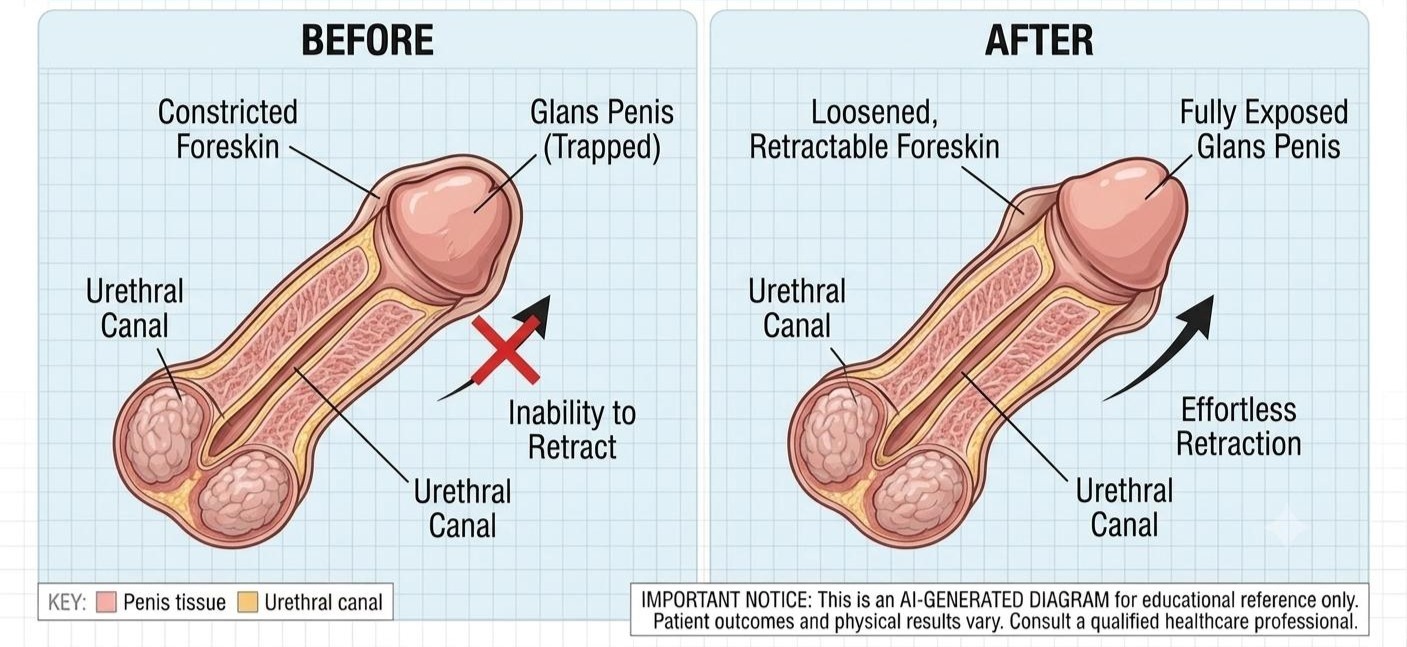
Before and After Images
Verified Patient Reviews ⭐⭐⭐⭐⭐| Phimosis Treatment

Phimosis Treatment at a Glance
Mr Marco Malahias, Consultant Plastic Surgeon
(Exact fee confirmed at consultation)
£300 with Mr Malahias
What Is Phimosis?
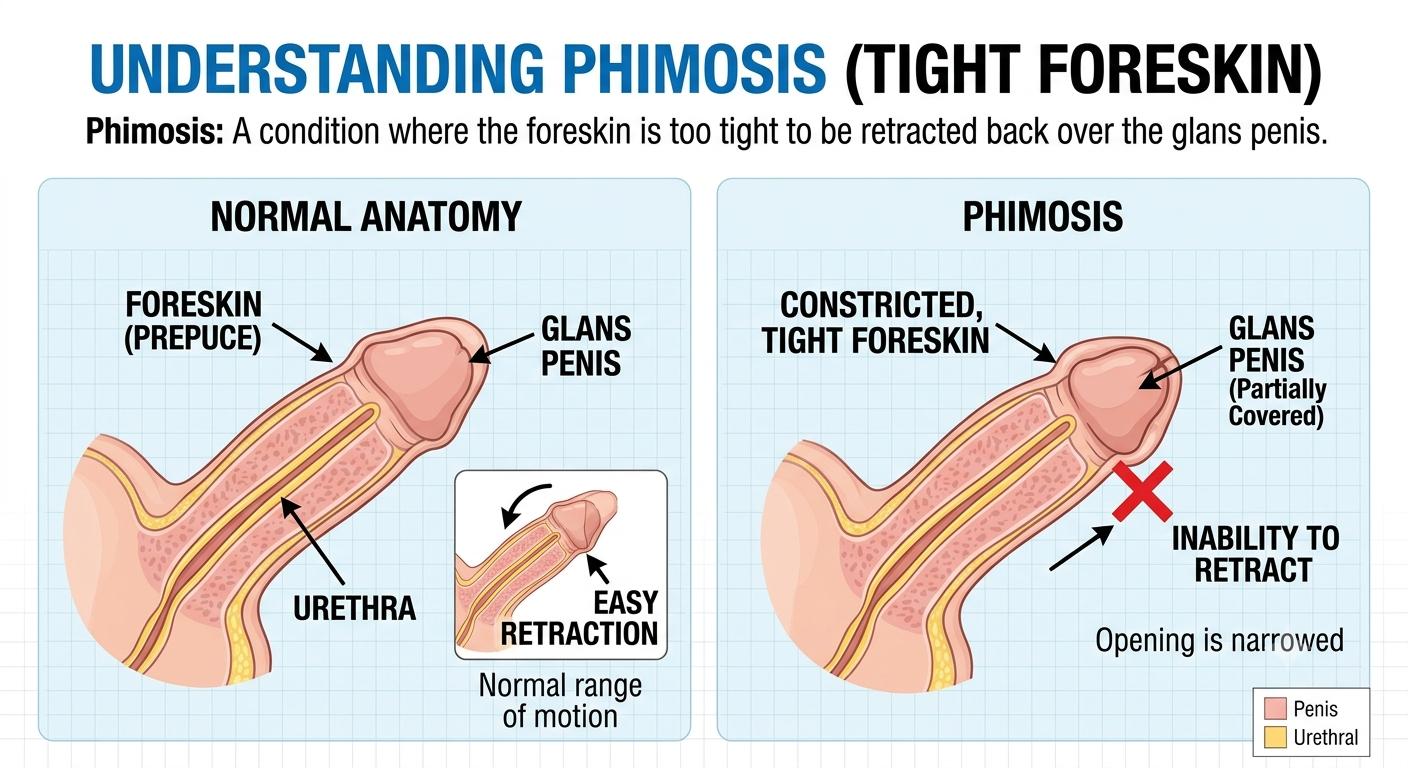
Phimosis is defined as the inability to retract the foreskin (prepuce) fully over the glans penis. The foreskin is a natural protective layer that covers the head of the penis. When it becomes too tight to pull back, it can affect hygiene, comfort, sexual function, and in some cases, urination.
In newborns and young children, phimosis is entirely normal the foreskin is naturally attached to the glans and separates gradually with age. By early adulthood, the foreskin can be retracted in the majority of males. When this does not happen, or when phimosis develops later in life due to a skin condition or injury, it is classified as pathological phimosis and requires assessment and treatment.
Phimosis is one of the most common reasons men seek adult circumcision at Renew Clinic. It is important to understand that phimosis is a medical condition and not a reflection of personal hygiene or behaviour. Many men with phimosis experience significant anxiety about discussing the condition, and the clinic provides a discreet and non judgmental environment for all consultations.
Types and Grades of Phimosis
Physiological Phimosis
Physiological phimosis is a natural and normal finding in infants and children. The foreskin is not designed to retract at birth. In most boys, natural separation occurs gradually and the foreskin becomes fully retractile by the mid teenage years. Physiological phimosis does not require treatment and should never be forcibly corrected, as forced retraction can cause micro tears that lead to scarring and pathological phimosis later in life.
Pathological Phimosis
Pathological phimosis develops when a previously retractile foreskin becomes tight due to scarring, chronic inflammation, or a skin condition. This is the form of phimosis that affects adults and that requires clinical management. It does not resolve on its own.
Grades of Phimosis
| Grade | Description | Impact | Likely Treatment |
|---|---|---|---|
| Grade 1 | Full retraction possible but tight behind the glans | Minimal | Stretching or steroid cream |
| Grade 2 | Partial retraction only | Moderate difficulty | Steroid cream |
| Grade 3 | Retraction possible at flaccid state only not erect | Significant | Steroid cream or surgery |
| Grade 4 | Only meatus visible on any attempt at retraction | Severe | Circumcision recommended |
| Grade 5 | No retraction possible meatus partially obscured | Very severe may affect urination | Circumcision required |
Request a call back
What Causes Phimosis?
In adults, phimosis causes are predominantly related to skin conditions or repeated trauma to the foreskin. Understanding the cause is an important part of selecting the right treatment approach.
• Lichen sclerosus (also known as balanitis xerotica obliterans or BXO) the most common cause of pathological phimosis in adults. A chronic inflammatory skin condition that causes white, scarred patches on the foreskin and glans, progressively tightening the foreskin over time
• Recurrent balanitis repeated episodes of inflammation or infection of the foreskin and glans can cause scar tissue to form, narrowing the foreskin opening
• Forceful retraction in childhood tearing the foreskin before it is ready to retract naturally creates micro tears that heal as scar tissue, progressively tightening the opening
• Eczema, psoriasis, or other inflammatory skin conditions affecting the foreskin
• Poor hygiene leading to recurrent infection and inflammation beneath the foreskin
• Trauma or injury to the foreskin
Your clinician will assess the likely cause of your phimosis at consultation, as this directly influences whether non surgical treatment is appropriate or whether surgery is the recommended path from the outset.
Phimosis Symptoms: What to Look For
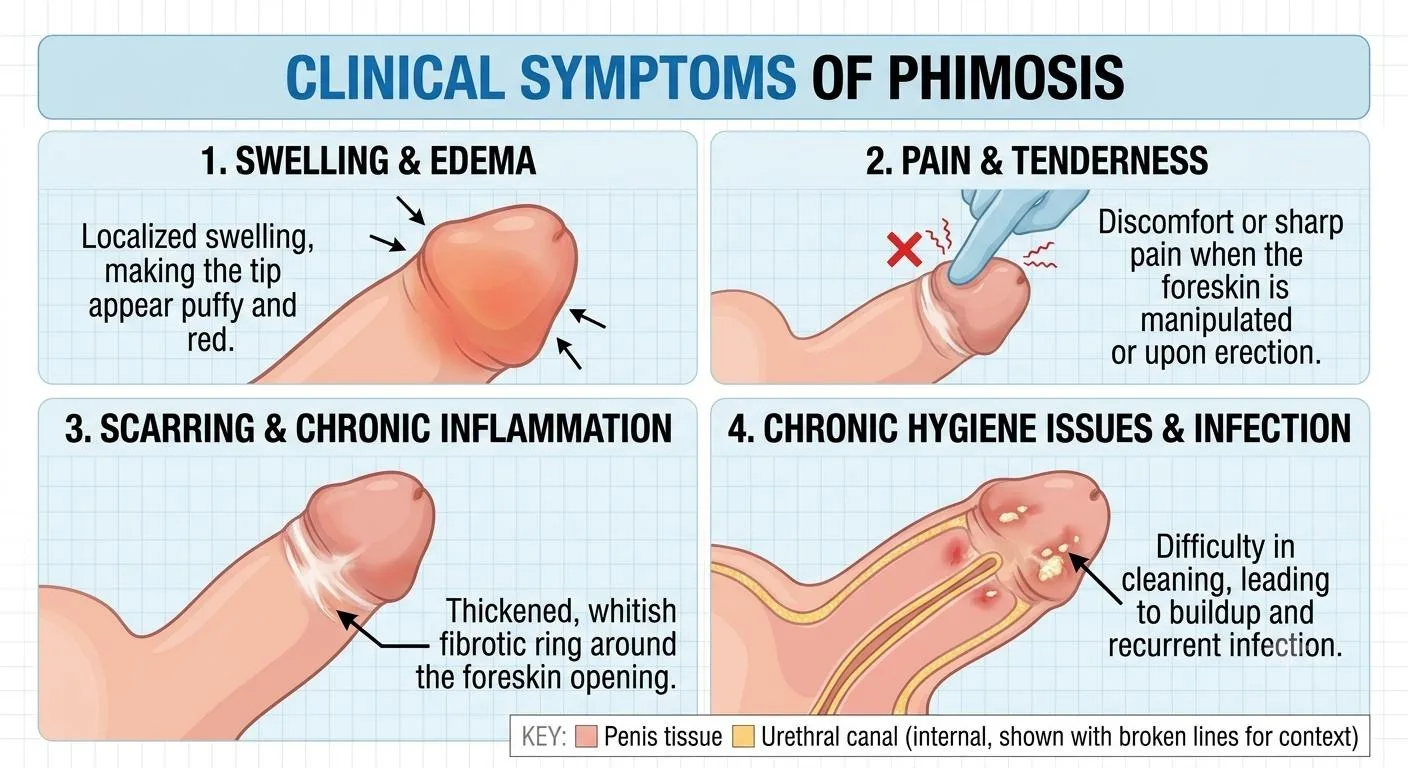
The severity of phimosis symptoms varies between individuals and across the grades of the condition. Common presentations include:
• Foreskin is tight when erect and cannot be fully retracted, or causes discomfort or splitting when retraction is attempted
• Pain during sexual intercourse, either from the tension on a tight foreskin or from micro tears that occur during sex
• Difficulty maintaining adequate hygiene beneath the foreskin, sometimes leading to discharge or odour
• A ring of white or pale scar tissue visible at the tip of the foreskin, which is characteristic of lichen sclerosus related phimosis
• Ballooning of the foreskin during urination, where urine pools beneath the foreskin before passing through the narrowed opening
• Reduced urinary flow or a thin stream in more advanced cases
• Recurring infections beneath the foreskin
If you notice your foreskin becoming progressively tighter over time, or if you have been experiencing any combination of the above symptoms, a clinical assessment is the appropriate next step. Phimosis that is left untreated tends to worsen rather than improve in adults.
Phimosis vs Paraphimosis: Understanding the Difference
Phimosis and paraphimosis are closely related but distinct conditions that are frequently confused. Understanding the difference is important, as paraphimosis is a urological emergency that requires immediate medical attention.
| Phimosis | Paraphimosis | |
|---|---|---|
| Definition | Foreskin is too tight to retract over the glans | Retracted foreskin becomes trapped behind the glans and cannot be returned to its normal position |
| Urgency | Non emergency managed over time | Medical emergency seek immediate care |
| Key Sign | Foreskin cannot be pulled back | Swollen glans foreskin stuck behind it constricting ring visible |
| Treatment | Steroid cream stretching or circumcision | Immediate manual reduction attend A and E if unable to resolve |
| Risk if Untreated | Progressive tightening discomfort | Restricted blood flow to glans tissue damage |
If you suspect paraphimosis seek immediate medical help
Paraphimosis causes restriction of blood flow to the penis. If the foreskin is trapped behind the glans and is causing swelling and significant discomfort attend your nearest A and E or call 999. Do not attempt to force the foreskin back yourself.
Phimosis Treatment Options at Renew Skin & Health Clinic
The treatment for phimosis at Renew Skin and Health Clinic is surgical. Dr Atul Kothare and Mr Marco Malahias perform circumcision to resolve phimosis permanently, removing the foreskin and eliminating the tightness that causes discomfort, pain during sex, and hygiene difficulties.
Circumcision is the definitive and most reliable treatment for phimosis. It is particularly recommended for moderate to severe phimosis, for phimosis caused by lichen sclerosus (BXO) where conservative options are not effective, and for cases where previous non-surgical approaches have not produced adequate improvement.
At Renew Clinic, circumcision for phimosis is performed by Dr Atul Kothare as a GP surgeon holding FRCS surgical qualification, or by Mr Marco Malahias as an EBOPRAS certified Consultant Plastic Surgeon. Both procedures are carried out under local anaesthetic as a day case with no overnight stay. Full details of the procedure, what to expect, and aftercare are covered on the adult circumcision page.
Phimosis and Lichen Sclerosus (BXO)
Lichen sclerosus, also known as balanitis xerotica obliterans (BXO), is the most common cause of pathological phimosis in adults in the UK. It is a chronic inflammatory skin condition that causes white, thickened, and scarred patches on the foreskin and glans penis. As the scarring progresses, the foreskin opening becomes increasingly tight.
BXO is important to identify because it changes the treatment approach significantly. Steroid cream has limited effectiveness once the tissue is already scarred and fibrotic. Circumcision is generally recommended earlier in the management of BXO related phimosis than it would be for non BXO phimosis. Additionally, all tissue removed during circumcision at Renew Clinic is sent for histological analysis to confirm the diagnosis and rule out any atypical cellular changes.
The Doctors Treating Phimosis at Renew Skin & Health Clinic
Phimosis treatment at Renew Skin and Health Clinic is provided by two GMC registered clinicians with different backgrounds and price points, giving patients a choice that reflects their clinical needs and preferences.
MS General Surgery | FRCS Edinburgh
MBBCh (Hons) | MRCS | MSc Aesthetic Surgery | EBOPRAS
Phimosis Treatment Cost
Private phimosis treatment cost at Renew Skin and Health Clinic is confirmed at your consultation once the severity of your condition and the most appropriate treatment approach have been assessed. The table below gives a guide to pricing.
| Dr Atul Kothare (GP Surgeon) | Mr Marco Malahias (Plastic Surgeon) | |
|---|---|---|
| Treatment Price Range | £795 to £1,250 | £795 to £1,250 |
| Consultation Fee | £150 | £300 |
| Procedure | Circumcision with GP surgeon holding FRCS surgical qualification | Circumcision with EBOPRAS certified Consultant Plastic Surgeon |
| Anaesthetic | Local anaesthetic included | Local anaesthetic included |
| Aftercare | Written instructions and follow up available | Written instructions and follow up available |
| Finance | 0% finance available | 0% finance available |
VAT Information
VAT applies to cosmetic treatments only.
Medical treatments are assessed for VAT exemption at consultation.
Affordable Monthly Payment Plans for Phimosis Treatment
We understand that the cost of phimosis treatment can be an important consideration. To make treatment more accessible, we offer flexible 0% finance options, allowing you to spread the cost of your procedure with affordable monthly payments.
Representative Payment Example:
- Procedure Cost: £1,250
- Deposit: £250
- Finance Amount: £1,000
- ✔ 0% Interest Finance Available
- ✔ Affordable Monthly Payments
- ✔ No Hidden Charges
- ✔ Quick Online Finance Calculator
*Representative example only. Finance options are subject to status and approval. Terms and conditions apply. The exact treatment cost and finance amount will depend on your consultation and personalised treatment plan.
Why Choose Renew Skin and Health Clinic for Phimosis Treatment?

- Two GMC registered clinicians with different backgrounds and price points you choose the right fit for your circumstances
- Conservative treatment assessed first steroid cream and stretching are recommended where clinically appropriate before surgery is advised
- Histological analysis of all surgically removed tissue, providing diagnostic confirmation and ruling out atypical cellular changes
- Completely discreet and confidential consultations in a private, CQC registered clinical environment
- 0% finance available to spread the cost of treatment
- Local anaesthetic, outpatient procedure no hospital admission, no overnight stay
- Same week appointments available
- 4.9 star rating across more than 837 verified patient reviews
- Accessible from Coventry, Birmingham, Rugby, Warwick, and across the Midlands
Frequently Asked Questions (FAQs)
1. What is the fastest way to cure phimosis?
For mild to moderate phimosis, a consistent steroid cream programme for four to eight weeks combined with gentle stretching produces improvement in the majority of cases. For moderate to severe phimosis, or for phimosis caused by lichen sclerosus (BXO), circumcision is the fastest and most definitive resolution. Your clinician at Renew Clinic will advise the most appropriate route at your consultation.
2. What causes phimosis in adults?
Phimosis causes in adults most commonly include lichen sclerosus (BXO), recurrent balanitis or foreskin infections, forceful retraction in childhood causing micro-tear scarring, inflammatory skin conditions such as eczema or psoriasis, and in some cases there is no identifiable cause. The underlying cause significantly influences which treatment approach is most effective.
3. Can I fix phimosis on my own at home?
Mild phimosis may respond to a gentle self-managed stretching programme, but this must be done very carefully to avoid causing micro-tears that worsen the condition over time. A steroid cream prescribed by a clinician significantly improves the effectiveness of a stretching programme. Attempting forceful retraction or using over-the-counter products without clinical guidance is not recommended and can cause lasting damage.
4. Is phimosis common in adults?
Phimosis in adults affects an estimated 1% of men over 16 in the UK, though this figure likely underrepresents the true prevalence as many men do not seek treatment due to embarrassment. Physiological phimosis that has persisted from childhood is common in young adults. Acquired pathological phimosis can develop at any age.
5. Can phimosis be treated without surgery?
Yes, in many cases. Steroid cream combined with a gentle stretching programme is the first-line treatment for mild and moderate phimosis and produces satisfactory results in the majority of suitable cases. Surgery becomes the recommended option when conservative treatment has not worked, when the phimosis is severe, or when the underlying cause is lichen sclerosus where the tissue is already scarred.
6. What is the difference between phimosis and paraphimosis?
Phimosis is when the foreskin cannot be retracted. Paraphimosis is when the retracted foreskin becomes trapped behind the glans and cannot be returned to its normal position, causing a constricting ring that restricts blood flow. Paraphimosis is a urological emergency requiring immediate medical attention. If you think you may have paraphimosis, go to your nearest A&E without delay.
7. How much does phimosis treatment cost in the UK?
At Renew Skin and Health Clinic, surgical phimosis treatment cost ranges from £795 to £1,250 depending on the clinician and specific procedure. Consultation is £150 with Dr Kothare and £300 with Mr Malahias. 0% finance is available. VAT exemption may apply to medically indicated treatments, assessed at consultation.
8. Is phimosis treatment available on the NHS?
The NHS offers phimosis treatment but typically requires a GP referral and may involve waiting times. Circumcision is available on the NHS where there is a clear medical indication. Non-surgical management is usually the first step offered. Private treatment at Renew Clinic provides same week consultation and treatment without the wait, with a choice of surgeon.
9. Does phimosis cause problems during sex?
Yes. Pain during sexual intercourse is one of the most commonly reported symptoms of phimosis. The tight foreskin may pull uncomfortably during sex, cause splits or micro-tears, or prevent full erection without discomfort. Treatment consistently improves or resolves these symptoms, and many patients report a significant improvement in quality of life and sexual confidence following treatment.
10. What happens after phimosis surgery?
After circumcision for phimosis, most patients return to light daily activities within one to two weeks. Full recovery is typically complete within four to six weeks. All patients receive written aftercare instructions, follow-up availability, and contact details for the clinic team. Full details of what to expect after the procedure are covered on the adult circumcision page.
11. Does steroid cream work for phimosis?
Topical steroid cream, typically betamethasone valerate, is a first line non surgical treatment for mild to moderate phimosis and is available from your GP or a private clinician. Clinical studies show success rates of between 65% and 95% when used correctly and consistently over four to eight weeks. However, steroid cream is not effective for phimosis caused by established lichen sclerosus (BXO) scarring, where the tissue has already become thickened and fibrotic. If you have tried steroid cream without success, or if your clinician has identified BXO as the underlying cause, surgical treatment is the recommended next step. Renew Clinic offers a surgical consultation to assess suitability and confirm the most appropriate treatment path.
12. Can stretching exercises cure phimosis?
A graduated foreskin stretching programme, often used alongside steroid cream, can improve mild phimosis where the tissue is still pliable. It involves very gentle, progressive stretching over several weeks and must never involve forceful pulling, which causes micro tears that worsen scarring over time. Stretching is not appropriate for phimosis caused by lichen sclerosus, as scarred tissue does not respond to stretching and is more likely to split. Where stretching has been attempted without satisfactory improvement, or where the severity of the condition makes it unsuitable, surgical circumcision is the appropriate next step. At Renew Clinic, your clinician will assess your specific presentation at consultation and advise on whether surgery is the right course for you.