
Pyogenic Granuloma Removal in Leamington Spa
HOME /Pyogenic Granuloma Removal in Leamington Spa
Pyogenic granuloma is a small, rapidly growing, benign red skin lump made of blood vessels close to the skin surface. Despite its alarming appearance and tendency to bleed easily, it is entirely non-cancerous and causes no serious health risk. At Renew Skin and Health Clinic in Leamington Spa, Pyogenic granulomas are removed under local anaesthetic as a same day outpatient procedure from £395. For your safety and reassurance, every lesion is routinely sent to a specialist pathology laboratory for histological analysis to confirm the diagnosis, ensuring accurate results and complete peace of mind.
Free consultations are available on weekdays, and we also provide a commitment to treat any recurrence at no additional cost.
Table Of Contents
Pyogenic Granuloma Removal at a Glance
Verified Patient Reviews ⭐⭐⭐⭐⭐| Pyogenic Granuloma


Before and After Images


What Is Pyogenic Granuloma?
A pyogenic granuloma is a benign, rapidly growing overgrowth of blood vessel tissue that forms a raised, bright red or reddish brown lump on or just beneath the skin surface. It is also known medically as a lobular capillary haemangioma. Despite its name, it is not caused by infection and is not a true granuloma the term ‘pyogenic’ is a historical misnomer that has remained in clinical use.
The lesion typically grows quickly over a period of weeks, reaching between a few millimetres and 1 to 2 centimetres in size. The surface is often moist, fragile, and bleeds easily when knocked or touched. This tendency to bleed is the most distressing characteristic for most patients and is usually the reason they seek treatment.
Pyogenic granulomas are completely benign and are not linked to skin cancer. They do not transform into malignancy and are not contagious. However, because they bleed easily, grow quickly, and are difficult to control without treatment, professional removal is strongly recommended.
Symptoms: What Does a Pyogenic Granuloma Look Like?
The key features that distinguish a pyogenic granuloma from other skin lumps are:
| Feature | Description |
|---|---|
| Colour | Bright red, dark red, or reddish brown. Can appear almost purple in some patients. |
| Size | Typically 2 mm to 20 mm. Grows rapidly over days to weeks after it first appears. |
| Surface | Moist, glistening, and fragile. Often appears raspberry like or dome shaped with a smooth or crusted top. |
| Bleeding | Bleeds easily and profusely when knocked, scratched, or rubbed. This is the most common presenting complaint. |
| Base | Attached by a narrow stalk known as pedunculated or sits on a flat base. Can appear to sit on a collarette of normal skin. |
| Pain | Usually painless unless traumatised or infected. |
Although pyogenic granuloma is benign, any rapidly growing or repeatedly bleeding skin lesion should be assessed by a clinician before treatment. Other skin conditions including amelanotic melanoma can occasionally resemble a pyogenic granuloma. Seeking professional clinical assessment is always the right first step.
At Renew Skin and Health Clinic, a clinical diagnosis is confirmed at your free consultation before any treatment proceeds. Although pyogenic granulomas are almost always harmless, they can occasionally resemble other rapidly growing skin lesions, including the rare amelanotic melanoma, which lacks the usual dark pigment. For complete peace of mind, every pyogenic granuloma we remove is routinely sent to a specialist pathology laboratory for histological analysis to confirm the diagnosis. Laboratory examination confirms the diagnosis and ensures that no significant condition is overlooked.
What Causes a Pyogenic Granuloma?
The precise cause of pyogenic granuloma is not always identifiable. The following factors are associated with its development:
| Trigger | Clinical Context |
|---|---|
| Minor trauma or injury | A cut, abrasion, insect bite, or even a small splinter can trigger the abnormal blood vessel proliferation that forms a pyogenic granuloma. |
| Pregnancy | Hormonal changes during pregnancy significantly increase the risk. Pyogenic granulomas in pregnancy most commonly develop on the gums and lips and are sometimes called pregnancy tumours or granuloma gravidarum. |
| Medications | Certain systemic medications including oral retinoids, some antiretroviral drugs, and targeted cancer therapies are associated with pyogenic granuloma development. |
| Hormonal changes | Changes in oestrogen and progesterone levels, including those associated with oral contraceptive use, can act as a contributing trigger. |
| Spontaneous development | In many cases, no clear cause is identified. The lesion develops without any preceding trauma or identifiable trigger. |
Request a call back
Where Can a Pyogenic Granuloma Appear?

Pyogenic granuloma can develop on almost any surface of the body, but certain locations are significantly more common than others:
| Location | Typical Presentation | Notes |
|---|---|---|
| Finger | One of the most common sites. Often follows a minor cut or splinter. A pyogenic granuloma on the finger frequently bleeds when catching on objects. | Very common in children and adults. |
| Face and scalp | A granuloma on the face or scalp tends to grow quickly and be cosmetically distressing due to its visible location. | Any age group. |
| Lip | A pyogenic granuloma on the lip is particularly prone to trauma from eating and speaking. | Common in pregnancy. |
| Gums | Hormonal changes during pregnancy significantly increase the risk of developing pyogenic granulomas, particularly on the gums (sometimes called a pregnancy epulis or epulis gravidarum). These benign growths may also appear on the lips and often develop due to the body's increased response to minor irritation during pregnancy. | Pregnancy associated. |
| Eyelid | A pyogenic granuloma on or around the eyelid requires particularly careful assessment and removal due to its proximity to the eye. | Ophthalmology referral if needed. |
| Trunk and limbs | Can develop on the chest, back, arms, or legs, often following minor skin trauma. | Any age group. |
How Is Pyogenic Granuloma Treated at Renew Skin & Health Clinic?
At Renew Skin and Health Clinic, pyogenic granuloma removal is performed as a same day outpatient procedure under local anaesthetic. The appropriate removal technique is determined at your free consultation based on the size, location, and characteristics of the lesion.
| Step | What Happens |
|---|---|
| 1 | At your free consultation, the lesion is assessed clinically. The size, location, and appearance are evaluated to confirm the diagnosis and select the most appropriate treatment technique. |
| 2 | Local anaesthetic is injected around the lesion. The area becomes fully numb within a few minutes. The procedure is painless throughout once anaesthesia is established. |
| 3 | The pyogenic granuloma is removed using surgical excision, electrocauterisation, shave removal, or CO2 laser depending on its characteristics. The base is treated to reduce the risk of regrowth. |
| 4 | Every pyogenic granuloma we remove is routinely sent to a specialist pathology laboratory for histological analysis. The tissue is examined under a microscope to confirm the diagnosis and exclude the rare skin conditions that can occasionally resemble a pyogenic granuloma. This provides complete reassurance and ensures the highest standard of clinical care. |
| 5 | A dressing is applied and written aftercare instructions are provided. You go home the same day. Most patients return to normal activity within 24 to 48 hours. |
Every Lesion We Remove Is Sent for Histology
Although a pyogenic granuloma is almost always a harmless growth, its appearance can sometimes closely resemble other skin conditions. Because these lesions often grow quickly, appear bright red, and bleed easily, they can occasionally look similar to rarer conditions such as amelanotic melanoma, a form of skin cancer that does not produce the usual dark pigment.For this reason, simply freezing or burning away a lesion without laboratory examination carries a small but genuine risk of missing an unexpected diagnosis.
At Renew Skin and Health Clinic, every pyogenic granuloma we remove is routinely sent to a pathology laboratory for histological examination to confirm the diagnosis. The tissue is carefully examined under a microscope to confirm the diagnosis. This provides complete reassurance that the lesion is benign and ensures that nothing significant has been overlooked. This is an important part of our standard of care and reflects our commitment to treating every skin lesion as a medical procedure rather than simply a cosmetic removal.
Pyogenic granulomas can occasionally recur after removal, particularly in certain locations or if the base was not fully treated.
At Renew Skin and Health Clinic, if your pyogenic granuloma recurs following treatment, we will re treat it at no additional cost. This commitment is part of our standard service and is confirmed at your consultation.
Aftercare Following Pyogenic Granuloma Removal
Recovery is straightforward. Follow these guidelines to support clean, fast healing:
• Keep the wound clean and dry for the first 48 hours following treatment
• Apply any prescribed ointment as instructed and replace the dressing as advised
• Avoid picking, scratching, or rubbing the treated area during healing
• Apply SPF50 sunscreen to the area once it has fully healed to minimise scarring
• Contact the clinic if you experience heavy bleeding, increasing pain, fever, or signs of infection
Most treated areas heal within one to three weeks.
Pyogenic Granuloma Removal Cost
At Renew Skin and Health Clinic, pyogenic granuloma removal is priced transparently based on the size and complexity of the lesion. A confirmed written quote is provided at your free consultation before any treatment is agreed.
| Service | Price |
|---|---|
| Consultation | Complimentary on weekdays |
| Standard pyogenic granuloma removal small lesion | From £395 |
| Larger or complex pyogenic granuloma | From £500 up to £1,000 |
| Recurrence treatment | Free of charge |
| Histological analysis | Additional Charges Apply |
Affordable Monthly Payment Plans Available
We understand that the cost of pyogenic granuloma removal can be an important consideration for some patients. That is why we offer flexible 0% finance options, allowing you to spread the cost of your treatment through convenient monthly payments.
Example Payment Plan:
- Treatment Cost: From £395
- Deposit: From £95
- Finance Amount: From £300
- ✔ 0% Interest Finance Available
- ✔ Affordable Monthly Payments
- ✔ No Hidden Charges
- ✔ Instant Finance Calculator Available
*Representative example only. Finance options are subject to status, approval, and the final treatment cost. Terms and conditions apply.
Consultation Fees & Weekend Treatment Charges
We believe in complete transparency when it comes to your treatment journey. Below is a clear breakdown of consultation and procedure fees:
| Service | Weekdays | Weekends & Bank Holidays |
|---|---|---|
| Consultation | Complimentary | £75 |
| Procedure | Standard Fee | Additional £150 (weekends only) |
For more details, please Call us +44 1926 422 454 or Connect on WhatsApp +44 1926 422 454.
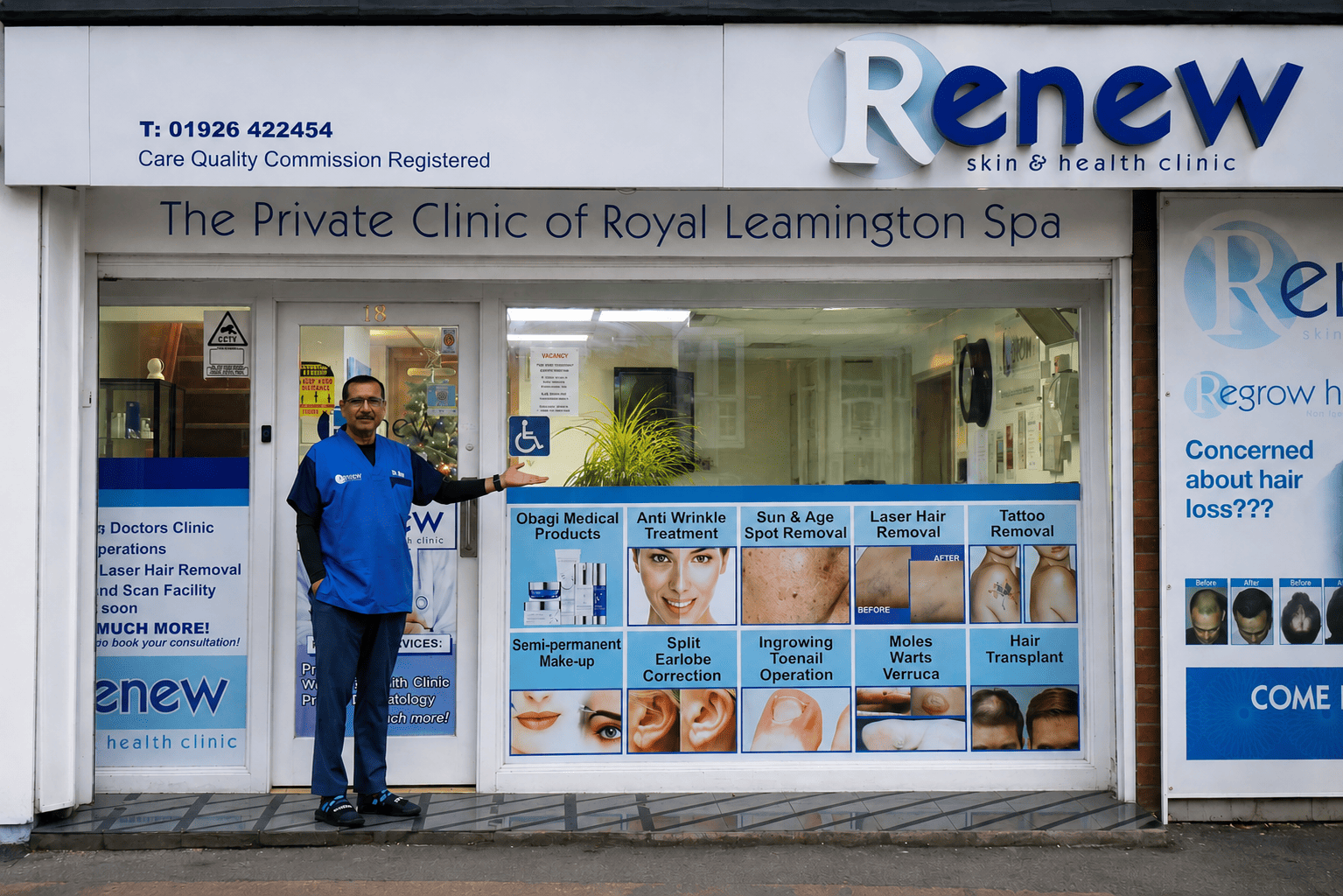
Why Choose Renew Skin and Health Clinic?
| What We Offer | What It Means for You |
|---|---|
| Free recurrence treatment | If the pyogenic granuloma returns after removal, we will re treat it at no charge. No other clinic in Leamington Spa offers this commitment. |
| Every lesion sent for histology | Every pyogenic granuloma we remove is routinely sent to a pathology laboratory to confirm the diagnosis and rule out any rare conditions that may appear similar, giving you complete peace of mind. |
| Local anaesthetic same day | No general anaesthetic, no hospital admission, no overnight stay. You arrive, are treated, and go home. |
| 0% finance available | Spread the cost with no added interest through Chrysalis Finance. Subject to eligibility. |
| CQC registered clinic | Regulated by the Care Quality Commission, the independent regulator of health and social care in England. |
You may also be interested in our skin lesion removal, our skin tag removal, or our full price list.
Pyogenic Granuloma Removal Near Leamington Spa
18 Guy Street, Leamington Spa CV32 4RT
Show map
Patients searching for pyogenic granuloma treatment or granuloma removal near Coventry, Birmingham, Warwick, and Rugby regularly choose Renew Skin and Health Clinic in Leamington Spa. Our clinic is centrally located in the heart of Royal Leamington Spa with easy access from across Warwickshire and the wider West Midlands.
Book Your Free Pyogenic Granuloma Consultation
Consultations are free on weekdays. A written diagnosis and cost estimate are provided with no obligation to proceed. Same day appointments available in most cases.
- Call: +44 1926 422 454
- Email:
- Address: Renew Skin & Health Clinic
18 Guy Street, Leamington Spa, CV32 4RT. United Kingdom. - Whatsapp: +44 1926 422 454
- Opening Hours: Monday to Friday, 10:00 AM – 6:00 PM (Telephone lines open daily 9:00 AM – 10:00 PM, including weekends)
Frequently Asked Questions (FAQs)
1. How serious is a pyogenic granuloma?
Pyogenic granuloma is entirely benign and has no cancer risk. It is not a serious medical condition. However, because it bleeds easily and profusely when knocked, and because it grows quickly, professional removal is strongly recommended to prevent repeated bleeding and to exclude other diagnoses.
2. Does a pyogenic granuloma go away on its own?
Pyogenic granulomas rarely resolve spontaneously in adults. Some may shrink following the end of pregnancy if they developed during pregnancy, but in most cases they persist and continue to bleed until removed. Professional granuloma removal is the only reliable treatment.
3. How is a pyogenic granuloma removed?
At Renew Skin and Health Clinic, pyogenic granuloma is removed under local anaesthetic as a same day procedure. The technique surgical excision, electrocauterisation, shave removal, or CO2 laser is selected based on the size and location of the lesion. The base is treated to minimise recurrence risk.
4. Can a pyogenic granuloma come back after treatment?
Yes, pyogenic granuloma can recur in some cases, particularly in certain locations or if the base was not fully treated. At Renew Skin and Health Clinic, if your pyogenic granuloma recurs after treatment, we will re-treat it completely free of charge.
5. Is pyogenic granuloma painful?
Pyogenic granulomas are usually painless unless they are knocked, caught on clothing, or become infected. The primary symptom that brings most patients to seek treatment is pyogenic granuloma bleeding the lesion bleeds very easily and sometimes profusely when touched.
6. What is the cost of pyogenic granuloma removal?
At Renew Skin and Health Clinic, pyogenic granuloma removal starts from £399 for standard lesions and up to £1,000 for larger or more complex cases. Consultations are free on weekdays. Finance is available. Any recurrence is treated at no additional cost.
7. Can pyogenic granuloma develop during pregnancy?
Yes. Pyogenic granuloma in pregnancy is well recognised and more common than in the general population. Hormonal changes during pregnancy stimulate abnormal blood vessel growth, particularly on the gums and lips. These are sometimes called ‘pregnancy tumours’ or granuloma gravidarum and are completely benign. Many resolve after delivery; those that persist can be safely removed.
8. Can a pyogenic granuloma appear in the mouth or on the gums?
Yes. Oral pyogenic granuloma on the gums, lips, and inside the mouth is one of the most common presentations. Pyogenic granuloma gums are particularly associated with pregnancy and poor oral hygiene acting as a local trigger. Oral pyogenic granulomas bleed easily when eating or brushing teeth and benefit from professional removal.
9. Is pyogenic granuloma the same as a blood blister or haemangioma?
No, though they can look similar. A pyogenic granuloma is a distinct condition formally known as a lobular capillary haemangioma characterised by its rapid growth and tendency to bleed. A blood blister is a collection of blood under the skin following trauma and resolves on its own. A haemangioma is a broader category of blood vessel abnormality. Clinical assessment is needed to distinguish between them.
10. How do I book a pyogenic granuloma removal consultation near me?
Book a free consultation at Renew Skin and Health Clinic in Leamington Spa by calling or WhatsApp messaging +44 1926 422 454, or emailing info@renewskinandhealthclinic.co.uk. Same day appointments are available. We welcome patients from Leamington Spa, Coventry, Birmingham, Warwick, Rugby, and across Warwickshire.
11. Is the lump tested after it is removed?
Yes. Every pyogenic granuloma we remove is routinely sent for histology at our on site pathology laboratory. The tissue is examined under a microscope to confirm the diagnosis. Although pyogenic granulomas are almost always benign, this important step excludes the rare conditions that can occasionally appear similar, giving you complete reassurance.