

Small, pearly bumps appearing on the skin can be confusing and, for many adults, a little embarrassing to bring up. While molluscum contagiosum is often thought of as a childhood condition, it is far more common in adults than most people realize, particularly through close skin contact. Understanding how it spreads, what it looks like, and how it is treated can take away much of the uncertainty around a diagnosis.
At Renew Skin & Health Clinic in Leamington Spa, our specialists regularly see adult patients concerned about new or spreading lesions. This guide details their symptoms, causes and treatment options available including what to expect should it appear as Molluscum Contagiosum on the face, where symptoms are especially noticeable.
What Is Molluscum Contagiosum?
Molluscum contagiosum (MC), caused by poxvirus, is an infectious skin condition which primarily impacts the outer layers of skin and forms small domeshaped bumps with distinctive central indentation known as an “umbilicated appearance.” MC can spread through direct skin to skin contact, shared personal items or sexual contact among adults. It’s highly contagious!
In adults, lesions commonly appear on the:
- Face and neck
- Arms, armpits, and hands
- Trunk
- Genital area
When lesions develop on visible areas, the condition is often referred to as musculum contagiosum on face, which can be particularly distressing simply because of how noticeable it is in daily life.
What Causes Molluscum Contagiosum in Adults?
An infection typically enters through small breaks in the skin or direct contact with someone or surface that is already infected, such as coming in contact with them directly. Common risk factors among adults include:
- Close skin to skin contact, including intimate contact
- Sharing towels, razors, or sports equipment
- Contact sports involving skin to skin contact
- A weakened immune system
- Shaving over already infected skin, which can spread lesions further
Signs and Symptoms to Watch For
The most common symptoms of molluscum contagiosum include:
- Small, flesh coloured or pearly bumps
- A characteristic central dimple in each lesion
- Mild redness or inflammation around the bumps
- Occasional itching or tenderness
- Pus formation if a lesion becomes secondarily infected
The condition itself is usually painless, though scratching can spread the virus to nearby areas of skin, a process known as autoinoculation.
How Does Molluscum Contagiosum Spread?

Because the virus spreads via direct contact, adults can easily infect sexual partners, close contacts and themselves through scratching and shaving. To minimize its spread and limit its potential damage, adults can adopt several simple habits:
- Avoid scratching, squeezing or picking at lesions;
- Do not share towels, razors or personal items;
- Cover visible lesions during contact sports;
- practice safe sexual habits while lesions exist;
- seek treatment as early as possible to lessen further spread.
Can Molluscum Contagiosum Heal on Its Own?
Yes, in many cases the condition can resolve naturally over several months, and occasionally longer. However, many adults choose active treatment because of:
- Rapid spread to new areas
- Persistent or recurring lesions
- Cosmetic concerns, especially with facial lesions
- The risk of passing the infection to a partner or close contact
- Ongoing discomfort or inflammation
Professional removal helps clear lesions faster and meaningfully reduces the chance of further transmission while waiting for natural resolution.
Molluscum Contagiosum Treatment Options
At Renew Skin & Health Clinic, treatment is tailored to the patient’s age, skin type, and the location of the lesions. Options include:
- Topical therapies
- Cryotherapy (freezing the lesions)
- Curettage (medical removal)
- Advanced laser treatment
For adults, CO2 laser treatment is generally the preferred option, as it precisely removes lesions with minimal scarring and downtime. This makes it particularly suitable for visible areas such as the face, as well as for genital lesions where cosmetic outcome matters most.
| Patient Group | Recommended Treatment | Why This Method Is Preferred |
|---|---|---|
| Adults | CO2 Laser Treatment | Precise lesion removal, excellent clearance rates, minimal scarring, controlled healing, ideal for visible and intimate areas. |
| Children (10+ years) | Pulsed Dye Laser (PDL) | A gentler, non-ablative laser that treats lesions safely with reduced discomfort. |
What Happens During Molluscum Contagiosum Removal?
The procedure targets the individual lesion while preserving the surrounding healthy skin. Laserbased removal is:
- Quick and precise
- Minimally invasive
- Associated with a low risk of scarring
- Suitable for sensitive areas, including the face and genital region
Most adult patients tolerate the laser treatment well, with only mild, temporary discomfort during the procedure itself.
Recovery After Treatment
Recovery time from treatment tends to be rapid. Mild redness or light scabbing may arise for up to one or two days before clearing away on its own. Patients should:
- Avoid scratching the treated area.
- Keep the skin clean and dry.
- Follow the aftercare guidance provided after the procedure.
Pricing for Molluscum Contagiosum Treatment
Renew Skin & Health Clinic offers transparent pricing with no hidden costs. Your exact treatment plan is confirmed only after a clinical assessment.
| Treatment Component | Details |
|---|---|
| Consultation | Free |
| Laser treatment session | Prices start from £250 |
| Number of sessions | Depends on the number, size, and location of lesions |
| Aftercare guidance | Included as standard |
Related Skin Concerns We Treat
Individuals being examined for Molluscum contagiosum will usually want to talk about other skin issues and general health problems, including:
- Viral, contagious growths in the genital area, treated through Genital Wart Removal.
- Unwanted facial or body hair, addressed through laser hair removal.
- Joint pain and inflammatory conditions, managed through our dedicated rheumatology service.
- General moles anywhere on the body, assessed and treated using modern dermatology techniques.
- Raised, overgrown scar tissue following injury or piercing, known as a Keloid Scar, treated with laser therapy, steroid injections, or surgery depending on severity.
- If thinning hair is also a concern, our hair loss treatment service is available too.
If you are ever unsure whether a skin change needs professional attention, our team is happy to assess it during a free consultation.
Why Choose Renew Skin & Health Clinic for Molluscum Contagiosum Removal?
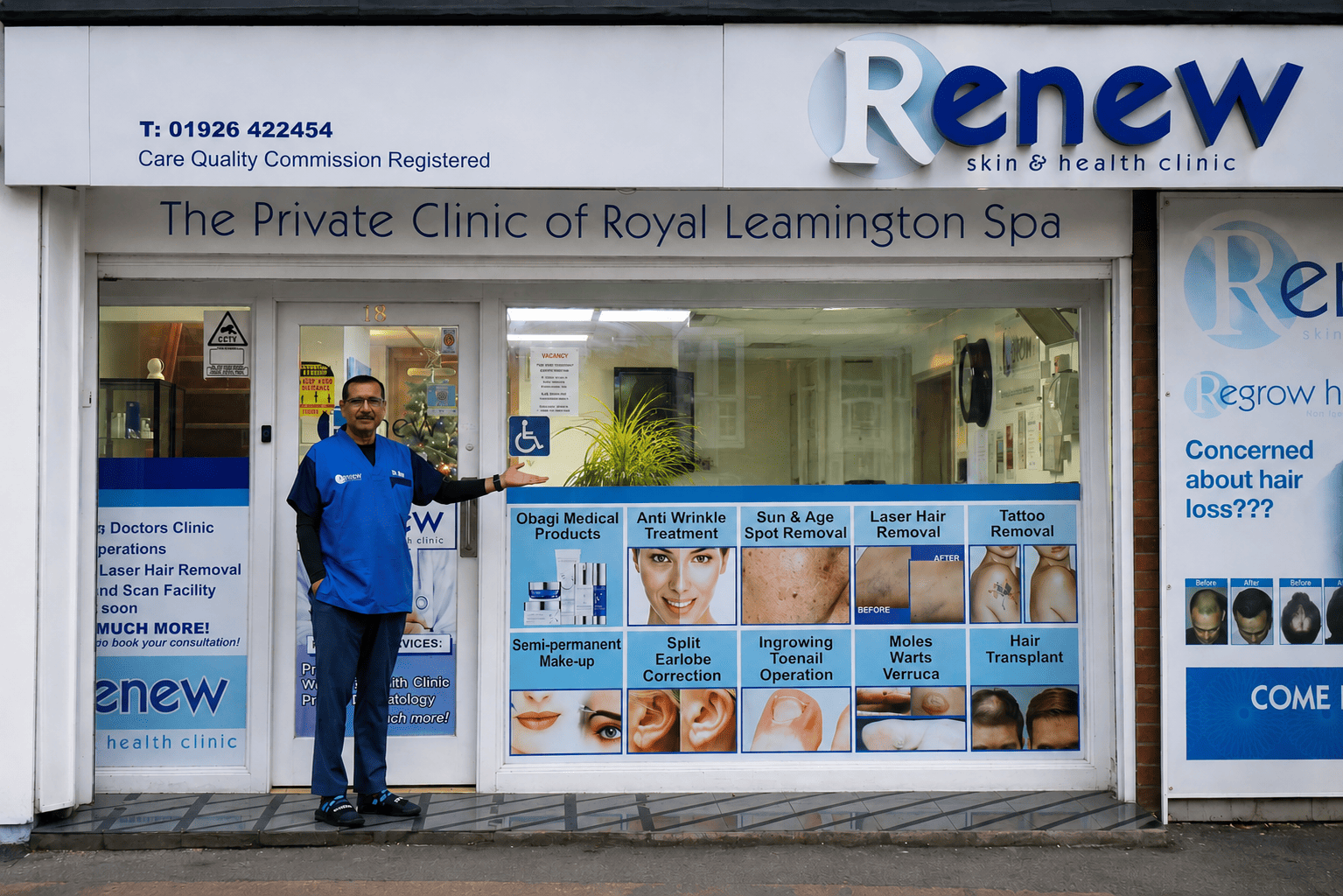
- Led by experienced specialists
- Advanced laser technology suited to both adults and children
- Safe treatment tailored to age, skin type, and lesion location
- Minimal downtime and low risk of scarring
- Trusted clinic with patients across the UK, rated 4.9 stars from over 850 Google reviews
Every consultation is private, discreet, and handled with complete sensitivity, particularly for patients concerned about facial or genital lesions.
Request a call back
Book a Confidential Consultation Today
For those who have noticed any new or developing growths and want an expert opinion, the experts at Renew Skin & Health Clinic are here to help.
- Call:+44 1926 422 454
- Email:
- Address: 18 Guy Street, Leamington Spa, CV32 4RT, United Kingdom
- Whatsapp: +44 1926 422 454
Frequently Asked Questions
1. Is molluscum contagiosum common in adults?
Yes. Molluscum Contagiosum, which is more prevalent among children, can still affect adults through skintoskin contact or sexual relations with an individual who carries the virus.
2. How long does molluscum contagiosum last if untreated?
Untreated lesions can take anywhere from several months to a couple of years to clear naturally, during which time they may continue to spread to other areas.
3. Can molluscum contagiosum on the face be treated safely?
Yes, CO2 laser treatment is the best treatment modality used on the face of an adult because it offers a very precise removal process, with little scarring.
4. Is molluscum contagiosum an STI?
Adults can contract the infection through sexual contact, so it may be classified with other skin conditions spread through intimate contact, although it’s not solely sexually transmitted.
5. Can I catch molluscum contagiosum more than once?
Yes. A single infection does not guarantee immunity; reinfection by contact with infected individuals or items remains possible.
6. Does shaving spread molluscum contagiosum?
Yes. Shaving infected skin can spread the virus to nearby areas and should therefore be avoided directly over lesions that are visible.
7. Will molluscum contagiosum leave scars?
The lesions themselves rarely scar if left alone, but scratching or picking at them increases the risk. Professional laser removal is designed to minimize scarring.
8. How soon can I return to normal activities after treatment?
Most adult patients return to their usual activities very quickly after laser treatment, with only mild, temporary redness at the treated site.
9. Can molluscum contagiosum come back after removal?
Once a lesion has been properly excised, it usually does not reappear unless reinfected by contact with its source virus.
10. When should I see a specialist about molluscum contagiosum?
When you notice that the lesions are recurring or when you find them to be an issue for yourself, then it is wise to seek the help of professionals rather than leaving them to cure themselves.