

An infected toe happens when bacteria enter the skin around the nail or through a small break, causing redness, swelling and pain. It often follows an ingrown toenail or a minor injury. Spotting the signs early helps you get the right care.
Table Of Contents
Request a call back
Signs of an Infected Toe
Toe infection symptoms usually build over a few days. Look for:
- Redness and swelling around the nail
- Throbbing pain when your toe hurts to touch
- Warmth, tight or shiny skin
- Pus or discharge, sometimes with a smell
- A sore toenail that stays tender
A side toenail infection often shows along one edge of the nail. A fungal nail looks different, thick, yellow and crumbly.
Common Causes of an Infected Toe
The causes of an infected toe usually involve bacteria entering broken skin. Common causes include:
- An ingrown toenail, sometimes called an ingrown infected nail
- Cuts, scrapes or burst blisters
- Nails cut too short or with rounded corners
- Fungal nail infections
An infected big toe is common because shoes press hardest there.
Infected Toe Treatment Options
Infected toe treatment depends on how far the infection has spread. For mild soreness, basic care can help:
- Wash gently with mild soap and water, then dry well
- Cover broken skin with a clean dressing
- Wear roomy shoes to reduce pressure
Do not squeeze pus, cut into the skin, dig out the nail or take leftover medicines. These can make things worse.
A toe with pus, increasing swelling or a nail edge pressing into the skin needs a doctor’s assessment. A doctor may start treatment for the infection where appropriate, drain pus safely, or treat the ingrown nail edge, as with ingrown toenail treatment in Leamington Spa .
Infected Toenail? See a Doctor If you have an infected toenail, you should see a doctor.
A consultation with Dr Jha at Renew Skin and Health Clinic is free of cost. |
When to See a Doctor?
See a doctor promptly if you notice:
- Redness spreading up the foot or red streaks
- Worsening pain, pus or swelling
- Fever or feeling unwell
- No improvement with basic care
People with diabetes, poor circulation or a weak immune system should seek advice early, even for a small toe problem.
Important for people with diabetes
If you have diabetes and an ulcer on your toe, Dr Jha advises you to seek help from your own GP immediately. A delay can be dangerous.
Prevention Tips
Simple habits lower the risk:
- Wash and dry your feet daily
- Cut nails straight across, not too short
- Wear well fitting shoes
- Clean and cover cuts and blisters
Conclusion
An infected toe is easier to treat when caught early. Basic care helps mild soreness, and a doctor can advise when more is needed.
Request a call back
Book Your Free Consultation
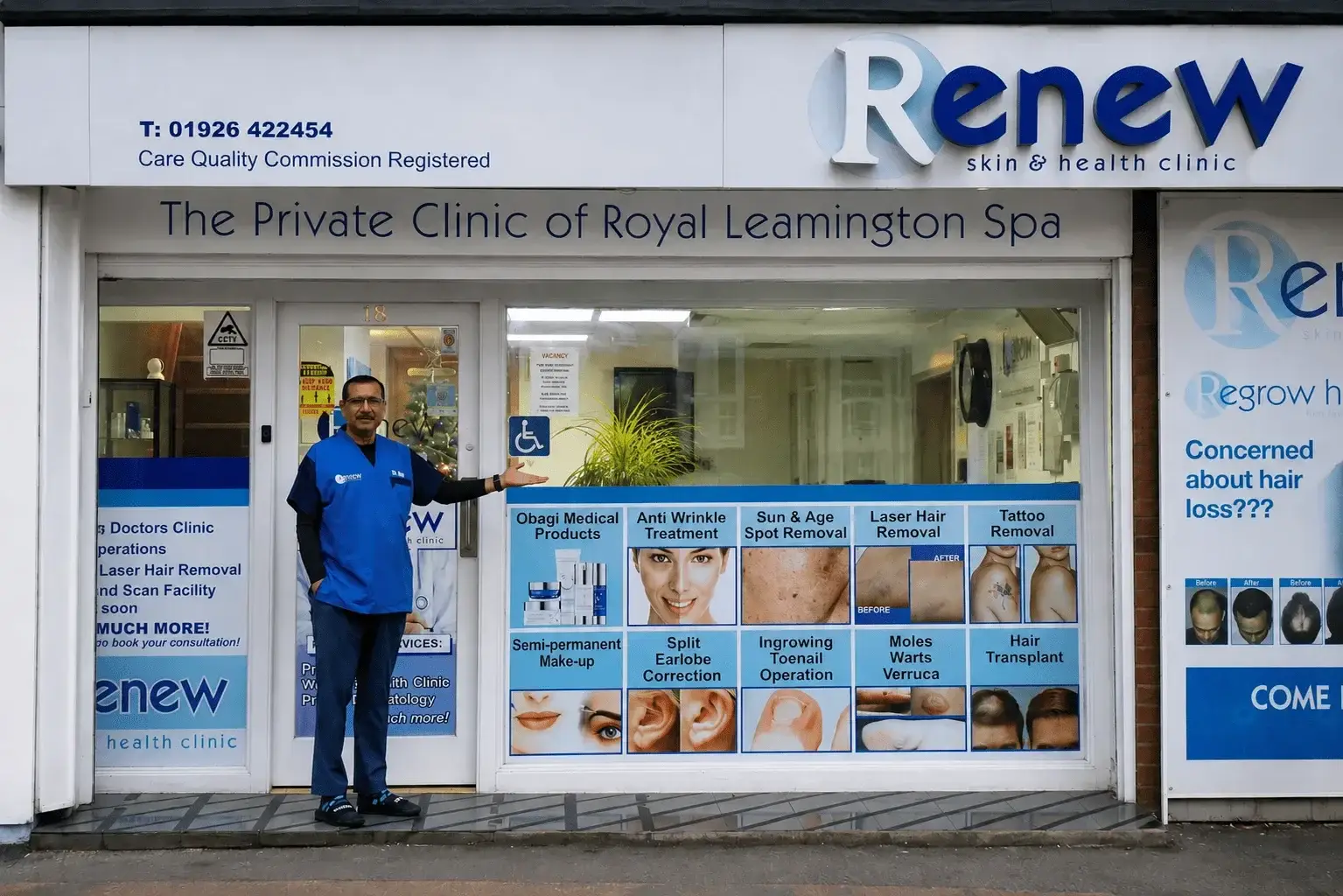
If you would like a clear answer on the right treatment and the exact cost for your case, book a free consultation with Dr Jha.
Call: +44 1926 422 454
WhatsApp: +44 1926 422 454
Email: info@renewskinandhealthclinic.co.uk
Address: Renew Skin & Health Clinic, 18 Guy Street, Leamington Spa, CV32 4RT, United Kingdom
Opening Hours: Monday to Friday, 10:00 AM – 6:00 PM (Telephone lines open daily 9:00 AM – 10:00 PM, including weekends)
Frequently Asked Questions
1. What does an infected toe look like?
An infected toe is usually red, swollen, warm and painful, and it may have pus or a bad smell. The skin around the nail often looks tight and shiny. A fungal nail infection looks different, with a thick, yellow or white, crumbly nail that is often not painful.
2. How do I know if my toe is infected or just ingrown?
An ingrown toenail causes pain and redness where the nail edge presses into the skin. It is more likely to be infected when you also see pus, increasing swelling, warmth or spreading redness. Only a doctor can confirm which you have, so send a clear photo or book an assessment if you are unsure.
3.What causes an infected toe?
An infected toe is usually caused by bacteria entering through a break in the skin. Common causes include an ingrown toenail, a cut or injury, a burst blister, nails cut too short and fungal nail infections. Tight shoes that press on the toe can make problems more likely.
4. How do you treat an infected toe?
Treatment depends on how far the infection has spread and on your health. Mild soreness may settle with basic foot care, but a toe with pus, increasing swelling or an ingrown nail edge needs a doctor’s assessment. A doctor may treat the infection, drain pus or treat the nail edge.
5. Does every infected toe need medicine?
No, not every infected toe needs the same treatment. A doctor examines the toe and decides whether treatment for the infection, drainage of pus or a small procedure on the nail edge is appropriate. Please do not take leftover medicines from an earlier illness.
6. Can I squeeze the pus or cut out the nail myself?
No. Squeezing pus, cutting into the skin or digging out the nail can push the infection deeper and cause more damage. If the toe has pus or the nail edge is pressing into the skin, let a doctor treat it safely.
7. When should I see a doctor for an infected toe?
See a doctor promptly if the toe has pus, increasing swelling, worsening pain or is not improving with basic care. Seek same day advice if redness spreads, you see red streaks or you have a fever. People with diabetes, poor circulation or a weak immune system should seek advice early.
8.What should I do if I have diabetes and an infected toe or toe ulcer?
If you have diabetes and an ulcer on your toe, Dr Jha advises you to seek help from your own GP immediately, because a delay can be dangerous. Any foot infection in a person with diabetes should be checked promptly (NICE NG19 covers diabetic foot problems).
9. How can I prevent an infected toe?
Wash and dry your feet daily, cut toenails straight across, avoid cutting them too short, and wear well fitting shoes with room for your toes. Clean and cover cuts and blisters, and check your feet regularly if you have diabetes.
10. Where can I get an infected toe checked in Leamington Spa?
Renew Skin and Health Clinic, 18 Guy Street, Leamington Spa, offers a free consultation with Dr Jha, in clinic or by sending a photo on WhatsApp to +44 1926 422 454. No GP referral is needed. If the toe needs a procedure, ingrown toenail treatment is available from £595.
References NICE Clinical Knowledge Summaries, Ingrown toenail. NICE NG19, Diabetic foot problems: prevention and management. |
This page provides general information and is not a substitute for individual medical advice.