

Yes. Vestibular papillomatosis can appear to develop suddenly, though in most cases it has been present for some time and is only noticed for the first time during a health check, a smear test, or when symptoms such as itching draw attention to the area. The condition itself is a normal anatomical variant, not an infection, and it is not caused by sexual contact.
Table Of Contents
What Is Vestibular Papillomatosis?
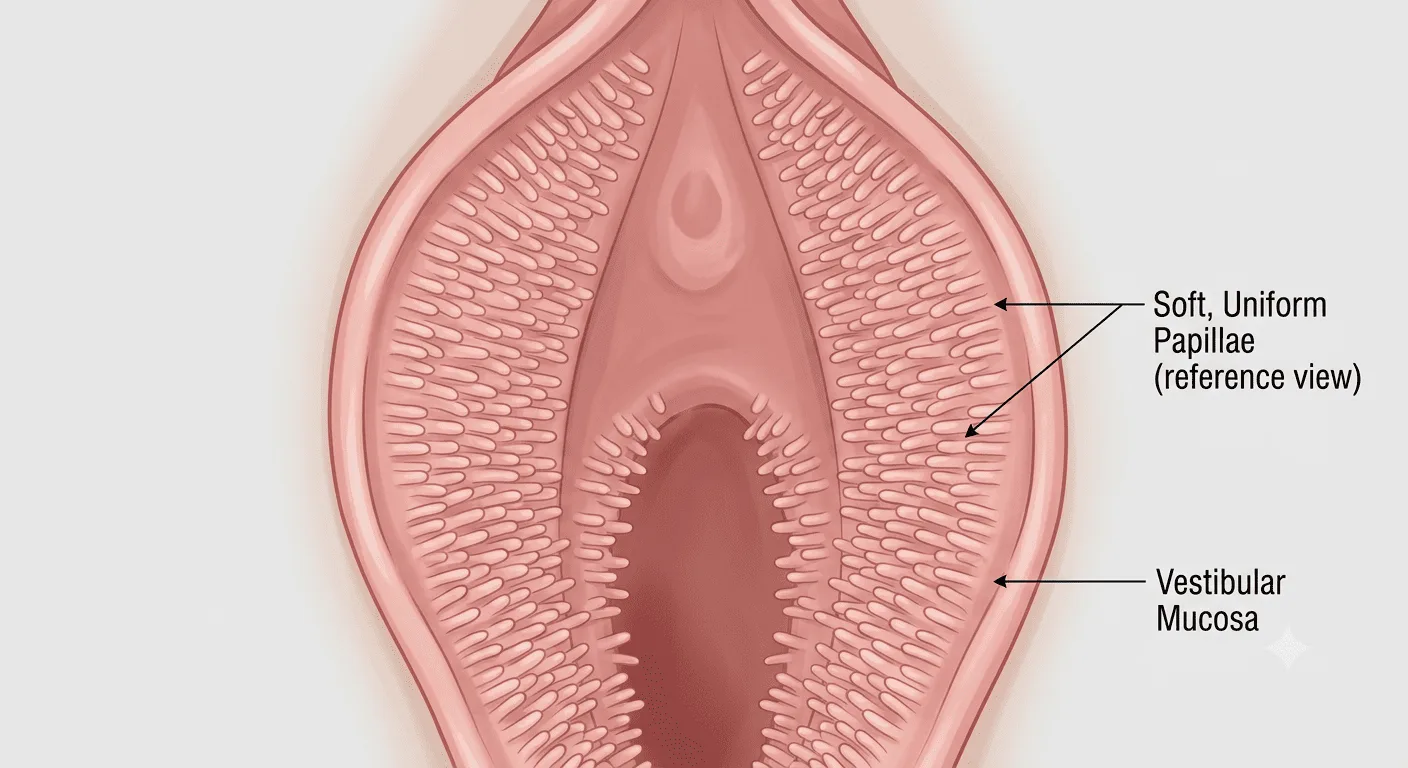
Vestibular papillomatosis is a normal anatomical variant characterised by small, soft, finger like or thread like projections on the inner labia minora and the vulval vestibule. These projections are made of normal mucosal tissue and are not caused by any infection, virus, or skin disease. Estimates of how common the condition is vary widely across studies, ranging from around 1% to as many as 1 in 3 women, though it is frequently misdiagnosed or self diagnosed as genital warts.
For full information on the condition including treatment and pricing, visit the vestibular papillomatosis treatment page.
Can Vestibular Papillomatosis Suddenly Appear?
This is the most common question asked about this condition, and the short answer is that it can seem to appear suddenly but usually it doesn’t. There are three reasons women typically discover vestibular papillomatosis and feel it has developed quickly:
• Discovery during a clinical examination: a smear test, gynaecological appointment, or sexual health check reveals papillae that were already present but had never been clinically observed or noticed at home
• Itching or discomfort draws attention to the area: many women first discover the papillae when they begin experiencing vestibular irritation and investigate the area more closely for the first time
• Hormonal changes increase prominence: pregnancy, starting or stopping hormonal contraception, and perimenopause can cause the papillae to become more pronounced, making them more visible than before
In all three scenarios, the condition has typically been present for some time. The key reassurance is that its appearance, however sudden it seems, does not indicate a new infection or a deteriorating health condition.
What Causes Vestibular Papillomatosis?
The causes of vestibular papillomatosis are not fully understood, but the condition is well established as a normal variant of vulval anatomy rather than a pathological process. The following factors are consistently associated with its presence:
• Genetic predisposition: it appears more commonly in some families, suggesting a hereditary component
• Hormonal factors: oestrogen appears to influence the prominence and thickness of the papillae, which is why the condition may seem more noticeable during pregnancy, hormonal contraceptive changes, or perimenopause
• Normal mucosal variation: the vestibular epithelium naturally varies between women in texture, colour, and the presence of papillae. Vestibular papillomatosis sits at one end of this spectrum of normal variation
• Age: the papillae may change in appearance at different life stages, becoming more or less prominent over time
Crucially, vestibular papillomatosis is not caused by HPV, sexual contact, sexual history, or any lifestyle factor. The presence of vestibular papillomatosis carries no implications for a woman’s sexual health or medical history.
Vestibular Papillomatosis Symptoms: What Women Notice
Many women with vestibular papillomatosis experience no symptoms at all and are only aware of the condition after a clinical examination. Others notice:
| Symptom | What It Typically Means |
|---|---|
| Visible finger like projections | Normal anatomical variant and not a sign of infection. |
| Itching | Common, particularly if concurrent thrush or contact dermatitis is present. The papillae themselves do not cause itching. |
| Discomfort during intercourse | Can occur if the papillae are prominent. Clinical assessment confirms whether vestibular papillomatosis is the cause. |
| Anxiety and distress | Extremely common due to confusion with genital warts. A clinical diagnosis provides significant reassurance. |
Itching associated with vestibular papillomatosis is usually caused by a concurrent condition, most commonly vulvovaginal candidiasis (thrush) or contact dermatitis, rather than the papillae themselves. A clinical assessment will identify any concurrent condition and address it separately.
Vestibular Papillomatosis vs HPV: What Is the Difference?
The most significant anxiety for women who discover vestibular papillomatosis is whether it could be genital warts caused by HPV. The two conditions can look superficially similar but are clinically distinct and distinguishable by an experienced clinician within a single examination.
If you are uncertain whether what you have is vestibular papillomatosis or genital warts, a clinical assessment is always the appropriate step. Self diagnosis from images found online is unreliable and a source of significant and unnecessary anxiety.
| Comparison Point | Vestibular Papillomatosis | Genital Warts (HPV) |
|---|---|---|
| Cause | Normal anatomical variation | Human papillomavirus (HPV) infection |
| Contagious | No, it cannot be passed to a partner. | Yes, HPV is sexually transmitted. |
| Appearance | Small, soft, smooth finger like projections that are symmetrical and arranged in neat rows. | Irregular, rough, cauliflower like growths that vary in size and shape. |
| Location | Usually found on the inner labia minora and the vulval vestibule in a symmetrical pattern. | Can develop anywhere on the external genital area, perineum or around the anus. |
| Acetic Acid Test | Usually remains unchanged and does not turn white. | Often turns white after acetic acid application. |
| Treatment | No medical treatment is required. Reassurance is usually all that is needed, although cosmetic removal is available if requested. | Treatment is generally recommended to remove visible warts and reduce the risk of transmission. |
If you’re looking for a more detailed comparison, read our guide on Vestibular Papillomatosis vs Genital Warts: How to Tell the Difference, where we explain the differences in appearance, symptoms, diagnosis, and when to seek medical advice.
Does Vestibular Papillomatosis Go Away on Its Own?
Vestibular papillomatosis does not typically resolve on its own. Because it is an anatomical variant rather than an infection or inflammatory response, there is no underlying process that would cause it to naturally subside. The papillae may become slightly less or more prominent at different hormonal stages of life, but they do not disappear without treatment.
Professional removal at Renew Skin and Health Clinic is carried out by Mr Amit Palchaudhuri, Consultant Gynaecologist, GMC 4752356, using CO2 laser treatment. Removal is a cosmetic choice rather than a medical necessity for most patients.
When Should You Seek a Clinical Assessment?
A clinical assessment is appropriate if any of the following apply:
• You have noticed the papillae for the first time and want a confirmed diagnosis
• You are experiencing significant anxiety about whether what you have could be an STI
• You are experiencing itching, discomfort, or irritation that you want investigated alongside the VP
• You are considering professional removal and want to discuss options and suitability
• A previous clinician was uncertain or gave a diagnosis you would like confirmed by a specialist
Mr Palchaudhuri at Renew Clinic will assess the condition visually, confirm the diagnosis, discuss any concurrent symptoms, and explain removal options if you are interested in pursuing treatment.
Request a call back
Book a Vestibular Papillomatosis Consultation at Renew Skin & Health Clinic
A consultation with Mr Amit Palchaudhuri, Consultant Gynaecologist, will confirm your diagnosis and discuss removal options if you wish to explore treatment.
Call: +44 1926 422 454
WhatsApp: +44 1926 422 454
Email: info@renewskinandhealthclinic.co.uk
Address: Renew Skin & Health Clinic, 18 Guy Street, Leamington Spa, CV32 4RT, United Kingdom
Opening Hours: Monday to Friday, 10:00 AM – 6:00 PM (Telephone lines open daily 9:00 AM – 10:00 PM, including weekends)
Frequently Asked Questions
1. Can vestibular papillomatosis suddenly appear?
Vestibular papillomatosis can appear to develop suddenly, but it is typically already present and only discovered for the first time during a clinical examination, when itching prompts closer inspection, or when hormonal changes make the papillae more prominent.
2. Can vestibular papillomatosis develop later in life?
Yes. While vestibular papillomatosis is often present from early adulthood, changes in hormonal levels during pregnancy, perimenopause, or contraceptive changes can cause existing papillae to become more prominent, making them noticeable for the first time in later life.
3. What causes vestibular papillomatosis?
Vestibular papillomatosis is caused by a normal variation in vulval mucosal tissue. It has a likely genetic component and is influenced by hormonal factors. It is not caused by HPV, any infection, or sexual activity. It is an anatomical variant, not a disease.
4. Why does vestibular papillomatosis happen?
The exact mechanism is not fully understood. It appears to be a variation in the normal development of the vulval epithelium. Hormones, particularly oestrogen, appear to influence the prominence of the papillae. It is more common in some families, suggesting a genetic component.
5. What percentage of people have vestibular papillomatosis?
Vestibular papillomatosis is estimated to affect approximately 1 in 3 women, making it extremely common. The condition is significantly underreported because many women who have it are never examined in circumstances where it would be identified, and because it causes no symptoms in a large proportion of those who have it.
6. Is vestibular papillomatosis the same as HPV or genital warts?
Vestibular papillomatosis vs HPV: they are not the same. Vestibular papillomatosis is a normal anatomical variant with no infectious cause. Genital warts are caused by the human papillomavirus (HPV), are sexually transmitted, and have an irregular cauliflower-like appearance. A clinical assessment with acetic acid testing or visual examination by an experienced clinician can reliably distinguish between the two.
7. Is vestibular papillomatosis itchy?
Vestibular papillomatosis itself does not typically cause itching. When itching is present alongside VP, it is usually caused by a concurrent condition such as vulvovaginal thrush or contact dermatitis. A clinical assessment will identify any co-existing condition so it can be treated separately.
8. Does vestibular papillomatosis go away on its own?
No. Vestibular papillomatosis does not spontaneously resolve. Because it is an anatomical variant rather than an infection, there is no natural process that would cause it to disappear without treatment. The papillae may become more or less prominent at different hormonal stages of life but will not fully resolve without professional removal.
9. Can vestibular papillomatosis grow?
Existing papillae do not typically grow significantly larger over time, though they may become more prominent during hormonal changes such as pregnancy. New papillae can develop in adjacent areas. The overall appearance of the condition tends to be relatively stable in the majority of patients.
10. How is vestibular papillomatosis treated?
Where cosmetic removal is desired, vestibular papillomatosis treatment at Renew Clinic is performed by Mr Amit Palchaudhuri using CO2 laser.